Saturday, June 30, 2012


Japan expected political explosion after Earthquake, Tsunami and Fukushima


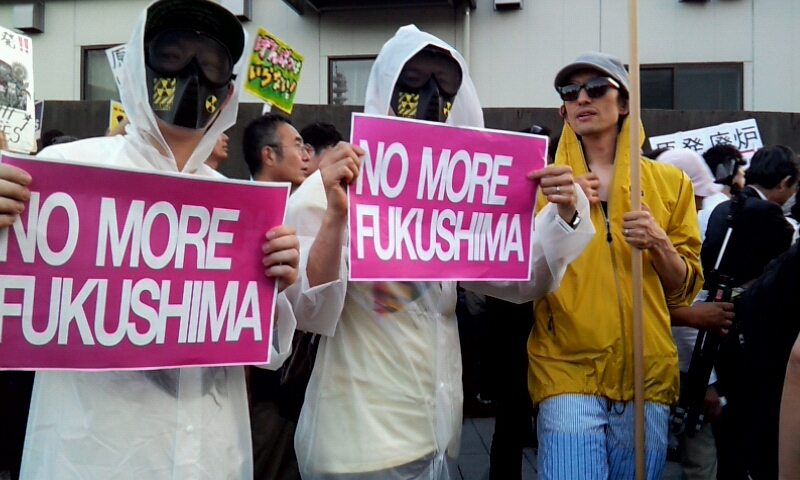
Tens of thousands of citizens occupy 
Japanese government district
Tokyo June 29th 2012.


On Friday June 29th 2012 a White Paper on Science and Technology was presented to the foreign media in Japan. A monument of "Tatemae" with worrying words like "Toward a Robust and resilient Society". But if we look deeper, it is an attempt to hide the lack of preparation of the Japanese big players and rulers in case of natural disasters in a country prone to such unfortunate events. (earthquake, tsunami, industrial accident, atomic explosion, poisoning, radiation, etc.)

On this last point the summary of the Sciences and Technology's photo (PHOTO) I added here elaborates the future agenda of concerns that Japan should not rule out, such as avoiding to see Japan contrive to hang itself for lack of careful preparation. One of the most fundamental right the people here are expecting. 

Apparently, the Japanese government, the administration and the related industrial interests were not yet aware of catastrophic impacts raised by the earthquake, the tsunami and by the Fukushima NPP accident before they opted for atomic energy more than half a century ago. Quotes: 

1) Effect of radiation on human health

2) Promotion of decontamination

3) Securing food safety.
Nuclear safety regulation, SPEEDI etc.

End of quotes.

White Paper

We understand that this is a review of what did not work well before and since 3/11. We can desperately regret that 20.000 people died of the 3/11 earthquake and the tsunami and half a million people lived in precarious conditions and that millions are worried about the impact of atomic radiation in their daily life, because Japan had not deeply thought about the nature of its territory and land ! We are stunned that Japan did not think about these risks before to build cities or atomic energy plant on the shores of its archipelago.

Studying the papers of the SC & Tech White Paper is nothing else than demonstrating the lack of serious consideration to daily life by those who have in their mandate and duties to assure the safety of life in Japan, today. 

And I assume that the a multitude of spin-doctors are going to say that foreign media are again sending false rumors such as what we did in March 2011, when we said, wrote, voiced that there was a meltdown in Fukushima NPP...! 

Maybe rulers' greed is one explanation. There are others.
                                                PART II


Tokyo Nagatacho June 29th 2012 

In the second part (in French) I write today about the strange "Interference between the International Atomic Energy Agency (IAEA) and World Health Organization (WHO) after the report by Michel Ferney, Professor Emeritus at the University of Basel, Michel Ferney was astonished, with the Chernobyl accident as currently in Fukushima: "a strange absence" of the World Health Organization (WHO). His article was published in Rue89 but I add here an extraordinary report published in 1957 about health dangers and mental health when dealing with Atomic Energy, by WHO-OMS... 


Les étranges "Interférences entre l'Agence Internationale de l'Énergie Atomique (AIEA) et l'Organisation Mondiale de la Santé (OMS) par Michel Fernex, Professeur émérite de médecine tropicale. Faculté de médecine, Université de Bâle. 


Les promoteurs des centrales atomiques, et l'AIEA en particulier, ont de tout temps investi dans une propagande bien orchestrée, pour que cessent les craintes "injustifiées" des populations face au nucléaire commercial. Ces craintes risquaient de gêner le développement rapide des centrales atomiques. Pour l'AIEA, il était essentiel de trouver le moyen de mettre fin aux publications de travaux, susceptibles d'inquiéter les populations et les responsables politiques ainsi que le présente ce rapport: 


" En 1957, une publication de l'OMS sur les "EFFETS GÉNÉTIQUES DES RADIATIONS CHEZ L'HOMME" souligne les dommages provoqué par les mutations ponctuelles, et leurs rapports avec les doses de rayonnement.Le travail signé par le professeur américain H.J. Muller, un biologiste célèbre, lauréat du Prix Nobel, de même que les travaux sur les mutations chez l'homme, risquaient de mettre en danger l'industrie atomique du fait de ses atteintes à la santé. Muller avait en particulier relevé que des doses de rayonnement très faibles pouvaient produire des altérations du génôme, sans que l'on puisse déceler de rapport linéaire entre les doses les plus faibles et ces altérations. 


L'année suivante, en 1958, l'AIEA et l'OMS, deux organisations des Nations Unies, concluent un Accord, qui contraint l'OMS à ne plus entreprendre de recherches, ni publier de documents pouvant gêner la promotion des centrales atomiques, et de conserver un caractère confidentiel à certaines informations sensibles. 


L'article 1 de cet Accord stipule en effet que : "Chaque fois qu'une des parties se propose d'entreprendre un programme ou une activité dans un domaine qui présente ou peut présenter un intérêt majeur pour l'autre partie, la première consulte la seconde en vue de régler la question d'un commun accord." 


L'Article III précise en outre que : 


1) L'Agence Internationale pour l'Énergie Atomique et l'Organisation Mondiale de la Santé reconnaissent qu'elles peuvent être appelées à prendre certaines mesures restrictives pour sauvegarder le caractère confidentiel de renseignements qui leur auront été fournis... 


2) Sous réserve des arrangements qui pourraient être nécessaires pour sauvegarder le caractère confidentiel de certains documents, le Secrétariat de l'AIEA et le Secrétariat de l'OMS se tiennent mutuellement au courant de tous les projets et tous les programmes de travail pouvant intéresser les deux parties. 


Cet Accord retire en conséquence à l'OMS la possibilité d'analyser, de manière indépendante, l'impact des installation atomiques sur la santé. La confidentialité instaurée par cet Accord est par ailleurs contraire à la Constitution de l'OMS (voir pp.1 à 18 de la référence 1). En effet, parmi les 22 fonctions qui doivent permettre à l'OMS d'atteindre ses objectifs pour la santé dans le monde, figurent les points suivants: 


- fournir toutes informations, donner tous conseils et toute assistance dans le domaine de la santé 


- aider à former, parmi les peuples, une opinion publique éclairée en ce qui concerne la santé


Malgré les contradictions entre la Constitution de l'OMS et les paragraphes de l'Accord cités ci-dessus, l'Accord entre l'AIEA et l'OMS a été approuvé par la 12e Assemblée Mondiale de la Santé, le 28 mai 1959. 


Pour mieux comprendre la portée de cette restriction de l'information des populations, il faut lire le numéro 151 de la Série de Rapports Techniques de l'OMS. La conclusion du chapitre: "Politique à suivre en cas d'accident et de dangers imprévus", à la page 50 de ce document s'exprime en ces termes sybillins:  "Cependant, du point de vue de la santé mentale, la solution la plus satisfaisante pour l'avenir des utilisations pacifiques de l'énergie atomique serait de voir monter une nouvelle génération qui aurait appris à s'accommoder de l'ignorance et de l'incertitude et qui, pour citer Joseph Addison, le poète anglais du XVIII siècle, saurait chevaucher l'ouragan et diriger la tempête". 


Cette conclusion traduit un mépris des populations, tout à fait contraire à l'esprit et à la lettre de la Constitution de l'OMS. En novembre 1995, lors du congrès organisé par l'OMS sur Tchernobyl à Genève, M. Claude Haegi, représentant le gouvernement de Genève, a lu ce texte en assemblée plénière. Une autre phrase a été citée par M. Haegi est celle exprimée par M. Blix, Directeur Général de l'AIEA, 4 mois après la catastrophe de Tchernobyl, et publiée le 28 août 1986, dans le journal le Monde. M. Blix y affirme que, vu l'importance de l'énergie atomique, le monde pourrait supporter un accident comparable à celui de Tchernobyl par an. M. Haegi de conclure : "Un Tchernobyl suffit. Il faut tendre vers une sécurité quasi totale." Cette contribution, comme tant d'autres n'a pas été mentionnée dans le document fourni après ce congrès." End of quotes.


Notes: http://www.akademia.ch/~sebes/textes/1998/98Fernex1.html#Tast.


NB: I have the original 1957 1958 WHO OMS documents in my files.

Thursday, June 28, 2012

Japan Consumption tax: Not now! 
Katz says "Japan is under psychological depression!"


Richard Katz Editor of the well know "Oriental Economist"

Richard Katz shouted at prime minister Noda about the 100% increase of the consumption tax: "Total Nonsense" says the Editor of the Oriental Economist at the press club today. Katz describes the tax as the "wrong tax at the wrong time." The problem according to the influential newsletter's editor is that Japan "is not growing and that low growth expands deficit." 


Good news? Japan's assets are huge, 60% are overseas, Japan is not Greece, it is the third economic power. But an increase of consumption tax is risky and can cause a recession. Let's hope the benefit of the tax does not only go to the firms and forget the people... He considers the Japanese media are too lenient vis a vis the Japanese ministry of Finances. "Reporters repeat things without really understanding what they are talking about" or he told also are complacent with their self censorship... 


Japan he said is now under a psychological depression. " Car sales are down by half compared to 10 years ago"? Really? He also said that people do not have money to spend and consume and use their savings, 5 to 10% of it. So why charge the consumers with a 100% tax to come? On Fukushima Katz reminded the audience that 84% of Japanese don't trust the government on the "cold shutdown".


Maybe the Osaka Mayor Toru Hashimoto or an other charismatic leader is now expected by voters says Katz who definitely appears to the public as an ice-cube in the coke. Refreshing! We exchanged "名刺" meishi together.

Saturday, June 09, 2012


The Tepco fuzzy world


Notorious Masataka SHIMIZU ex-Tepco president 

Is Japan rewarding those who ruin and bring shame on the nation? 日本は、国を破滅させ国家の恥を晒す人たちに報いるのですか?


National Diet of Japan, my brief comments on Tepco and the 19 meetings of the Fukushima Nuclear Accident Independent Investigation Commission (NAIIC)【国会事故調】

After hearing ex-Tepco president Shimizu at the Diet investigation panel, Shimizu was in charge of the Fukushima Dai I nuclear power plant, I simply would say that he is an example of what Japan produced the worst as servile protector of his business, his bureaucratic career and his Japan nuclear village, Shimizu  stated in front of the panel and the audience, that he did not remember much of what he did during the March 2011 days of international emergency! How awkward.

I have to say a few things about the Japanese press and the Fukushima Diet Naiic investigation panel and first impression is that actually this panel has a method and it is a first for such panel to investigate, and it is hard. The witnesses (Kan, Edano, Shimizu, Sato etc.) are not under oath as this was not decided by Parliament. They do not have this practice they say according to Dr. Kurokawa. The project is here to let Japanese and foreign public to draw their own conclusions on what happened during this Fukushima accident and since March 11. So the panel seems to exist as a tool that is set between, say, a Congress investigation and the South African reconciliation process, but it is still vague.

Maybe it fails of not having a possibility to bring the result of testimonies in front of the Justice. This would eventually happen as people have sued Tepco already. Indeed we are here in Japan in a democracy with strict separation of powers Executive Legislative and Justice in what I observed in the practice of these three powers.

The second thing I observed during these 19 meetings and hearings of the Diet Fukushima investigation is the great work or Mr. Nomura who was in charge of asking questions to witnesses (as a Prosecutor could do), Nomura-san is a quiet, remarkable in the method, the logic and the grilling of a person testifying, impressive.

Last comment is about the Japanese media. Japanese reporters ask very tough questions during press conferences opened to all journalists from all around the world, especially the Japanese free lance journalists (many have a regular basis collaboration with media actually) but the sad thing is that the Japanese big media (5 big TV and in particular the 5 big newspapers group: 朝、毎、読、日経、産経 ) do not publish all they reported and were told. Why?

Last but not least, as my fellow colleague from Reuters newswire (ex Bloomberg) Aaron Sheldrick writes: "... in a sign of the close ties that bind corporate Japan, Shimizu will later this month become an outside board member of Fuji Oil Co., which is owned by AOC Holdings Inc., a firm in which Tepco has an 8.7 percent stake." Is Japan rewarding those who ruin and bring shame on the nation? 日本は、国を破滅させ国家の恥を晒す人たちに報いるのですか?


Wednesday, May 30, 2012


WHO-OMS report on Fukushima, "allegedly questionable"!

Picture by Antonio Pagnotta©2012

Scientific criticisms  are emerging  following the publication of the report of the WHO  on Fukushima after the March 11th 2011 earthquake  and tsunami. (Bilingual French and English)


Part I

Regarding  the  "Preliminary dose  estimation from
the  nuclear  accident after  the 2011  Great East
Japan  Earthquake  and  Tsunami" published  by the
WHO   (OMS)   World   Health   Organization  2012.
Criticisms  about  the  methodology  adopted,  and
about   the  conclusions.   Here  is   a  critical
analysis  of this report  prepared by  a scientist
who works on Chernobyl  and follows  the Fukushima
case from France.

I  could  obtain  a  copy  of  this  document. The
report  focusses  on 5  major themes  of questions
which  are  puzzling  the scientific  community, I
publish  them  here,  they  provide a  pretty fair
assessment of the questions asked today:

"...  Above  all,  we  have  to denounce  the link
between  "dose  assessment"  and   Earthquake  and
Tsunami. If there were no  nuclear power  plant in
operation   along   the   coast   of   Japan,   no
radioactive   contamination   would    have   been
reported.  The  (WHO)   title  should   have  only
referred  to  the  destruction  of  the  Fukushima
Dai-ichi  nuclear  power  plant! The  report title
formulation is chosen to focus  the main  cause of
the   radioactivity   doses   received    by   the
population on the tectonic plates  and not  on the
concentration   of   radioactive    materials   at
facilities subject to the failures of men  and the
upheavals of the nature..."


"... it is  now necessary to  provide answers  to 5
questions that this report raises:

-Why the WHO, which has no human  means to  do the
job, brought its label to  the publication  and by
taking  full  responsibility  in  the eyes  of the
media and public opinion?

-Where  and with what  experience and  history are
involved the main contributors to the  present WHO
report?

-What   position   would   it occupy    in   the
communication     "allowed"      regarding     the
consequences of the accident?

-What  is  the   scientific  context   of  this
assessment? Is it appropriate?

-Can the report bring the Japanese  authorities to
reconsider their handling of the  crisis affecting
the radiological re-contaminated regions?


In  addition:


FR: "... des informations rassemblées  ci-dessus il
découle  à  l'évidence que  ce rapport  “OMS 2012”
sur Fukushima ne s'inscrit pas dans un  conflit au
sein  de  la   technocratie,  l'OMS   essayant  de
recouvrer  une  petite  part  de  l'autonomie dont
l'accord de  1959 et la  Convention de  1986 l'ont
complètement  privée.  Il  est  donc un  élément à
considérer  comme important  dans la  stratégie de
communication visant à verrouiller  les prévisions
sur  les conséquences  sanitaires de  Fukushima et
l'interprétation  de  celles  que les  médecins et
épidémiologistes indépendants observerons  au sein
des  populations  touchées  par  la  radioactivité
répandue. Tout conduit à penser  que la  machine à
broyer le réel est déjà lancée à plein  régime. Il
n'y a pas eu d'irradiations aigües  à Fukushima.
L'accident  n'aura  donc  produit  aucune  mort  à
mettre  au  compte  de  la  radioactivité. Dieu
merci ! pourront s'exclamer  Jean-Pierre Chaussade
et Sunichi Yamashita..., s'ils  ne l'ont  pas déjà
fait.  La  radiophobie a  déjà commencé  à exercer
ses   ravages,    que   les   rapports   officiels
déploreront  et  imputeront  à  l'alarmisme des
intervenants        indépendants,       ignorants,
incompétents et irresponsables..."

CQFD,  we wish to  hear the  concerned authorities
about these questions.

Part II

Details on how the atomic club works, in French:

FR:  "...  La  mécanique  de   la  radioprotection
internationale

1. Le dispositif institutionnel

Une brève description de  la structure  du système
institutionnel    international    (onusien)    de
radioprotection et de la manière dont  ses membres
en disposent est ici indispensable.  Annie Sugier,
une   bureaucrate   éminente   de  l'establishment
atomique  français moult  fois décorée  et primée,
présente    le   diagramme    de   flux    de   la
radioprotection  mondiale dans  le Dossier  167 de
l'ASN10.

Au  sommet,  la  Science  qui produit  des papiers
publiés par les revues à  Comité de  lecture. Rien
à  dire,  sinon  que les  budgets de  recherche ne
vont  pas  toujours  vers  les séquelles  les plus
préoccupantes de  la pollution  radioactive (comme
en  Biélorussie  par exemple,  où tout  ce domaine
est délaissé).

L'UNSCEAR, United Nations Scientific  Committee on
the   Effects    of   Atomic    Radiation,   vient
immédiatement après. Son  rôle est  d'examiner les
publications  scientifiques sur  le sujet  et d'en
retenir ce que bon  lui semble.  L'organisme n'est
soumis à aucun contrôle scientifique.  En d'autres
termes il juge souverainement.

En   dessous   se   trouve  la   CIPR,  Commission
Internationale  de  Protection  radiologique,  une
association  caritative   [sic]  qui   reçoit  les
publications  sélectionnées  par  l'UNSCEAR  et en
tire des recommandations.

On  peut  se  rendre  compte  de  l'efficacité  du
filtrage  opéré par  ces deux  acteurs prééminents
du dispositif en regardant comment  Tchernobyl est
pris en compte dans les  dernières recommandations
générales,  Publication  CIPR  103 (2007).  Le mot
Tchernobyl   n'est   cité   que   trois   fois  et
uniquement en relation avec la question  du cancer
de la thyroïde... Un exploit indépassable  s'il en
est. Puis viennent les  instances de  discussion :
AIEA, OMS, IRPA, OCDE,  AEN etc.  Elles retiennent
ce qui leur  paraît pertinent  des recommandations
de    la   CIPR    pour   l'exercice    de   leurs
responsabilités en matière de radioprotection.

En   découlent   les    standards   internationaux
élaborés par l'AIEA, l'OMS, la FAO, l'AEN  etc, et
les  standards  régionaux,  comme  ceux d'EURATOM.
Enfin,   en   dernier   lieu,   nourries   par  ce
processus, les législations nationales.

C'est  presque  beau  comme  l'Antique.  Cependant
l'ordonnance du dispositif  est brouillée  par les
acteurs   qui   en  assurent   le  fonctionnement.
Impossible ici  de fournir dans  le temps  et dans
l'espace le film  des fluctuations  de l'entrelacs
des  appartenances  des  uns  et  des  autres, aux
institutions  qui  le  composent  mais  aussi  aux
industries atomique  et radiologique.  On découvre
sans  surprise  que se  vautrer dans  les conflits
d'intérêt  assure  des  carrières  sûres  vers les
sommets.

A  titre d'exemple, la  dernière recrue  du Comité
principal  de  la  CIPR, la  radiobiologiste russe
Natalya   Shandala   est   aussi   Conseillère  en
communication de ROSATOM et  participe à  ce titre
à des chats sur In- ternet, du genre  : “Radiation :
Friend or Enemy ?  ”11. La  Scientologie recourt
aux  mêmes  procédés.   Tout  est   brouillé  sauf
l'esprit de corps, la pensée unifiée, le  rejet de
toute contestation et de  remise en  cause, portés
par    cette   machinerie    bureaucratique   sans
faille..."

Fin de citations de Yves Lenoir, 29 mai 2012.
In Asiangazette, May 30th 2012.
Translation FR to EN, the French version is to be
the original reference.

Quod erat demonstrandum!

Tuesday, May 22, 2012


Interviewed in 日刊 ゲンダイ


Today is the opening of the Sky Tree Tower (STT) in Asakusa, Tokyo, and it rains like cats and dogs! Later in the day, visitors cannot see a thing because of the clouds and the rain and then are prisoners of the elevators, the lifts don't work because of the wind. Bad luck. Sorry friends but I do not enjoy this new tower that destroys Tokyo's perspective with the Fuji san in the horizon line, and I wrote about it in the Japanese press recently. To me it just looks like a TV antenna pole, as too many seen on Tokyo streets. And it is interpreted as a sign of loosing power for those who rule Japan nowadays with an added Freudian act of compensation: offsetting a psychological difficulty by developing in another direction... 


I was interviewed by Japanese daily newspaper Nikkan Gendai about Japan and this Sky Tree, I could have add that neighbors, as watched on midday news TV program yesterday, are greatly troubled by the tower and by early and late visitors who drop all their garbage in the streets (yes in Japan) or who climb the houses and condominium staircases to take pictures. I saw how the TV reporter himself came to clean up the streets nearby. In term of aesthetic, I prefer Dubai's 828-meter-high Burj Khalifa tower. This STT thing symbolizes destruction of the environment and deploys the overdone arrogance of public work at a time when energy should be saved and construction spared for people and society in a sustainable led policy. 


It's also just an other childish form of arrogance to surpass the 600-meter-high of Canton city Tower in China. (634 versus 610). I do not think it is a security prone tower in case of accident contrary to what the builders say. Besides city planners are worried about terrorism therefore the Tobu Railway Co. which operates the tower planted over 77 cameras to monitor the visitors and locations. True enough... the area is controlled by the anti-social groups (the Akasuka  Yakuza). The only thing here is that it is a record thing, the world tallest built tower. I personally prefer Tokyo Tower and her elegant style especially in the night when lights illuminate the Tokyo sky. Talking about Kizuna (bonds) that often but not always spread in Japan since 3/11, I also would rather like to see % of the money earned by the Sky Tree offered to the reconstruction of victimized Tohoku people... Anyway, just my views in popular Nikkan Gendai newspaper published earlier in May (gendai.net 1,5 million copies sold) 


This interview was published for a Golden Week special edition of a Japanese daily newspaper Nikkan Gendai. 1500000 copies a day, popular evening daily. Gendai disclosed a lot in 1976 about the Lockheed scandal. The interview is about Japan declining power and its symbols. I genuinely am unimpressed by the branding of the Sky Tree so called tallest building (Freudian act of the builders?) I raise the issues of a poor social and managerial environment in Japan, I focus on Olympus, Sony, NEC, too rigid; and altered by a stubborn hierarchy. I warn against a non-combative seniority system that I describe as a sickness paralyzing progress, creativity and talents, especially dispiriting the young generations of Japanese men and women. My interview page 7 by 堀田 佳男 in  日刊 ゲンダイ.

Also page 5 of the same edition there is an interview of my honorable colleague Karel Van Wolferen who analyzes that politician "Ozawa Ichiro will revive..."

Saturday, May 12, 2012

Japan Needs Babies


Picture Antonio Pagnotta©2012


What Japan economy needs is... babies!! I reported on RTL news.「日本経済に必要なのは、赤ちゃん!」私のRTL( フランス)最新レポートです。Alertez les bébés...!

http://www.rtl.fr/actualites/insolite/article/au-japon-il-se-vend-plus-de-couches-pour-adultes-que-pour-bebes-7748037975


1) Joël Legendre, sur RTL, le 11 Mai 2012 Journal de 18:30


Les ventes de couches pour adultes ont "légèrement surpassé" celles pour bébés,  car on ne fait pas assez de bébé au Japon qui compte un enfant de moins toutes les 100 secondes. C'est la catastrophe pour tout le système socio-économique qui découle de ce vieillissement rapide.


La retraite et le 3e âge qu'on imagine calme et paisible dans les kimonos fleuris c'est beau dans les pubs mais faute de revenus et en période de crise. C'est le cauchemar. Car ici les Japonais de 65 ans ou plus représentent un quart de la population, les femmes vivent jusqu'à 86 ans et les hommes 80. Si la tendance se poursuit, la population chutera de 30% entre 2010 et 2060, pour s'établir à 85 millions.


Ce vieillissement est un casse-tête économique pour Tokyo qui s'escrime pour assurer le financement des retraites et répondre aux dépenses de santé.


Poussant la logique des chiffres jusqu'à  l'absurde, Un démographe de l'Université du Sendai, Hiroshi Yoshida a mis au point une pendule démographique. Constat effrayant. Avec 16 millions d'enfants, et au taux actuel le Japon n'aura plus aucun enfant dans mille ans!


Mille ans, Bon, il y a encore du temps aux japonais pour se ressaisir et  faire de jolis bébés! Sinon la démographie ce sera le plus gros problème de la 3e économie mondiale...


2) In addition to my report there is this background for my fellow English speaking blog's followers:


This is not the same demographic and aging problems for France (beyond 2%) for Japan (1.39) or Singapore (1.2) and there are several impacts on our radar screen. As French philosopher Auguste Comte once said: "Japan's demographic challenge will lead to worrying scenarios for Asia." Security: Indeed Japan wont have enough feet to put in those boots, not enough hands to hold the flag" Japan's demographic is a guillotine that cuts down its strategic options... It goes well beyond the desire to have babies. Economy: Many reports were written about this problem with the recent visit of the OECD Angel Gurria who recommends to feminize the working population, or run the obligation to call for immigration. Health: The National Institute of Social Welfare and demographic problems: The Japanese population will drop by a third between 2010 and 2060! We know it since 2006. 75% of the people who will populate Japan in 2040 are already alive. 1 in 20 Japanese will live with dementia or Alzheimers. Marriage is collapsing. 10 million fewer were married in 2010. "Ballooning debt obligations will compound the demographic pressures on economic performance." (Wilson Quarterly: Japan Shrinks by Nicholas Eberstadt) Society: In other words we can talk about a Japan's demographic doom, a time bomb) It pleads in favor in allowing immigrant workers "to come in."

Sunday, May 06, 2012

May 6th 2012 the day when Japan was nuclear free


Picture Antonio Pagnotta©2012


"You may believe it's a chaotic world without any rhyme or reason. How you perceive the world not only tells about the world, but it is also a reflection of how your mind works." (Zen philosophy)


May 6th 2012, an important week end, Japan closed its last nuclear power reactor. France elects a new President of La République...


The last of Japan’s 54 nuclear reactors switched off May 5th ! Tomari No. 3 reactor operated by Hokkaido Electric Power Co. shut down Saturday in Japan's northernmost main island of Hokkaido for maintenance. The question is to see if Japan will survive the summer without power blackouts. If yes, citizens may pressure the government to accelerate temporary nuclear shutdowns. A two decades move requested by 54% of people surveyed recently by Tokyo Shimbun. Prime minister Noda's government options are to re-open the nuclear plants of Oi, in the Fukui prefecture, west Japan, a topic monitored by Osaka mayor Hashimoto Toru who wants to make it a national concern. Hard indeed to convince the Japanese, a recent survey by Kyodo news agency established that 60 per cent of respondents are against restarting the Oi reactors. The next political agenda of Japan is opened for a candidate prime minister able to conceive how to develop a sustainable friendly to environment strong economy in the post-Fukushima 3/11 era? Theme which is very dear to the Japanese society who praises prosperity and modernity... I reported on this issue on RTL recently.


A bad news for the contamination of food in Japan, we heard that some indelicate Japanese importers companies have apparently flooded Japanese market with Chernobyl's contaminated food in total legality, the daily Chunichi wrote May 1st. If this info is true, it means that the 500 becquerels safety limit for one year has turned Japan into a trash can for radioactive food from Eastern europe!

Tuesday, April 17, 2012

Reportage: "Fukushima : comment le Japon abandonne peu à peu le nucléaire"

Voici mon reportage en pleine campagne présidentielle française: "Fukushima : comment le Japon abandonne peu à peu le nucléaire" et ce que m'a inspiré sur le Japon et la France le petit message sur Facebook que m'a envoyé mon ami journaliste Jacques Dufresne (ancien du journal Les Echos) a la suite de mon reportage sur RTL et RTL.fr a propos de la "dénucléarisation" par le Japon de ses centrales comme le disait dans le JP de 12:30 présenté par Laurent Bazin et Elizabeth Martichoux ma collègue de Paris qui "lançait" mon sujet.

"Jacques Dufresne: Merci Joël, tu es bien l'un des rares journalistes à donner ce genre d'info au public français, hélas..."

Etonné par cette phrase de Jacques, je lui réponds ici et expose quelques unes de mes préoccupations sur ce qui se passe dans le nucléaire nippon et dans la société Japonaise, suite a son commentaire.


"@ Jacques Dufresne, merci cher Jacques. Mais c'est parce que RTL est la meilleure station que j'en parle! Il est intéressant aussi de lire les commentaires sur la page du site RTL.fr. C'estvrai que cette façon japonaise de se passer du nucléaire concerne au plus haut point la politique intérieure française avec la proximité de la présidentielle. Mais cette couverture d'information sur la situation nucléaire vécue par la société japonaise et sur Fukushima c'est l'objet de reportages quasi quotidiens dans la presse anglo-saxonne, Angleterre, Etats Unis, Canada, Italie, Espagne, Allemagne, Hollande, en Asie, en Afrique, au Moyen Orient, en Israël, en Russie, Ukraine, Pays Baltes, Am Lat' car partout je lis des papiers sur le nucléaire et le post-tsunami au Japon.

A Fukushima, sur place, la situation est dangereuse, renforcée par les échecs du traitement contre la radioactivité, par de nouvelles découvertes sur l'ampleur de la radio-activité, par la contamination de la chaîne alimentaire, et le tout sur fond de "négationnisme écologique" du danger affiché par Tepco selon la formule "tout est normal". Sauf que les experts japonais disent qu'on ne peut pas vivre tout a fait normalement avec 53 microsievert / heure, comme c'est le cas dans des zones de la région proche de la centrale de Fukushima. Pourtant les autorités japonaises (qui irritent de + en + les "japonais-moyens") veulent ramener des populations sur place, et pratiquent le "permanent denial" comme on le dit en anglais.

Les conférences de presse de Tepco sont des monuments de mensonge institutionnalisé. Tout le monde le dit, mais le premier ministre Mr. Noda n'en a cure. Son parti, le PDJ, a tronqué la révision et le ré examen des centrales du Manifesto en 2009. Mais avec RTL nous suivons assez régulièrement depuis le 11 mars 2011 l'information sur le séisme et le tsunami, sur Fukushima comme les 10 et 11 mars 2012. Je précise que j'étais ce 11 mars 2011 un des rares sinon le seul journaliste français en direct avec la France depuis le début de la triple catastrophe car mon portable avait réussi "a passer" le mur imposé par les telecom nippones... Ensuite, je suis resté et ai travaillé au Japon depuis Tokyo ou le nord, pendant toute la période des explosions des réacteurs nucléaires de Fukushima et ai enquêté dans le Tohoku.

Quoi qu'il en soit, j'ai reçu le témoignage de personnalités japonaises et étrangères, françaises aussi, des médias et de la politique, et pas des moindres, nous implorant de témoigner, d'enquêter et de dire la vérité sur la situation au Japon. Donc, je dois en être a mon 150e ou 160e reportage sur le suivi du 11 mars 2011! Il y en aura pour des années. Tchernobyl, c'est le futur de Fukushima, peut-être pire a cause de la population japonaise agglutinée aux alentours, le Japon ce sont des îles, étroites recouvertes a 70% de vallées et de montagnes...

Mais le plus saisissant, et je l'ai dit en reportage ou en conférences, invité par des universités japonaises (Ritsumeikan APC), dans des "benkyou-kai" (groupes de recherches) ou par la Commission Européenne, le plus saisissant c'est le fait de la manipulation permanente de Tepco et de cette administration et de l' industrie japonaise du nucléaire unis en un " iron triangle" encore et toujours. Cette union sulfureuse qui joue sur les mots et les ambiguïtés alors que ce que l'on attend ce sont des faits. Tepco en ce sens me disait un ami japonais, c'est une secte comme le Japon en a créé, avec la secte d'Aum ou lors de la guerre avec les gouvernements militaires des années 30 40.

Danger a tous les échelons. La notion d'a peu près ou de mensonge de ces gens-la, leur réflexe de quasi enfant pris en flagrant délit de mensonges et d'irresponsabilité est hallucinante pour un esprit Cartésien. "Les japonais d'aujourd'hui ne sont plus ceux qui ont construit ou rebâti le Japon sous les Eres Meiji, Taisho, ou Showa" me déclarait récemment une japonaise très férue de politique et d'histoire. Dont acte! Je sais que les japonais de la rue eux vont tirer leurs conclusions de cette situation dangereuse pour le futur, pour les générations a venir. Cela semble devenir une obsession pour les japonais, savoir, et quand le Japon s'entête ou s'obsède sur une chose, cela fait craindre pour le futur.

Des politiciens de l'extrême droite japonaise ont commencé d'instrumentaliser la catastrophe du 3/11. Ishihara a Tokyo, Hashimoto a Osaka. D'autres encore. L'armée (Les JSDF) qui a repris du galon depuis les opérations de nettoyage du Tohoku se sent regonflée a bloc. Et avec cela, tous les nostalgiques du Japon d'avant guerre, avec ces puissances économiques sous terraines comme les fondations (Sasakawa par exemple) pour appuyer des politiques que nous réprouvons en France, toutes tendances confondues, sauf chez les gens du FN peut-être. Déséquilibre des japonais après une catastrophe qui a frappé le monde entier. Ils se sentent peinés, humiliés, blessés, et je crains leur réaction, je les sens nerveux, irrités, agressifs. En groupe les japonais deviennent bruyants et insensibles vis a vis des plus faibles. Que leur réserve l'avenir?

Même l'Empereur du Japon, Akihito est monté au créneau, lui-même, le 11 mars 2012, lors des cérémonies de commémoration un an après Fukushima en demandant de tout faire pour protéger les populations des contaminations et du danger des centrales nucléaire exposant la vie de millions de japonais désinformés. 80% sont contre le nucléaire, 16% en faveur, sondage du grand quotidien Tokyo Shimbun, et plus de la moitié des personnes sondées demandent une sortie progressive du nucléaire!

Vu du jardin, le Japon est enchanteur, mais ces arbres si bien coupés si bien ensemble, cette société déformée, docile, "bonzaiifiée" fait parfois peur. L'impression pour beaucoup de japonais est que l'archipel est malade depuis Fukushima comme il était malade depuis Hiroshima. Malade et impuissant car les hommes de 2012 ne sont pas ceux des années de guerre. La société est en quête de nouvelle direction, les marchands d'idées sont en panne, les camelots de tous horizons vendent leur prêt a penser idéologique. Le Japon s'interroge et adore être critiqué, il croit alors être jugé comme central, important et exister, mais au bout du compte, l'absence de réflexion collective n'égale que l'absence d'initiative individuelle. Le mal du Japon c'est son enfermement, son isolement. Ne rien voir ne rien dire ne rien entendre. On a vu ce que des années de négligence ont provoqué a Fukushima ou dans les régions victimes du tsunami. Le chaos! *

Ce sont les faits."

"Stay tuned!"


La couverture par RTL et RTL.fr du 3/11, la triple catastrophe au Japon du 11 mars 2011, séisme, tsunami, accident nucléaire de Fukushima.


* Blog updated 18th April 2012.

Sunday, April 15, 2012

Japan's government reaction helpless facing DPRK rocket launch!


"3 North Koreans shot!" Japanese evening news tabloids said right after the first stage of the DPRK rocket Unha-3 blew up in a large fire-ball. Tabloids... who can say? Still after a decade of research and development and two prior test launches, the DPRK rocket engineers ("and anyone helping them" as Nightwatch writes) still have failed to master rocket's stage separation.

The day after, today, DPRK leader Kim Jong-un gave his first public speech since taking office, on the occasion of the centenary of its founder's birth, K.I.S., calling for a push to "final victory" at a mass military parade in Pyongyang.


In Japan, it's crisis again! This time about the 43 minutes delay in revealing the information to the public. 43 minutes! The US monitoring intelligence provided information to the Japanese MOD, which transfered to the Prime Minister, and, nothing came to the public! Question is what exactly were the Japanese authorities doing with their own Spy Satellites they already launched thanks to taxpayers money?

Since 2003, "prompted by concerns over North Korea's missile program" Japan (with Jaxa) currently has a few optical information-gathering satellites in orbit. 2 spy satellites were launched last year, last one in December 2011. It was expected to begin gathering intelligence in a few months. We are in April... Is it really for the defense of the archipelago or to help some companies to make money with other issues than defense. Monitoring oceans for economical interests, targeting populations, using the intel for private benefits interests? You know...

An other "spy sat" is to be launched later in this year 2012. Japan is to have 2 optical and 2 radar satellites to provide informations on any wanted target "at least once a day" Jaxa guys said. But what's the need to justify the public cash that it's for monitoring DPRK when it actually is NOT the case. More, it does not serve to reassure the public as Japan government and the MOD keep it for them. Worst is the lack of consideration for people living in Japan and especially the Okinawa people since the DPRK rocket second stage was to fly above the islands, above Ishigaki islands.

People in Okinawa have not even been warned right after the North Koran rocket missile launch even-though it takes a few minutes for the second stage to fall from the rocket cruising at 4 times the speed of sound!

How to proceed with crisis management in a country where communication and initiative are simply nonexistent? Again...

# 3.11
# Japan in crisis.
# Japan budget's cut.
# Japan facing new threats.
# New Space Law
# Type of satellites expected for such mission: Imagery Gathering satellite IMINT, Radio Wave IGS, Early warning surveillance, Positioning GPS, Meteorological observation etc.

More to come on Asian Gazette, stay tuned!

Saturday, March 31, 2012

絆 KIZUNA! A year has passed since 3/11


What is written on this picture is "Nihon Kizuna", it means "bond". In Japanese, it is written 日本絆 and it means: a bond of friendship with Japan. Picture designed by Tokyo based Japanese and foreign artists sent as symbol of 3/11. It is also an electronic-music compilation album which raised more than US $ 33.000 for victims of the triple catastrophe. Collected from Japan and Europe, the fund raised was then given to the Japanese Red Cross.

My honorable friend Konoe Tadateru is the president of the Japanese Red Cross Society, International Federation of Red Cross and Red Crescent Societies. The RC helped a lot. They spent a lot. Konoe himself criticized a lot the Japanese authorities since 3/11. His wife is of Imperial lineage. Watch out!

"Kizuna" is the word used by the Emperor of Japan Akihito in his courageous speech of March 11th 2012, during the morning ceremonies of commemoration where he briefly alluded to criticism of the nuclear people of Tepco and the governments, local regional and national. In the evening news of March 11 2012, the Emperor's words were discreetly censored by Japanese televisions. Japan is led by Shogun Tepco nowadays.

Facing or confronting at highest level this institutionalized collusion, "Kizuna" reigns with link, bond, tie, relation, and friendship. It seems to unite Japanese together, also foreigners with local islanders. Warm hearted, but one year after, question is to know if this beautiful expression of human generosity achieved more than a short time generosity? The story of 3/11 it is the story of Japan since World war II. I'll explain why it is changing the life of these islanders set on one of the wealthiest nation on earth.

Asian Gazette is back

I have not been blogging very much this past year since March 2011. I have personally gone through many changes, most of these changes have been good personally or professionally and a lot of new things happened, I also opened my eyes on many new situations. As you know Japan entered into many changes too in the last year due to the 2011 triple catastrophe, the quake, the tsunami and the nuclear accident.

The triple disaster has changed everyone's lives forever. Including the attention of journalists and observers such as myself. I have also immersed myself into the very heart of the Japanese (Asian) society. Because of the immediate need to communicate and receive informations I also opened pages on facebook or twitter or other networks and not necessary under my name as I do here.

I guess the future watching work is intrinsically linked to new media and to speed of information and communication. We all know that. But the working writing analyzing exercise remains the one blog page type. I learned with social networks how we loose concentration and sense of relativity, and also sense of effort to research. This is why the book paper or digital is and remains the instrument of power and knowledge. For a journalist as myself this is the weapon of mass attraction. I am aware of it.

So many reports for France especially for my favorite news-station of Paris ( RTL ) added to other world media and comments here and there took a lot of my time! I am thankful to the faithful readers.

Ok now what about future? Well, to make it simple, a lot has now to be analyzed in a rather large perspective about what happened in Japan and around and what has not been said. A lot remains to be clarified about how things work or do not work in Japan and around (sic). Yes, Japan changed since one year but the Japanese do not yet know about this fundamental change of paradigm. And the foreign world remains as anchored far away from these islands than ever, same was the world during the Dejima - Nagasaki containment of foreign eyes kept away from the maelstrom of agitated crowds and powers. Time to simply explain the fuzziness of the daily life of my favorite heirs of Mongols, Tungus, Bai Yue clans, etc.

In the months ahead, following a year of madness and deconstruction, "Asian Gazette" will talk about the Japanese psyche, helped by my extended years of residence. I'll talk about what life is and means for the non-Japanese world since and now. Economy won't be forgotten here. In non PR form. Needed to remind that today's Japan GDP is 5th rank with $4.389 trillion, before Germany (6th) UK (6th) or France (10th) South Korea (13th).

Of course I'll talk about Fukushima, about Tohoku, and also about Tokyo and the inner archipelago and what is being kept confidentially for a coming decade. Enough to boost my appetite and desire to point out at absurdities, errors, current or past, mine including. But I'll also talk to point out at what is to be a quite stunning adventure and future for those living here. Those who are working, in transit or deeply in love with this land surrounded by tumultuous seas and oceans, residing above powerful earth forces. Sometimes we, the media, show the Japanese as hard workers and diligent warm hearts, sometimes like dangerous opponents, in war or in trade.

Probably, the truth is not, repeat, not in the middle of it, the truth is even more extreme! Same as these natural and extreme forces which destroyed 600 km of Japan northern coast on March 11th 2011 and promise continuous hardship to these lands. "The Japanese are the happiest people of the world but who died fooled by life" as one of Albert Camus' s book character said. They, the Japanese, certainly will talk a lot about being the men and women of a land "led by exploiters" as one Tohoku resident told me while I was on a press assignment. Exploiters? Who, why? How come so many Japanese feel betrayed and start to open their eyes?

Time to focus closer. Stay tuned!