Sunday, August 14, 2005

Who and what constituted the WW2 Kamikaze?


Quote:
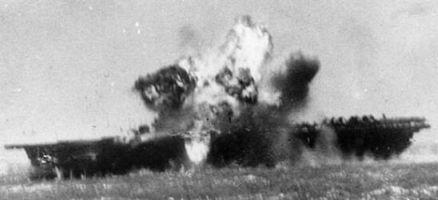
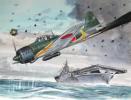
"... nothing was more terrifying than a kamikaze attack.
Grainy black-and-white footage of Japanese fighter
aircraft plunging into the decks of aircraft carriers,
shown repeatedly on television, also formed the most
enduring images of the war for several postwar
generations of Americans...


Such fanatical resistance on the part of kamikaze pilots
convinced many Americans in the military at the time,
and many American civilians afterward, that an invasion
of Japan would lead to equally fanatical suicide attacks
by ordinary Japanese, resulting in millions of
casualties on both sides...


who were the kamikaze pilots? What motivated them, and
what were they thinking and doing in their final hours
before they took off in their bomb-laden planes? What
did their families, friends and those in the local
villages near the kamikaze bases think...


The pilots were usually kids, farm boys who joined not
only out of patriotic duty but for the adventure. One
boy, Iwao Fukugawa, would receive training, watch his
friends fly off to death, but survive and go on to a
successful postwar business career. Fukugawa came from
an exceptionally close family, who would visit him while
he was in training, bringing him food, which he readily
shared....


The story of the girls of Chiran, the Nadeshiko unit, is
little known, even among World War II history buffs, and
is here exceptionally well told. The girls, who were
only 14 or 15 years old at the time, were ordered to
work at the Chiran base. They cleaned the base and
prepared meals for the pilots, most of whom were only a
few years older than themselves.


It was a experience of unimaginable trauma for the
Nadeshiko girls, who spent days befriending the pilots,
watched them fly off to their deaths, and then turned
around to welcome another fresh batch of young men that
they knew would soon be dead. Like the pilots who
survived, the girls remained close-knit friends after
the war. A few of these girls, now grandmothers in
their 70s, continue to meet regularly in Tokyo...."
End of quote.


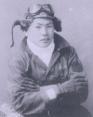
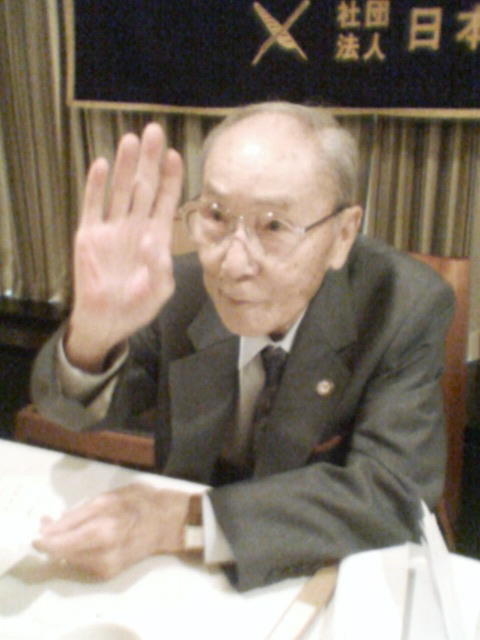
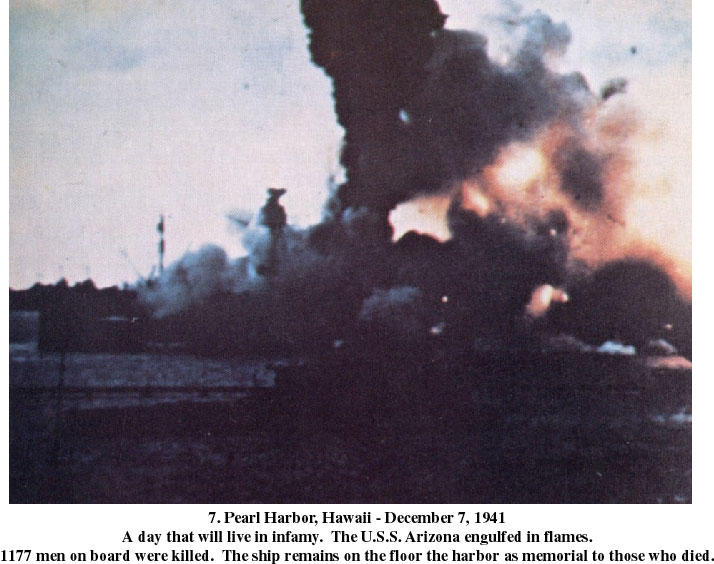
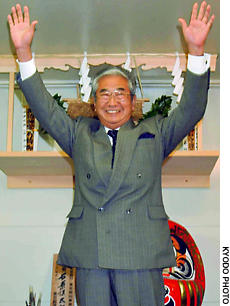
This photo of Zenji Abe, "in the morning hours of Dec.
7, 1941, Lt. Zenji Abe took off from the flight deck of
the aircraft carrier Akagi bound for the U.S. naval
base at Pearl Harbor. Abe, now 89 and battling cancer,
could not have known that he would play a part in one of
the most important historical events of the 20th
century. He is believed to have taken part in the
sinking of the "Arizona," which, more than any other
ship that went down, symbolized the enormity of the
event. Japan's attack on the base at Pearl Harbor would
become the rallying point for America's entry into the
war and would be remembered for decades as a day of
infamy."

Book :
BLOSSOMS IN THE WIND: Human Legacies of the Kamikaze, by
M.G. Sheftall. NAL Caliber, 2005, 480 pp.

Monday, August 01, 2005

60 th Anniversary : Japanese and American Perspectives on the Emperor Hirohito and World War II in Asia


Hirohito and History:

Japanese and American Perspectives on the Emperor
and World War II in Asia

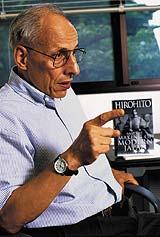
by Herbert P. Bix

July 30, 2005


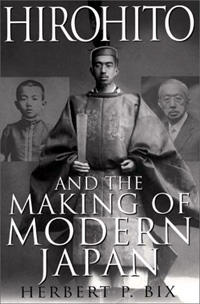
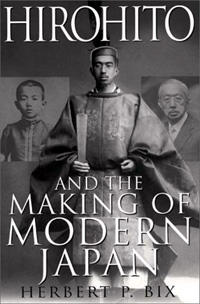
Herbert P. Bix, author of Hirohito and the Making of
Modern Japan (HarperCollins, 2000), writes on problems
of war and empire. A Japan Focus associate, he
prepared this article for Japan Focus. Posted July
24, 2005. Quote :

"For nearly 60 years many Japanese have been struggling
honorably to come to terms with the China War and the
Pacific War, and indeed their entire imperialist past.
But their struggles never take place in a vacuum.
Trends in history, politics, international relations,
and even culture, shape them. During the occupation
years (1945 to 1952) neonationalists who rejected the
Tokyo Trial and justified the lost war seldom spoke
out. At that time, Japanese who sought to grasp the
war experience, end the era of irresponsibility, and
develop a critical historiography went virtually
unchallenged.


Regression from a critical to an affirmative view of
the war began only after the occupation ended. In the
late 1950s the trends became quite visible. Over the
1960s influential writers, including Hayashi Fusao,
laid the basis for a comprehensive denial of war
atrocities. His views were immediately challenged and
ever since, the pendulum has swung back and forth.
Today, Prime Minister Koizumi and like-minded
conservatives in the LDP visit the Yasukuni Shrine or
approve history textbooks that whitewash the crimes
committed in past wars, then insist that foreigners
shouldn't criticize their actions for they are
essentially domestic issues. But Japanese historical
consciousness about the lost war is not a matter
solely for Japanese.


The stream of right-wing revisionism that runs down to
the present, justifying Japan's wars in 1931, 1937,
and 1941, has always been contested. But the
conditions that favor the rise of these regressive
views, or that make it feasible to express them
publicly, are a product of changing international and
domestic political conditions. And even when such
views seem to dominate mainstream media discourse,
that does not mean they are universally held.
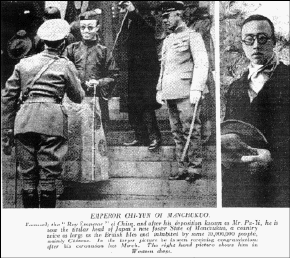
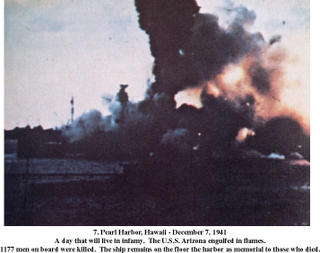


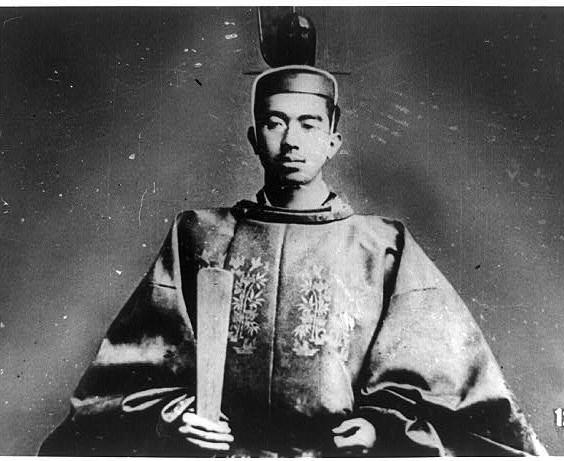
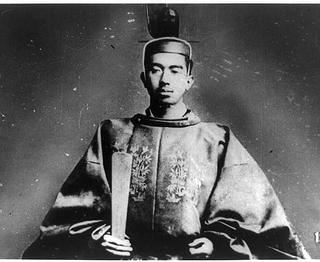
Before and during World War II, a chrysanthemum taboo
shielded the Japanese monarchy from view, making it
extremely difficult to critically scrutinize Hirohito.

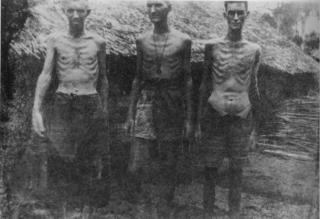


After the war, the US occupation's laudatory and
exculpatory view of Hirohito, one quite similar to
that put forward by ruling groups in Japan, prevailed.
Academic circles in the US and Britain either shied
away from contemporary emperor studies or followed
unquestioningly the official government line. The
bilateral relationship determined their image of the
emperor.

American public understanding of Hirohito's role in
the political process was almost non-existent. The
conventional wisdom held that he had been a mere
figurehead. Passive and powerless, he acceded to, but
never actively backed, the decisions of the
militarists to wage all-out war in China in 1937, and
to go to war with Britain and the US four years later.
The conventional wisdom also described Hirohito as a
pacifist, an anti-militarist, and a principled seeker
of diplomatic solutions to problems. Most of all, it
insisted that he was both a normal constitutional
monarch, and a courageous loser who in August 1945 had
acted to take sole responsibility for what had
happened.


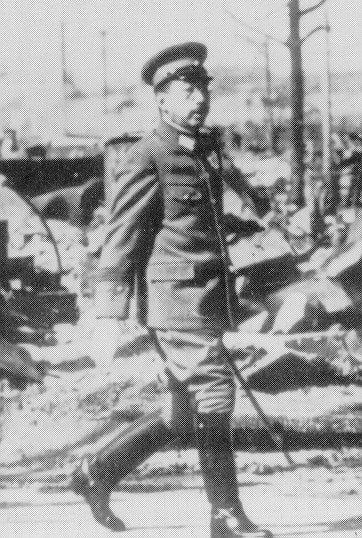
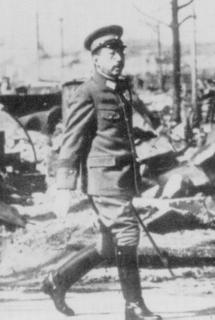
(Hirohito at Dunkirk, 1921)

The emperor was a complex, stubborn, conflicted, and
nervous man. During the first two decades of his
reign he gave full attention to protection of his
imperial house and preservation of the Japanese
empire. From early boyhood he had been educated in
both Confucian and idealized samurai values. This
failed and the culpable political leader and supreme
military commander -- who led Japan on a disastrous
course of empire and war -- survived his mistakes.
Thanks to the efforts of the US and Japan's old guard
leaders, rather than being deposed with Japan's
wartime defeat, he remained on the throne for the rest
of his life, working to perpetuate Japan's satellite
relationship to the U.S. The decision to preserve the
monarchy and retain Hirohito served US interests of
preserving stability. But it delayed the Japanese
people's confrontation with their wartime past,
contributed to the censoring and falsification of
wartime history, and ultimately acted as a brake on
democratization. The ghost of Hirohito still looms
behind the misunderstanding and distrust of Japan that
exists today in many Asian countries.


Hirohito assumed his role as commander in chief with
the imperial army's takeover of Manchuria in autumn
1931. Caught psychologically unprepared, he hesitated
at first, uncertain of himself, but once the
"incident" proved successful, his "realism" and
opportunism asserted itself. He jumped on the
military bandwagon, and quickly became the most
important promoter of the new course of territorial
expansion. Afterwards, by numerous calculated acts of
commission and omission, he sanctioned the destruction
of Taisho democracy and fostered indoctrination in
militarism and ultranationalism.

Then in late summer of 1937, all-out war between
Japanese and Chinese nationalist forces began. Only
then did Hirohito begin to find his stride as a
supreme commander actively intervening in military
decision-making. For four years he supervised the
deadlocked conflict in China, living his
commander-in-chief role day and night. He became more
willing to run risks with Britain and the United
States, and more accustomed to making operational
interventions, more persuaded by the rhetoric of the
"new international order" that Japan sought to create
in East Asia. Finally, in October 1941, he ignored
opportunities for peace -- such as appointing a
cabinet headed by a member of the imperial family --
and he elevated General Tojo Hideki to the prime
minister because he supported Tojo's policies.


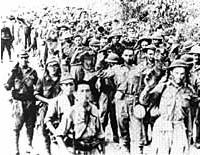
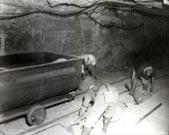
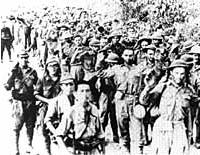
(Photos of L tenney. After surviving the infamous
Bataan Death March, a 60 mile forced trek through the
jungle during which prisoners were subjected to
extreme brutality by Japanese soldiers, Dr. Lester I.
Tenney spent three-and-a-half years as a prisoner of
war. Shipped to Japan, he worked for two years under
brutal forced-labor conditions for Japanese
conglomerate Mitsui & Co., Ltd. Now a 79-year old
retired professor of Arizona State University, Tenney
has filed a suit in Los Angeles Superior Court seeking
compensation for his forced labor and damages for
torture and injuries suffered at the hands of Mitsui.)


The US authorities who controlled occupied Japan
wanted to maintain the monarchy and protect Hirohito
as a means to insure his support for occupation
reforms. But they would do so only after stripping
him of all political power and subject to his
cooperation in reforming Japan. General MacArthur and
the Truman administration calculated that they could
use the emperor to demilitarize Japan, change the
Meiji political structure, and pursue democratizing
reforms. The first was easy to accomplish because
Japan's ruling elites had already decided to
demilitarize and get the jump on MacArthur before he
even arrived. But the democratization goal proved
difficult and after a few years American officials
prematurely abandoned thoroughgoing democratization in
order to wage a cold war with the Soviet Union.


Keeping Hirohito on the throne until he died led to
the falsification of history. Forging his credentials
as a pacifist when, in fact, he had been a staunch
imperialist and had exercised leadership in support of
war, did enormous damage both in the short and long
term. Because Hirohito said there was a national
emergency, young Japanese men served as loyal
soldiers, invaded other countries, and felt justified
in killing the enemy. The great "project" of nation
building in Manchuria had been his project, so too the
China War (1937?45) and the Pacific War (1941?45).

The great postwar cover-up of Hirohito's role, the
whitewashing of history that it entailed, sowed
distrust of Japan in China, Korea and other lands that
had suffered Japanese occupation and colonization.
Japan's political elites of course participated
energetically in the cover-up, but it went
unchallenged by other leaders, too, such as Stalin,
Chiang, and Mao.

In helping legitimize a "symbol emperor system"
predicated on new historical myths, American
policymakers acted on the idea that the monarchic
principle and Western-style democracy were compatible.

That very premise, however, blunted the full potential
of the democratic revolution that Washington had just
initiated. The reformed Japanese monarchy, which the
United States supported, immediately tilted the
struggle for democracy in postwar Japan in favor of
the "moderate" politicians who had shared in the
failures of the old regime. These men still saw the
lost war as a just war for self-defense and for the
prosperity of the peoples of Asia.

Unlike many of his leading generals and officials,
Hirohito was never investigated and tried judicially,
so that the medieval principle of legibus solutus --
the ruler is above the law -- still stands, and must
be combated afresh by every generation. The US, to
its great discredit, saw to that.

Usually the setting of national holidays is a domestic
matter and seldom provokes foreign criticism, except
where the commemoration of wars are concerned. In
this case, pressure from conservative politicians to
change "Arbor Day" in honor of the environment, to
"Showa Day" in honor of Emperor Hirohito, increased
during the 1990s. Even so, in 1997 the bill failed to
pass. But the conservatives persisted and it finally
became law. Should we not see this as another attempt
to whitewash history?

Prime Minister Hosokawa Morihiro in 1993, and Prime
Minister Murayama Tomiichi in 1995 had acknowledged
that Japan fought wars of aggression. But rather than
following through on their international pledges by
conducting public investigations of the war and
engaging in historical reflection, the LDP whipped up
a backlash against a shared understanding of the lost
war. For example, Internal Affairs and Communications
Minister Aso Taro went to work on behalf of the
right-wing "Association to Write New History
Textbooks" (Tsukurukai), a purveyor of whitewashed
textbooks. Nakagawa Shoichi, currently Minister of
Economy, Trade and Industry is a supporter of
Tsukurukai, as is Tokyo governor and writer Ishihara
Shintaro. The current LDP Secretary-General Abe
Shinzo, has lobbied for revision of the 1947 Basic
Education Law in order to place more stress on
"patriotic education." In these and various other
ways, neonationalist LDP politicians simultaneously
support an end to the teaching of the darker side of
Japan's national history, while they prepare the
ground for a future revision of Japan's peace
constitution. Their ultimate aim is to break down
popular support for the uniquely internationalist
peace norm written into Article 9 of the Constitution
of Japan.

Interestingly, in 1994, the Chinese government also
began emphasizing "patriotic education," centered on
teaching the history of the "Anti-Japanese War." So
the possibility exists that neonationalist currents
will feed off one another. Peace groups everywhere
need to understand the politics of the Northeast Asian
nations and work to prevent that from happening. Never
has the need for historical reflection on World War II
in Asia been greater."

end of quote
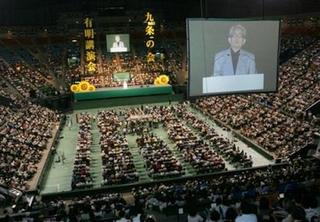


I would like to add to the text of Professor Bix that
thousands of people gathered to voice opposition to
possible revision of the war-renouncing Article 9 of
the Japanese Constitution in Tokyo on Saturday July
30th. The public meeting was sponsored by the Article
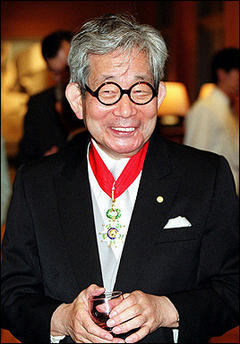
9 Association, which was established in June last year
by nine prominent intellectuals, including Kenzaburo
Oe, 1994 winner of the Nobel Prize in Literature, to
seek a coalition of various political powers and the
public to defend the constitutional clause.


Kenzaburo Oe made a speech during the rally with
9,000 people to call for protection of Japan's
pacifist constitution, especially opposing recent move
to revise its war-renouncing Article 2005 at Ariake
Coliseum in Tokyo.

Friday, July 29, 2005

Japan and China ready to debate their Historical Great Leap and Diplomatic Polyphony?


"There are 2,000 years of (friendly) exchanges between
China and Japan. The history of the exchanges was much
longer than that of confrontations," Zhao Qizheng,
minister of the Chinese State Council Information
Office, said at the opening ceremony of the photo
exhibition in Tokyo describing the past 60 years of
history between Japan and China, after WW2. "We hope
people, especially the young people in both countries,
will gain confidence in our future" through the event."
Also that day the words of the Diet HOR Speaker Mr.
Yohei Kono who analyzed the situation in Europe between
France and Germany were very important, I think, as an
image of what ex-foes can do to forgive and prepare
future generations to live in peace and development.

I mentioned to Minister Zhao that I still study Chinese,
he seemed very enthusiastic, or at least, happy to speak
a few words of Chinese In Tokyo with a French European
journalist and foreign correspondent. A rare Gaijin
present on that day.

Actually and it is an academic view, the only way to
consider history is to open debates. By debating and
confronting in a positive manner all elements and try to
reach a majority of agreements is the long and fruitful
way which would avoid any form of impeachments based on
discriminations or confrontations. It is largely
admitted that the last stage of discrimination has one
word : genocide. It is to be firmly addressed. In France
too, politicians have serious difficulties to address
history and among many topics, the colonization. There
is not much debate about it in France, is there?

By being able to attend this remarkable and intelligent
event where I felt very comfortable, I also had the
delectation to be in interaction between the 2
communities and witness debates and frank exchanges. An
idea came to my mind immediately with one certitude :
the day when Japan and China will become two friends,
the planet Earth will never be the same! The Heavens and
the Sun, after all, are made to merge... I therefore
strongly hope that my perceptions of understanding and
manhood I felt today with Chinese and Japanese
societies, are a landmark on the road of fellowship and
to be repeated.

But! There were one bad and one good news on that day of
July 28th :

Quote :

Tokyo's education board adopted a history textbook on
Thursday that critics say whitewashes past Japanese
militarism for use at 26 junior high schools in the
capital, a decision that could anger China and South
Korea. Japan's Education Ministry approved the new
edition of the textbook, written by nationalist
scholars, in April, sparking protests from China and
South Korea where bitter memories of Japan's aggression
before and during World War II persist.


The six-member Tokyo education board adopted the
textbook for use at four state-run schools and 22
schools for the blind and deaf and the physically and
mentally handicapped, said an official at the Tokyo
metropolitan government. "The decision was reached
unanimously," he said, adding that the textbooks would
be used for four years starting next year.


The board also adopted a civics textbook, produced by
the same group of scholars, that has upset South Korea
as it reiterates Tokyo's claim to two tiny islands
disputed with Seoul, for use at the 22 schools for the
handicapped. Because of a complex administration system,
the board has power to approve textbooks for only a
handful of the hundreds of junior high schools run by
public authorities in Tokyo. Earlier this month, the
education board of the city of Otawara in Tochigi
prefecture, 150 km (90 miles) north of Tokyo, became the
first municipal government to adopt the latest versions
of the two disputed textbooks.


Critics say the history textbook, sponsored by the
Japanese Society for History Textbook Reform
(Tsukurukai), plays down the 1937 Nanjing Massacre in
China, ignores the sexual enslavement of women for
Japanese soldiers and depicts Japanese wartime actions
as aimed at liberating other Asian countries. A previous
version of the history textbook, approved in 2001, was
adopted by less than 1 percent of school districts
nationwide, but Tsukurukai and its supporters hope to
increase that to 10 percent with the new edition.
Opponents of the textbook are worried that given a rise
of nationalism in sections of Japanese society, many
state schools may adopt the textbook. The authors and
supporters of the textbook argue that the history text's
approach corrects a "masochistic" view of history which
they say has deprived Japanese of pride and patriotism.
The government has said the text does not represent the
official view of history. The Tsukurukai praised the
Tokyo board's decision and said it hoped other school
boards would follow suit.


(Zhao Qizheng)

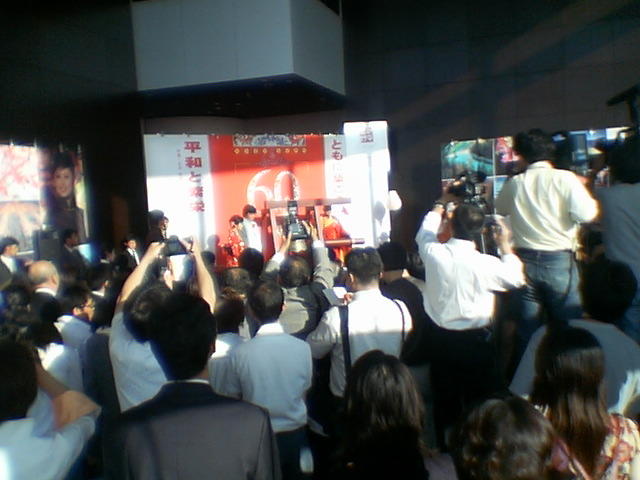
On the same day fortunately the Chinese government held
a ceremony at Mori Art Museum at Tokyo Roppongi Hills
superb location for an exhibit on the country's
relations with Japan after World War II from July 28 to
Aug. 7 at the Roppongi Hills commercial complex in
Tokyo, the State Council Information Office said
Wednesday. The exhibit will feature 220 pictures, chosen
from about 1,000 contributed by the two governments as
well as the private sector, which will be shown
according to themes such as 60 years of governmental and
grassroots-level exchanges, according to the office.


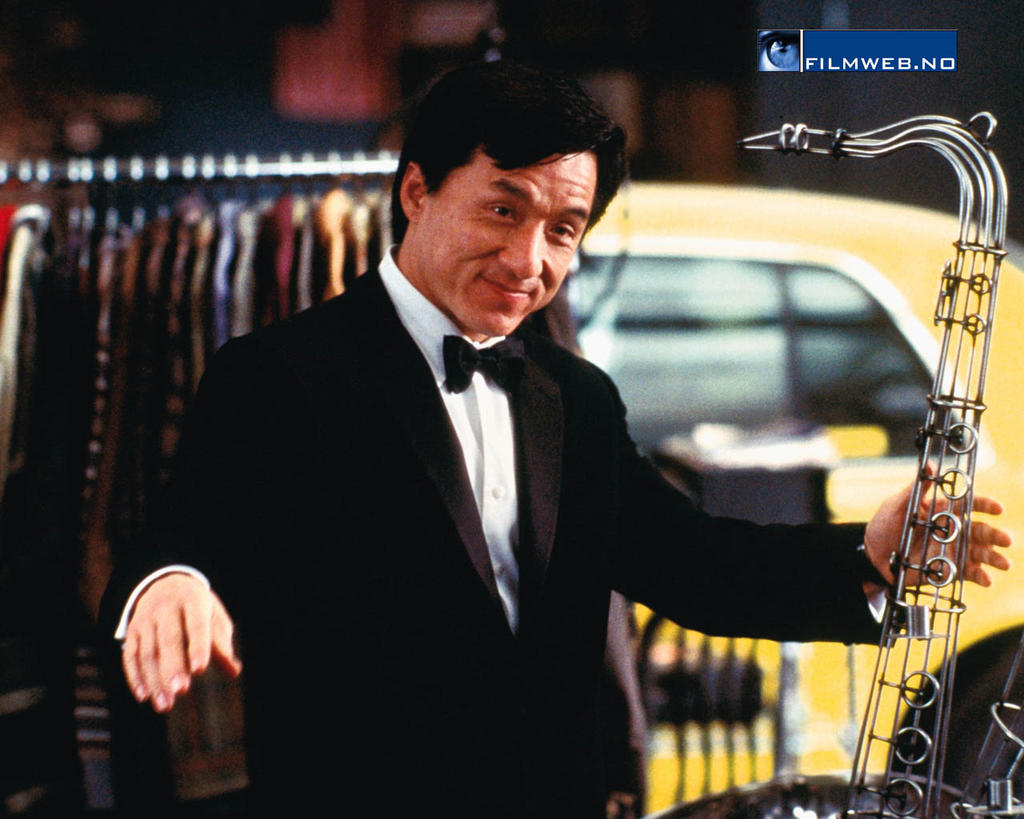
Japanese teenage table tennis star Ai Fukuhara, who
plays for the Chinese Super League club Liaoning, and
Hong Kong action star Jackie Chan attended the opening
ceremony on the first day of the photos exhibition.


(Jackie Chan)

"It is important for us to remember all aspects of
friendship, war and history," said Zhao Qizheng,
minister at the office. "We hope that the Japanese side
will also host a similar exhibit."

end of quote

Sunday, July 24, 2005

Tokyo Governor Ishihara tells France: Check the bill and Pay !


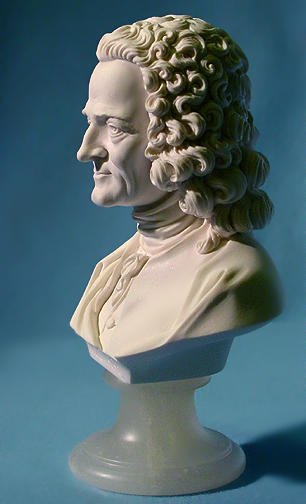
Francois Marie Arouet dit "Voltaire"


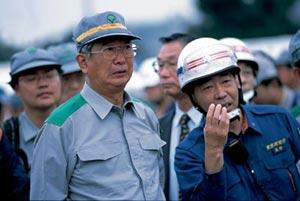
Tokyo Governor Ishihara Shintaro


The Tokyo Metropolitan Government has ordered a
Tokyo-based French school operated by the French
government to pay about 100 million yen in taxes as the
school is not eligible to receive tax exemptions.
Ishihara recently claimed that French language was not
capable of counting appropriately...


Quote :

"The move comes a week after a French-language teacher
and 20 others sued Tokyo Gov. Shintaro Ishihara over
what they claim were disparaging remarks about the
French language.

Following the issuance of an order by the metro
government in May 2004, Lycee franco-japonais de Tokyo,
based in Chiyoda Ward, had agreed to pay the amount,
which was levied as a fixed-asset tax and urban planning
tax for the 2000-2004 period, the officials said.

The school has yet to obtain the status of a legally
incorporated educational institution, a condition for
receiving tax incentives from the metro government, they
said.

"France does not have the idea of 'incorporated
educational institution,' " said Takehiko Anan of the
metro government's bureau of taxation.

Anan said that was why it took several years before the
French side agreed to apply to be authorized as an
incorporated educational institution and to pay the
taxes before the school gets the authorization.

Most schools catering to foreign children in Tokyo have
the metro government authorization as incorporated
educational institutions, which are exempt from the
fixed property tax and the city planning tax, he said.

The metro government had accorded the school exceptional
tax-free treatment, accepting its claim that it was
simply behind schedule in applying for the status.

However, the school did not take prompt action in
obtaining the status and the metro government decided to
impose the taxes in May last year, citing a need to
ensure taxation fairness.

Lycee franco-japonais de Tokyo was founded in 1975. It
stands on a site owned by the French government.


Last week, Malik Berkane, 46, principal of a
French-language school in Tokyo, filed a suit at the
Tokyo District Court, along with 20 other French and
Japanese, demanding an apology and 500,000 yen in
compensation for each plaintiff over remarks made by
Ishihara on Oct. 19.

Ishihara said French did not qualify as an international
language as it was a language in which you could not
count. "


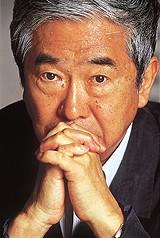
- By Japan Zone : Portrait of Mr. Ishihara

Ishihara Shintaro (1932- ) The Ishihara brothers, Yujiro
and Shintaro, made their very considerable mark on Japan
in the middle of the last century. The younger Yujiro
died in 1987 but still lives on as one of the country's
biggest cultural icons (something like Japan's Elvis
Presley). The elder Shintaro first achieved fame while
still in university when his novel Seasons of the Sun
(Taiyo no Kisetsu) won the Akutagawa Prize in 1955. When
Yujiro made his cinematic debut in the hit movie
version, it made big stars of both young brothers.


Shintaro's reputation grew after he entered the world of
politics in 1965. He was often outspoken and critical
even of members of his own party, the long-dominant
Liberal Democratic Party (LDP). Like his brother, he was
often referred to as a nationalist. The most famous
example of Shintaro asking his fellow countrymen to
stand up to the US was the 1989 book A Japan That Can
Say No, co-authored with Sony chairman Morita Akio. He
also angered Chinese leaders by making a statement that
their claims about the Rape of Nanking were exaggerated
or worse, fabricated, while also attacking their
policies on Tibet. In another incident, an Ishihara aid
was arrested for defacing posters of an opponent in
Ishihara's electoral constituency in 1983 (Arai Shokei
was a naturalized North Korean and the Ishihara office
was accused of spreading rumors that he would act as a
spy).

Ishihara's populism ensured that he rose through the
political ranks, but his maverick style meant that he
failed to establish any real power base. In particular,
he failed to form his own faction in the LDP. His
highest post was Minister of Transport in the 1980s. He
dropped out of national politics in 1995, disenchanted
with the lack of vision which was bringing the country
to the brink of financial ruin. But he could not stay
out of the limelight for long, and he ran for the post
of Governor of Tokyo in 1999. In his campaign, among
other things Ishihara called for the return of the US
airbase at Yokosuka, near Tokyo, for use as a civilian
airport. This certainly appealed to many people due to
Tokyo's reliance on the inconvenient Narita
International Airport. His "Tokyo That Can Say No"
slogan and attacks on his former party, by now suffering
the effects of scandals and a prolonged economic slump,
ensured him a landslide victory.

After his election, Ishihara continued to fan the flames
of controversy, for example by including in an address
to the security forces that they should be ready to
defend the country against rioting foreigners in case of
a major natural disaster. In particular, he used the
term "sangokujin", literally people from a third
country, but usually meant as a derogatory word for
people from Japan's prewar colonies of Taiwan, China and
Korea.

He doesn't apologize for what some critics call
xenophobia. "I am a nationalist," he said. "I like sumo
and I like kabuki, but I don't necessarily have
ethnocentric ideas that everything Japanese is better.
In the Japan-U.S. relationship, what I hate most is
Japan. It can't speak up. It has no national strategy.
Japan should design is own financial products that even
Americans will want to buy. But when America says no,
Japan just gives up."

Tokyo Governor Shintaro Ishihara recently fired a
broadside at Korean President Roh Moo-hyun, saying his
criticism of Japan was "a third-rate political
technique" to recover popularity at home. Appearing on a
Fuji TV interview program, Ishihara said Roh's repeated
criticism of Japan over its colonial abuses and the
Dokdo Islets was "a stopgap measure for President Roh to
recover some of his popularity." He added, "For a
politician it's a third-rate technique."


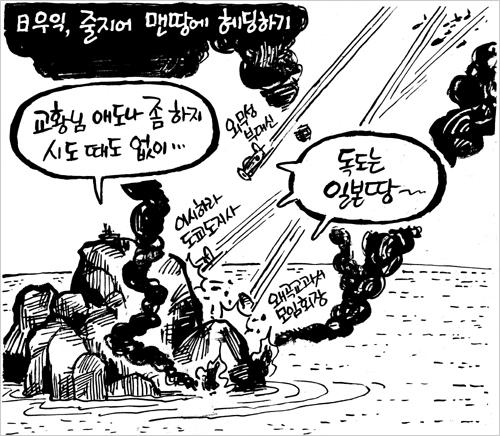
Cartoon : Kamikaze pilots including Tokyo Governor
Shintaro Ishihara and Senior Vice Foreign Minister
Ichiro Aisawa cry, "Dokdo is Japanese territory!" as
they slam into the rocky islets. The Korean police
guarding the island say, "Can't they just shut up and
mourn the pope?


- Profile of Shintaro Ishihara


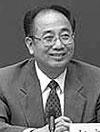
Shintaro Ishihara (born September 30, 1932), author,
outspoken Japanese nationalist, populist, and current
governor of Tokyo, was born in Hyogo Prefecture in
Japan. After winning the Akutagawa Prize (Japan's most
prestigious literary prize) when he was a 23-year-old
college student, he and his now deceased brother Yujiro
Ishihara, who was Japan's most popular movie star,
became the center of a youth-oriented cult. Ishihara has
stayed in the public limelight since then.

In the early 1960s, he concentrated on writing,
including plays, novels, and a musical version of
Treasure Island. He was involved in directing, ran a
theater company, traveled to the North Pole, raced his
own yacht, and crossed South America on a motorcycle.

He entered politics in 1965 via the long-dominant
Liberal Democratic Party (LDP), but was often critical
of it. In 1973, he joined with thirty other LDP
lawmakers in the anti-communist Seirankai, or Blue Storm
Group; the group gained notoriety in the media for
sealing a pledge of unity in their own blood.

In 1989, Ishihara came to the attention of the West
through his book, A Japan That Can Say No, co-authored
with then-Sony chairman Akio Morita. The book called on
his fellow countrymen to stand up to the United States.
He dropped out of national politics in 1995, but remains
a national political figure.

In 1999, he ran on an independent platform and was
elected governor of Tokyo. Since then he has undertaken
a number of bold and popular moves at the metropolitan
government level, such as imposing a new tax on banks'
gross profits and holding up a bottle of diesel soot as
he restricted the operation of diesel-powered vehicles.
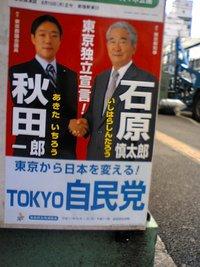
At the same time, he has gained notoriety for statements
referring to Tokyo-based Chinese and Koreans as
sangokujin , an old term literally meaning
"third-country person" which is now considered to be
derogatory. Ishihara also declared in a 1995 Playboy
interview that the Nanjing Massacre "never happened" and
was a "Chinese creation".


Governor Ishihara wanted to study the French language
when he was a school kid and asked his authoritarian
father to enter the Imperial university of Kyoto, but
his father denied this dream and obliged him to study
accounting (konin kaikeshi). Today, Governor Ishihara is
regarded as a potential future Prime Minister.

(Comments on the record from Tokyo Governor Ishihara
during an interview for TBS at Tokyo City Hall July 15th
2005, 22h35 PM)

Friday, July 22, 2005

Japan and his neighbors: " Problem" a former Tokyo cabinet minister says.


I recently wrote a column for my news station in Paris about Japan's difficulties facing China and other Asian neighbors. My point was among others balanced and I tried to focus on strategical issues including the assistance of US forces in Japan. I got this comment from a Kantei (Prime Minister bureau) official :

Extract

"It is overstatement to say Japan is badly liked of Asia
as the issue you have mentioned is mostly about Japan's
relationship with China. Asia consists of many more
countries and the title gives wrong impressions
concerning Japan in Asia.

Moreover, the reporting does not give any regard to the
fact that Japan is now a pacifist country which has not
engaged in a war or combat for past sixty years. This is
quite a feat for any country in this region. There is no
glorification of imperial past either.

I am disappointed with the reference to the American
forces in Japan as they are in other area of world as
well and does not merit special attention in this
context as this particular anchor does.

As a fast developing country China needs Japan and Japan
needs China in many ways. This is a view shared by both
country leaders and I believe your viewers would not be
served well by overemphasizing conflict between two
countries in this manner."

End of quote of this Japanese official who prefers to
remain anonymous...

Now... the real facts:


Born in 1935, Taichi Sakaiya was a bureaucrat of the former Ministry of International Trade and Industry before he became a novelist. He served as Minister of State for Economic Planning in the administrations of Keizo Obuchi and Yoshiro Mori

Quote :

"Meanwhile, no country in the world has more serious
political and diplomatic problems with its neighbors
than Japan.

The root cause of these problems lies in the way
politicians leave foreign policy to bureaucrats. There
is also the problem of sectionalism by ministries that
are determined to protect their turf. The Yasukuni
problem is no exception.


The government leaves it to the Foreign Ministry to
provide explanations about Koizumi's Yasukuni visits to
China and other neighboring countries. As a result,
Japan seems to be giving different explanations to
audiences at home and abroad.


In foreign policy, political judgment to choose what is
more important to the nation and give in to other
countries on other points is indispensable. Such
judgment is lacking in Japanese diplomacy.


The situation is so critical that I am reminded of a
comment by U.S. President Franklin D. Roosevelt on the
eve of the Pacific War. He said that Japan refuses to
compromise on anything.

Koizumi has remained adamant about making the shrine
visits since he first publicly pledged to make them when
he was campaigning for the Liberal Democratic Party
presidential election. If that is the case, he should
squarely face the Yasukuni problem as a religious
problem and not a political one.


He should explain his thoughts on Yasukuni Shrine and
make a concerted effort to win the understanding of
neighboring countries. Doing so would also be the first
step in sloughing off the practice of leaving diplomacy
to bureaucrats and recovering strategic foreign policy."


(IHT/Asahi: July 21,2005) end of quote

click the title to access the column