Wednesday, May 28, 2014

東京物語 A new Abenomics target could be : the "Love Society Arrow" ?


  Katsuhiko Fujimori

東京物語 Tokyo stories You know how I like Japan and the people here, but how unfortunate it is to see that Japanese seem to seal their eyes only on their smartphones and forget to watch people near by them in subway, office, cafes, sea side, mountain slopes… Impact is a withdrawal from the society? Almost true. But not necessary. There are also social and psychological reasons to this isolation on the rise. An other consequence is late marriage, no kids. Other impact: the aged society and lonely household with age parents abandoned from their kids. 

Why don't we get happy here to marry and live in family and get older with our beloved ones? The decrease of married couples living with aged parents and extended longevity, the number of single-person households in Japan is expected to reach 18.72 million in 2030, 36.5% of all the households!!  Now for the hard talk in particular, 1 out of 5 men in their 50s and 60s are expected to live alone in 2030. As the super single society approaches, solutions to such issues as social isolation and poverty are being sought out. 

 Yasujiro Ozu’s Tokyo Story

Fascinating briefing at the FPCJ Foreign Press center Japan yesterday with Mr. Katsuhiko Fujimori, Mizuho Information Research Institute, Inc., Chief Research Associate. My question to Fujimori san was related to the iconic movie Yasujiro Ozu’s Tokyo Story and what has Japan done in the last 50 years, since Tokyo Monogatari, to challenge the trend of  what can simply be sadness and loneliness of Japanese society. Can Abe and dynamic Tokyo Governor Masuzoe deliver or... is it just communication bla bla? 

Maybe a new policy for the Abenomics could be : the "Love Society Arrow!" 


Yasujiro Ozu’s Tokyo Story

Sunday, May 18, 2014

Tomioka Silk Mill 富岡製糸工場 recommended as "Unesco World Heritage"

Tomioka Silk Mill 富岡製糸工場 
Gunma prefecture 群馬県 Japan


Discovery travel of the Tomioka Silk Mill 富岡製糸工場, old city of Tomioka 富岡市, in Gunma prefecture 群馬県, Japan. It is located about 120 km northwest of Tokyo. it's Japan's oldest modern model silk reeling factory. Was established in 1872 by the government to introduce modern machine silk reeling from France and spread its technology in Japan.

In 1870, Paul Brunat, who worked in a French trading company in Yokohama, researched suitable locations for a silk mill in the Kanto region and selected the site in Tomioka City from among the candidates.

The construction began in 1871 and was completed in July the next year. Three months later the factory started operation. In the beginning, there were 150 silk reeling machines (300 basins), and about 400 female workers, many French teachers and workers came into Japan to teach the work to local Japanese women and operated the machines in the mill.

The lifestyle of the workers has been recorded in the diary of one, Wada Ei. In the silk reeling factory, 'you will be amazed by the huge area without supporting pillars for the silk reeling mill that was operated by 300 workers.'

I liked the detail about manpower: At first it was difficult to find workers, local people were afraid of what they called French "vampires" drinking blood... They enjoyed drinking a red liquid called... red wine

Late April 2014, Paris based Unesco advisory panel recommended giving "Unesco World Heritage" status to the Tomioka Silk Mill historic factory building as they are symbolizing Japan’s industrialization from the 19th century. Endorsement could be formalized at a meeting of the World Heritage Committee June 15-25, set in Qatar. Likely to be offered.

Already today tourists are visiting this attractive old city of Gunma prefecture. So, to go there, catch a Shinkansen to Takasaki, then ride the cute 2 cars train Joshin Dentetsu line to Joshu-Tomioka. It's a beautiful report / journey in the history of Japan industrialisation on the way to Karuizawa and near by Isobe Onsen.


Friday, May 09, 2014

"Journalist backtracks on best-seller after Nanjing switcheroo Former Times bureau chief shocked by his Japanese writer revisionist conclusion of own book"


 Henry S. Stokes at FCCJ


Hiroyuki Fujita at FCCJ

"Stokes, a longtime resident of Tokyo, did not know what was written in his own book." It says all. It shows the right wing attempts to vilipend the foreign media correspondents in their work on World War II issues was once more defeated. It was all of a trick that we discovered. It also says a lot on current administration whose nationalism sees to be a bit out of control to the point that the US administration of president Obama asked Japan to cool down: "U.S. President Barack Obama urged Japan on Friday to settle disputes over the issue of women, mostly Koreans, who were forced to provide sex to Imperial troops in Japan’s wartime military brothels, calling it a “terrible” human rights violation.” (JT April 25 2014)"

Part I

It is maybe time now to review treaties of impunity and to finally agree to settle history cases in a spirit of fairness, equity and justice and to make of World War II abominations at last a case of Victim's Justice.


I and other journalists have exposed for years of work here and overseas the numerous attempts of the Japanese right wing conservatives and their clones to whitewash massacres, slaughters, looting and misery by Japan Imperial Army during China and Korea invasion and during the South Strike to Malaya and Singapore, Indochina and the Philippines. Time to clarify in textbooks the JIA responsibility massacres during WW2 and settle the Nanking slaughter with the aim to produce fine documented archives in universities and schools and request from Allied nations, China, Russia, Japan and all concerned administration to open their archives. 2015, 70 years after the end of hostilities, could be a year to start such history mission and show more concerns with the obligation of remembrance ( Aka "Le devoir de Mémoire" in French )

Recently a few statements by Japanese press attacked the Fccj on history issues accusing the foreign journalists to be Peking and Seoul spies! And they quoted manipulated documents to justify their claims. Today, back-pedalling, one writer who can't hold a pen but who published a book with the aid of a Japanese right winger who "used" him admits that he was cheated: "Stokes, a longtime resident of Tokyo, did not know what was written in his own book."

This attack by Fujita against foreign correspondents was published in the column for the Sankei Shimbun column of March 29, Takao Harakawa accused foreign correspondents based in Tokyo of harbouring “blind belief” in the anti-Japanese propaganda being generated by China and South Korea. He bases this on his observations from a recent press conference that in his view descended into a “blame-Japan” fest.

“Interpreter at the event was Hiroyuki Fujita, an international journalist and translator of Henry Scott-Stokes’ recent book (in Japanese) titled, “Falsehoods of the Allied Nations’ Victorious View of History, as Seen by a British Journalist.” “Foreigners, especially citizens of the Allied nations (during WW2), tend to view the historical truth in terms of judgments handed down by the Tokyo war crimes tribunal,” said Fujita. “According to that view, Japan must be the villain, and anyone who attempts to assert something at odds with that is stereotypically tarred as a revisionist who is attempting to gloss over history. One of the very few correspondents who’s an exception to this would be Mr Henry Scott-Stokes, who has really done his homework on the issues.”

For the anecdote, I can add that for months I often watched Fujita entertaining Stokes at lunched at the bar of Fccj where Fujita claims that he received all instruction and data from Stokes. But I never saw Stokes or Fujita writing documents or engaged into working sessions there. Fujita is the same right wing clique who claims that foreign journalists are Chinese and Korean spies...
Poppycock!


Part II 

Now today's story in Japan Times: "Journalist backtracks on best-seller after Nanjing switcher"

http://www.japantimes.co.jp/news/2014/05/08/national/history/journalist-backtracks-best-seller-revisionist-switcheroo/#.U2wRFV59v1o

Former Times bureau chief 'shocked' by revisionist conclusion of own book
By Ben Dooley and Kyodo news agency.

MAY 8, 2014 


Former New York Times Tokyo bureau chief Henry S. Stokes should have reason to celebrate. His latest book “Eikokujin Kisha Ga Mita Rengokoku Sensho Shikan no Kyomou” (“Falsehoods of the Allied Nations’ Victorious View of History, as Seen by a British Journalist”) has moved 100,000 copies in the five months since its December release, according to its publisher Shodensha.
The mashup of journalistic anecdotes from the front lines of Japan’s modern history and hard-nosed arguments against its responsibility for World War II atrocities has made the 75-year-old Stokes a darling of the country’s resurgent right wing. With the slim volume popping up on best-seller lists across the nation, its author has found himself in the brightest spotlight of his career.
There is just one problem — until a recent interview with Kyodo News, Stokes, a longtime resident of Tokyo, did not know what was written in his own book.
Now, the former reporter, who reads and writes only a little Japanese, says he is “shocked and horrified” by the book’s conclusion that the Chinese government fabricated the Nanjing Massacre, describing the claim as “straightforward right-wing propaganda.”
The book’s translator, Hiroyuki Fujita, “smuggled” the rogue passages into the work, Stokes says, adding that the conclusion was “just spooned into the text.” Fujita admits that he added his own language to the book but argues that he closely based his additions on Stokes’ own views.
Stokes, who suffers from advanced Parkinson’s disease and cannot easily type or use a pen or pencil, entrusted the book’s production to Fujita and Hideaki Kase, two men with close ties to the Society for the Dissemination of Historical Fact, a nonprofit educational group that advocates “revisionist” positions on Japanese history.
At Kase’s urging, Stokes sat with Fujita for over 170 hours of interviews about his journalistic career and his self-described “right of center” political views. He says the men told him that they would translate the interviews into Japanese and then shape them into a book.
Stokes agreed to participate in the project, despite warnings from family and friends to be wary of the men, whom he describes as “personal, close friends.”
According to Stokes, Fujita had assured him that “90 to 95 percent” of the book was based on their interview sessions. While Fujita reiterated these claims, he would not comment on what other additions he had made to the text and declined multiple requests to share the recordings.
“As I’m being interviewed by these people, I would trust them to stick by the record,” Stokes said. “And if they haven’t done that, they have let me down and let themselves down.”
The “record” of Stokes’ comments on Nanjing is decidedly mixed. On one hand, the claims made in Stokes’ book appear, almost word for word, in an article attributed to him in the March 2014 issue of WiLL, a hard right-wing Japanese magazine, edited by Kazuyoshi Hanada. Similar comments appear under Stokes’ name in a series of interviews in Yukan Fuji, a popular evening tabloid.
But, in the March issue of Voice Magazine, another Japanese-language publication, Stokes expresses a very different opinion on both subjects. In a translated response to a question about Nanjing by reporter Taka Daimaru, Stokes says that he “can’t support” right-wing arguments that the massacre never happened, because they “aren’t realistic.” Similar comments appear in an interview with journalist David McNeil that ran in the April issue of the Foreign Correspondents’ Club of Japan’s magazine Number 1 Shimbun.
Despite the contradictions, Fujita, Daimaru and McNeill all say that they have faithfully reproduced their conversations with Stokes. Hanada was not available for comment.
“In the process of compiling the Japanese version of course I summarized or interpreted basically what he said,” Fujita said, adding that the quotation marks around the words Nanjing Massacre make it clear that he intended to convey Stokes’ position that the Chinese government has exaggerated the scale of the massacre, not that it is an outright lie.
Japanese readers, however, have interpreted the text differently. In a tweet sent two days before the interview, for example, one wrote that Stokes claims “there is not even one piece of evidence that the Nanjing Massacre occurred.”
That conclusion could not be further from the truth, Stokes says.
Over the course of multiple interviews with Kyodo News beginning on April 5, Stokes repeatedly expressed a view on Nanjing that directly contradicts the remarks attributed to him in both his own book and the articles in WiLL and Yukan Fuji.
“I don’t come within ten-thousand miles of this stuff as a position,” he said, dismissing the view that Nanjing is a fabrication as “ludicrous,” “fatuous” and “utterly, utterly asinine.”
“The stance I take is that ghastly events occurred in Nanjing,” Stokes said, adding that he does, however, disagree with Chinese assessments that 300,000 people died during the six days when the Imperial Japanese Army overran China’s then capital. He also objects to the use of the term massacre, preferring the more anodyne “Nanjing Incident.”
Stokes’ claims are supported by one of the project’s transcriptionists, who resigned for “ethical concerns” stemming from what she described as major differences between Fujita’s interviews with Stokes and the book’s contents. The text, she said, takes out of context or deliberately ignores several of Stokes’ statements, especially on the subject of Nanjing and the comfort women.
Stokes’ career as Tokyo bureau chief for the left of center New York Times, where he worked from 1978 to 1983, makes him the perfect vehicle for providing credibility to historical revisionists’ arguments against Japan’s responsibility for wartime atrocities, according to Takesato Watanabe, a professor of media ethics at Doshisha University in Kyoto.
Fujita admits this was a consideration in producing the book. “If I wrote this,” Fujita said, “people would say that I’m right-wing or a revisionist, and the things I say can’t be trusted, because I’m defending Japan.”
“If a foreign correspondent says it for me,” he added, “no matter what the content . . . people will say it’s interesting.”
Although Fujita played a major role in the book’s production, “without Kase-sensei (Mr. Kase), this publication was not possible,” he said, adding that he had consulted with Kase on the book’s topics and what questions to ask Stokes.
While admitting that he introduced Stokes to the book’s publisher, Kase denied that he had any direct role in writing it or that he knew about Fujita’s additions. Kase wrote the book’s afterword.
Stokes met Kase, who describes himself as a “diplomatic critic,” in the late 1960s. In the years following, Kase became an adviser to former Prime Ministers Takeo Fukuda and Yasuhiro Nakasone.
Kase, 77, has stayed active in conservative political circles in Japan. In addition to his position as the chairman of the revisionist group, he has been involved with several other right-wing organizations, most notably as a “representative” and “auditor” to the board of directors of the Nippon Kaigi (Japan Conference), a hard-right political group with links to the administration of Prime Minister Shinzo Abe.
In November 2012, Kase’s name appeared alongside Abe’s in a full-page newspaper advertisement in the New Jersey newspaper The Star-Ledger that described comfort women as high-paid prostitutes and made a number of additional claims that closely resemble those found in Stokes’ book. The ad instructs readers “eager to look further into the truth” to visit the website of the Society for the Dissemination of Historical Fact.
This is not the first time that Kase’s name has appeared in connection with a literary sleight of hand. In the 1990s, a Korean journalist accused the prolific author of ghostwriting “Minikkui Kankokujin” (“Ugly Koreans”), a Japanese best-seller that argues Japan’s occupation of Korea had been good for the country. The book’s original author later came forward and accused Kase of making substantial revisions to the text, which was published under a Korean pen name. Kase says he “corrected” the book, but denies writing it.
Stokes has requested that Fujita issue a correction to his book. Fujita says that he will correct the record in a forthcoming English edition, but there are currently no plans to amend the existing text.
Contacted by Kyodo News, the publisher said that he was “surprised” by the allegations and that if true a correction would be issued.
Despite his objections, Stokes refuses to assign blame for the book’s contents to the men he calls friends.
No matter how much he may disagree with the end result, “If I’ve been taken advantage of, it’s with my complicity,” Stokes said. “And, it’s my responsibility and my fault.”

[We felt as important to publish here the whole story of JT as document to future researchers]


Part III

The FCCJ magazine Number 1 Shimbun journalist comments about the right wing attacks (in the Sankei group for instance) against foreign media in current edition of the press club magazine. Editor is Gregory Starr. 

Siegfried Knittel
Freelance journalist (Germany)

Martin Fackler
New York Times (USA)

Henry Scott Stokes
Yukan Fuji columnist 

Joël Legendre-Koizumi
RTL France Broadcasting (France)

Justin McCurry
The Guardian (UK)

Fuyuko Nishisato
Producer, ZDF TV (Germany)

David McNeill
The Independent (UK)


En langue française:

"Au Japon, fausse audace économique, vrai nationalisme"par Katsumata Makoto.

Le Japon à l’heure du virage nationaliste, par Martine Bulard.

Last but not least, the video of the conservative Fujita asking to retrial Tokyo Trials


“The Henry S. Stokes nationalist book controversy” on Youtube.


Rq: The Tokyo War Crimes Trials (1946-1948) :
“On October 6 MacArthur received a directive, soon approved by the other Allied powers, granting him the authority to proceed with the major trials and giving him basic guidelines for their conduct. As they had done in Germany, the Allies set up three broad categories. "Class A" charges alleging "crimes against peace" were to be brought against Japan's top leaders who had planned and directed the war. Class B and C charges, which could be levelled at Japanese of any rank, covered "conventional war crimes" and "crimes against humanity," respectively. On December 23, 1948, General Tojo and six others were hung at Sugamo prison.” (PBS.org)


Conclusion

There is something sinister in this poor episode of what appears as a manipulation. An old man suffering form Parkinson disease is played-friend in this later sense of hypocrisies by a conservative right-winger and many others today in Japan are approaching the foreign observers and media to exonerate Japan from war crimes and history massacres during WW2 and early stage during the colonisation of Korea, China and South East Asia. 

Errors may have been happening in the search for justice from all parties. But it's maybe time now to review treaties of impunity and to finally agree to settle history cases in a spirit of fairness, equity and justice and to finally deliver, without equivocal statements, "Victim's Justice." A duty to honour for the peace, security and prosperity of East Asia and Pacific. 

In no way such a group of manipulators, without any desire to apologise and repair, may belong to the collective of FCCJ Bona Fide members unless an "Amende honorable" is properly addressed and a review by the Board of Directors of what happened within the walls of our news gathering devoted institution.


Update May 13, 2014 

The Parkinsonian suffering author changed his mind. But the Kyodo press agency keeps its first recorded interpretation: "...Kyodo News in turn released a statement dated Friday, saying it was “confident in the accuracy of the article,” which it said “drew on its interview with the former Tokyo bureau chief.” The agency also said the interview was taped."

in Time, Kirk Spitzer news-story: “Lucy Birmingham, president of the Foreign Correspondents Club of Japan, said the foreign press corps in Japan has come under increasing attack from conservative news media for alleged anti-Japanese bias in recent years, and pressure to toe the line is likely to continue. “It’s difficult to know exactly what Henry Scott Stokes’ views are. He has been quoted as saying diametrically different things in different publications,” says Birmingham, a freelance writer who has written for TIME and other publications."


Tuesday, May 06, 2014

Envoyé spécial sur Okinawa - RTL Monde (RTL 世界)


On the occasion of the visit of Japan prime minister Shinzo Abe in Paris, I report about the situation on Okinawa islands, US military presence in Okinawa, with Futenma, Nago and Henoko, about the economic situation, the long expectation of Okinawa people towards Tokyo and Washington. I also focus on Okinawa's economy, on media and cultural life. I attend art festival and the Yoshimoto Kogyo 6th film festival. Okinawa, and her people, an oceanic pearl in the China seas is aspiring to a more natural life and the ability to use her economy opting for the end of this enduring traumatic "cold war" atmosphere. This is seen lately with the "territorial dispute" between China, Korea and Japan. RTL Monde, special assignment Joel Legendre, anchored by Philippe Robuchon.

My story 3'38”:

http://soundcloud.com/jo-l-legendre-koizumi/rtl-monde-philippe-robuchon-04-mai-2014-okinawa-esp-joel-legendre

My programme RTL Monde on RTL France

http://www.rtl.fr/emission/rtl-monde/ecouter/rtl-monde-du-04-mai-pologne-okinawa-afrique-du-sud-7771697819


Tuesday, April 29, 2014

Invited on NHK-WORLD TV Show to talk about 3 things I like in Japan!


The show is called "Moshi Moshi Nippon". It was a great time and such fun. Love it.

One of the 2 announcers of Moshi Moshi Nippon show is Singer Kyary Pamyu Pamyu, 21, a star here in Japan. She kicked off a concert tour of Europe April 25, singing before 1000 fans in Paris. She will also perform in Cologne and London, US and Asia. She is on a world tour this 2014 and in between she hosts the show.

"... Joel Legendre-Koizumi a French journalist who works at Europe’s biggest media group RTL, talks about his favorites! He likes echinus, tofu and Kabuki. In this segment, he talks about his experience at a traditional tofu store... "

NHK-WORLD TV "Moshi Moshi Nippon" Link:
http://www.jibtv.com/programs/moshimoshinippon/20140425.html

It's fun for a wide young audience...

Wednesday, April 23, 2014


When Japan needs to face its own past and build up trust with Asia


US president arrived in Tokyo Haneda airport tonight around 1900 April 23rd 2014, Wednesday evening. He will meet prime minister Shinzo Abe at a sushi restaurant in Ginza, a private dinner "to get to know each other better" as a watcher told me. Obama will stay in a hotel during this trip but all discussions of the summit will be held at the Akasaka palace. First state visit by a US president since Bill Clinton. The main talk in town is about trade and TPP for the 12 nations of the Asia Pacific region. But the regional issues are on the agenda.

According to Kyodo agency, "Obama will explain the US intention to focus on Asia, a policy described as "rebalancing." Among the problems of the time, the maritime security, the territorial disputes with China and Korea (Senkaku/Diaoyu and Dokdo/Liancourt Rocks/Takeshima), the history divide between Japan and her neighbours China and Korea on war crimes such as the "Comfort Women." US and Japan are to discuss their security pact and also the future of Okinawa and the Collective Defence, with a more "offensive" policy by Japan administration under Shinzo Abe, both politics and economy.

Obama will meet the Emperor, 24th, have a state banquet in the evening, he will also visit a Shinto shrine: the Meiji Jingu. He will visit the Miraikan, the "national museum of emerging science and innovation" on Odaiba (the place where some of the Tokyo 2020 Olympics will be organised) then Obama will continue his Asia journey with a flight to Seoul to meet president Park Geun Hye, then Malaysia and the Philippines.

Analysing this visit and the current situation faced by Japan I read this interesting comment from social and literary critic Norihiro Kato in the Asahi shimbun: "Japan must face up to ‘3 distortions’ of WW II defeat", where he explained how Japan "experienced a dramatic downturn in its diplomacy with not only China and South Korea but also the United States." The sincerity of Japanese politicians vis a vis the other Asian partners needs to be re examined.

http://ajw.asahi.com/article/views/opinion/AJ201404220023 

And as an illustration that some segment of the Japanese so called "sentimental nationalist" seem not to appreciate the visit of US president Obama, I was quite surprised to see and especially to hear the demonstrations of the nationalists right wing, a few yards from the US embassy, prior to Obama 'Air Force One' landing on Tokyo Haneda airport. Some words could hurt young people and excessive sounds could hurt your ears, watch out... This is Tokyo daily reality.

http://youtu.be/s5RWf__R7PE


Thursday, April 17, 2014

Walk on the Wild Side of the Yasukuni Shrine


Many watchers are well aware that the majority of Japanese nationals are far away from the ultra conservative right wing who think their time has come with Shinzo Abe. It is nevertheless embarrassing to see foreigners doing their job and who are seen by some critics as hostile to Japan because they dare to talk about dark corners of the society. This is the comment of one of the most experienced correspondent in Japan who I met the other day. Indeed. Could we imagine, because it is sensitive, not to talk about the rise of the France National Front or about the violence erupting today in Ukraine or the religious conflict in Central African Republic?

The current prime minister, Abe, seems not to give such an importance to politics, according to his aides, but rather prioritises the economy and tries to make Japan rebound after decades of economy and financial crisis.

OK, but I remember that day when I saw Shinzo Abe attending a right wing gathering at Yasukuni, August 15th, 2012, a few months before his come back. He was addressing crowds under a big white tent, protected from the strong sun, many, many, many old men lined up in dark suits, scowling when foreigners came to visit the place, while the Emperor Akihito was sending a message of condolences and peace through the loudspeakers, at the near-by Budokan. It was around midday.

Before and since Abe took power, I know of plenty of gatherings of nationalists at Yasukuni, at Nagatacho, at Meiji Kinenkan and other dark rooms where nationalists gather to talk defeat and establish their plans against Koreans or Chinese, build their spider web like network in all aspects of the society, from administration to shinto religious associations, from police to armed forces, and mostly from all layers of society.

One day they gather to pray for the soul of Mishima, another day for people who died for the nation during this war of aggression. I’ve seen those who attend these parties even celebrating the return of the World War Two heirs to power. Many spread their anger speech on the internet, on TV (Channel Sakura, known for its support for Japanese right-wing causes) where nationalists launch revisionists campaigns etc. Many of them are distorting the real course of history and, as in my own country France with our FN, use democracy to advance their noisy and dangerous agenda. The right wing is globally on the rise as “Le Monde Diplomatique” recently wrote in a special publication.

Really? Or in Japan is it just because a few of them are very noisy, as Yakuza are, or have no common sense, no shame and lack essential dignity or are the Japanese so comfortable that they cannot identify or sense the notion of danger, and eventually are just lacking courage to say NO to these dangerous waves of anti democracy groups? As if violence and racial crimes were just belonging to the past?


Near by Yasukuni shrine, under the torrid midsummer heat and humidity, disobeying the priests command for peace and prayers, we can hear each August 15th the usual screaming noisy black lorries of the right wing made to scare politicians, citizens, and media, with arrivals of limousines filled with what appear to be Yakuza bosses, they look extraordinarily similar to those muscled men standing a few yards away from the shrine, in front of the food stalls, in the apparent absence of security from police forces. Making the place look like a strange no-law zone. We heard there the right wing nationalists people bragging that they actually pay the Yakuza to scare whoever is their enemy "du jour". I was told it often happens these last years in front of Tepco too where people shout slogans and receive money from the right wing to do so. Paid demonstrators somehow…

Therefore, and in spite of all, it is good to rebalance views about what is unfairly addressed to Japanese society, apathetic, sleeping, bureaucratised, fearing the days after when a powerful China would take over their lands, starting with their remote islands. That is in fact an improbable scenario when you know what China is going through these days, with its huge domestic problems ahead. Back in Japan, I can only wonder why is Abe courting these extremists people? Is he just tolerating them because he must to use the symbolism of Yasukuni to inspire a wider audience? And who is the audience?

Surely Shinzo Abe perceives and has been advised that hanging out with these characters does not make him appear to be a very sound politician. Politicians can either love lost causes and tilt at windmills or devote themselves to holding power. The marriage between these two things can never afford to be very long. What is Abe’s real quid pro quo and who does he really represent? Is this Japanese right wing network running far more deeply and more broadly in the Land of Yamato than we realise?


Also related:

http://www.monde-diplomatique.fr/index/sujet/nationalisme

http://www.japansubculture.com/understand-abe-but-focus-on-japan/


Update April 28th 2014: WW2 慰安婦 Comfort Women. China published archives.

China just launched a counter-attack on Japan in publishing Japanese archives documents seized in Changchun, ex capital of Manchukuo. 89 wartime documents were made public on Friday. Twenty-five files relate to "comfort women."

"The invading troops buried some of their archives when fleeing Changchun, the then "capital" of the puppet Manchu State, in wake of a war with the Soviet Union, as they had no time to burn the documents," Xinhua wrote.

"New Evidence Confirms Japan's War Crimes Against China." CRI reports: "The document records, mainly written in Japanese, reveal information about Japan's Kwantung Army deployed in northeast China, the central bank of Manchukuo and plans for some construction projects. The new information not only proves the brutal activities conducted by the Japanese troops, but also confirms the role of the Japanese government at the time in the "comfort women" issue, said Su Zhiliang, a professor and expert on comfort women at Shanghai Normal University. The records also unveil Japan's colonial rule in Northeast China, employment of slave labor, institutionalisation of sexual slavery institution in the military and involvement of 731 troops in performing human bacterial tests." EoQ

Also today in the Japan Times: "China releases trove of Japanese sex slave records" http://tinyurl.com/Ianfu

Also more details in the Global Times quoting Xinhua: http://www.globaltimes.cn/content/857026.shtml#.U12fBV59v1o

President Barack Obama said in Seoul Friday that: " Japan’s use of South Korean “comfort women” during the Second World War was a terrible and egregious violation of human rights. Followed by a strong criticism from Tokyo: "This issue should not be made into a political or diplomatic subject, said Katsunobu Kato, deputy chief cabinet secretary.

I was aware of this option of China having in mind to publish these Japanese documents after a recent press conference event held by Japanese scholars at the press club following events held by Japanese nationalists denying that such things happened under the Japan Imperial Army rule of Japan. (Here the Kwantung Army).

Remains to study the validity of the documents and once established, the consequences it would have on the East Asia region and on Japan policies. All options opened?

Here is the whole Xinhua new story:

Archives reveal "comfort women" official actions of Japan
Source:Xinhua Published: 2014-4-27 8:53:13

Forcing women into sex slavery and setting up "comfort stations" were official actions of the invading Japanese army during World War Two in Asian countries, newly publicized wartime archives reveal.

A total of 89 wartime documents were made public on Friday as a response to Japan's right-wing politicians' denial of its wartime crimes in China. Twenty-five files relate to "comfort women".

The use of "comfort women" was the state action of Japan during the war, said Su Zhiliang, a professor on the history of "comfort women" at Shanghai Normal University.

The actions harmed China, the Republic of Korea and Democratic People's Republic of Korea.

The archives showed that the first "comfort station" was in the Southeast Asian country of Indonesia on Java Island.

The invading Japanese army in northeast China, documented what happened during the war, revealing their criminality.

The files are from archives of the military police corps of Japan's Kwantung Army and the national bank of the puppet Manchurian regime, which are stored in Jilin Provincial Archives in northeast China.

The 25 files on "comfort women" include two investigation reports, two telephone records and 21 documents on troops forcing women to have sex and enslaving them.

They revealed conditions at "comfort stations", including ratios between Japanese soldiers and "comfort women" and details of gruesome rapes.

The invading Japanese army allocated women proportionally.

In Feb. 1 to 10 in 1938, there were six "comfort women" for 1,200 soldiers, a ratio of 1:200, in Xiaguan district of east China's Nanjing. After Feb. 20, there were eleven more "comfort women", representing a ratio of 1:71.

In five months since November 1944, the invading Japanese army paid 532,000 Japanese yen on setting up "comfort stations". The expenditure was approved by the Kwantung Army, said a telephone record of the national bank of the puppet Manchurian regime.

The invading Japanese army had abducted and forced women from occupied Korea to some "comfort stations" in Chinese regions, such as Heihe in northeast China's Heilongjiang Province and Wuhu in eastern China's Anhui Province, according to the files.

Invading Japanese troops set up "comfort stations" everywhere they reached. The stations appeared in at least twenty to thirty counties in northeast China, said Su Zhiliang.

"The archives showed that the 'comfort station' in Java in Indonesia, strongly demonstrated the 'comfort women' system had reached the southeast Asian country," he said.

One soldier of the police corps was reported and received a verbal criticism after he went to a "comfort station" on March 5, 1944, recorded on a monthly report of the invading Japanese troops in Java.

Several letters Japanese soldiers wrote but seized by army officers expose the invaders' rapes of local women. "Japanese armies raped tens of thousands of women in Nanjing, including a 12-year-old girl, and many were even killed thereafter. The crimes were appalling," said one letter.

The documents represent only a small portion of the nearly 100,000 wartime Japanese files in 1931-1945 period retrieved underground during construction work in 1953, said Yin Huai, president of the Jilin Provincial Archives in Changchun, capital of Jilin Province. Ninety percent of the files are in Japanese.

"The files recorded by the invading Japanese troops themselves are the real documents about their invasion history in China. They are of significant value," said Yin.

The invading troops buried some of their archives when fleeing Changchun, the then "capital" of the puppet Manchu State, in wake of a war with the Soviet Union, as they had no time to burn the documents.

The Jilin Provincial Archives started in 2013 to translate and study the archives. Further work is under way. 


Sunday, April 13, 2014

Asian countries protest Japanese minister's Yasukuni visit  


No! they did not do it again, and this time just before US president Obama visit to Japan!?? Jesus! On the contrary, one did. Yoshitaka Shindo, Shinzo Abe’s Minister of Internal Affairs and Communications, visited the Yasukuni shrine saturday April 12th just prior to attend the prime minister Shinzo Abe cherry blossom garden party at Shinjuku Gyoen. I just saw Yoshitaka Shindo at 09:50am (photo) walking in front of my camera, crowded on this day. I flashed and no more. He smiled (embarrassed?) when asked things. As we see on my photo, Minister Shindo was on the other side than First Lady Akie Abe, she apparently did not want to cross his way.

Mr. Shindo’s grandfather is Tadamichi Kuribayashi, who fought as the leader of approximately 22,000 Japanese soldiers to defend Iwo Jima at the end of World War II. Mr. Shindo now serves as an adviser to the group of survivors and bereaved families whose relatives perished in the battle of Iwo Jima. "His visit to Yasukuni Shrine, which is a matter of his heart and conscience, and the Government of Japan's policy are two totally separate matters," as a FB friend, who is a spokesperson of the Foreign Ministry, emailed me.

But... Shindo also promoted Japan's claims in territorial disputes including its assertion of sovereignty over Takeshima 竹島 Dokdo 독도/獨島 Liancourt rocks controlled by South Korea. Seoul naturally criticised Mr. Shindo's visit to Yasukuni “as anachronistic and called on Japanese politicians to work toward a trust-based relationship." And... Yoshitaka Shindo, who is the Minister of Internal Affairs and Communications, (controls the NHK) defended NHK President Katsuto Momii who made these early year controversial statements about Japan’s wartime activities. NHK top Katsuto Momii has been criticized for saying that women forced into sexual slavery during the Second World War were “common in any country at war.” Momii has since apologised for the comments, which caused anger of the Chinese, South Koreans and much of the Japanese public. 3,300 viewers had called for NHK chief Momii’s resignation after the "comfort women" gaffe.

So it looks like there is a pattern of attitudes here. Yasukuni, Comfort Women. Not to be attributed to an eventual 花見 Hanami drunkenness under the sakura.

Of course we sure would like to report about other things...

Wednesday, March 12, 2014

Japan: excruciating mourning 3 years since 14:46pm 11 March 2011 triple disaster 

Earthquake, Tsunami and Fukushima


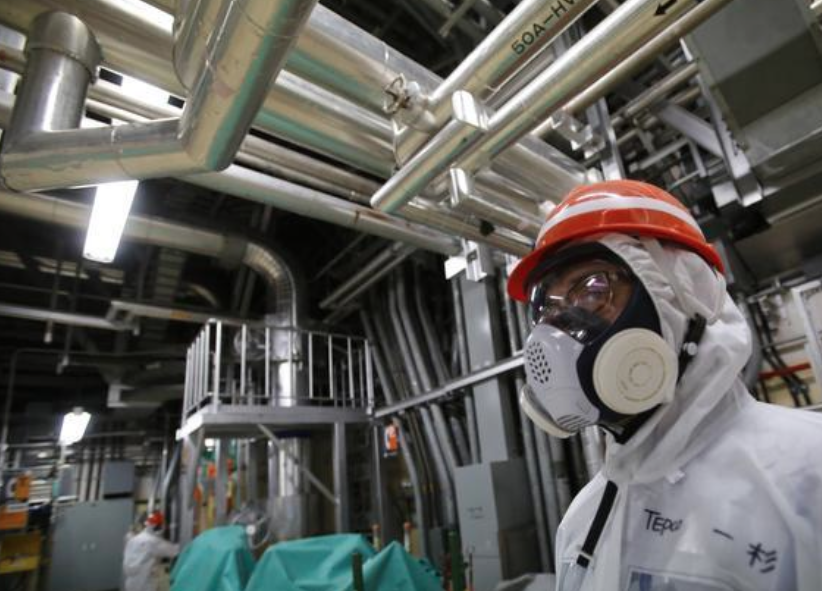
I am reporting March 11 2014 from within the forbidden zone of Fukushima Daiichi nuclear power plant for the 3 years spent since the triple disaster: earthquake, tsunami and Fukushima nuclear accident. Most impressive is to enter into nuclear reactors basements (Unit 5) and control room (Unit 1 and 2).

I worked with a few colleagues of the international press in Fukushima dai ichi, I stand here in the middle, raising my left hand, with my sound recorder and dosimeter in my right hand. We visited locations in Fukushima Dai ichi that were, for the first time, opened to the foreign media. High security and extremely tense situation. We made it and at the end I received "just" 30 microsieverts.

Report on the following links, in French.

JL Envoyé spécial de RTL sur Fukushima Daiichi. RTL France 07:30 11 Mar 2014
http://www.rtl.fr/.../ecouter/le-journal-de-7h30-7770341061

http://www.rtl.fr/actualites/info/politique/article/fukushima-trois-ans-apres-la-centrale-toujours-sous-surveillance-7770345143


Pic 1 I am standing 3rd from left.
Pic 2 I am watching the pool photographer, 2nd left.
Pic 3 Tepco technician helping to guide the FD1 visit.

Sunday, March 09, 2014

Naoto Matsumura est-il vraiment le dernier homme de Fukushima?


Cette aventure de Naoto Matsumura tient-elle du film de Kurozawa "Dersou Ouzala" ou au contraire nous plonge-t-elle dans le "Kagemusha, l'ombre du guerrier 影武者" de l'Ere moderne? L'affaire de Matsumura est, vue d'ici, sujette à caution. L’homme a été instrumentalisé* par les medias et les éditeurs mais aussi par les groupes anti nucléaires, eux aussi en désaccord sur cette visite en Europe et sur ce qui concerne le nucléaire, disent les critiques de cette visite européenne de Naoto Matsumura.

Pourquoi? Matsumura est un éleveur japonais, assez simple, un peu rude, voire atypique, isolé, mais bien sympathique et têtu qui vivait dans une région en s’accommodant très bien de la proximité des installations nucléaires de Fukushima, et comme beaucoup de gens, au Japon, a placé son intérêt personnel dans le droit chemin de celui suivi alors par les collectivités locales. Or depuis le 11/3/2011 Matsumura a été utilisé, placé au centre des querelles entre groupes anti nucléaires, et aussi des proches du parti de Shinzo Abe, le parti libéral démocrate aux affaires. Car nombreux sont ceux et celles qui estiment que son expérience permet de prouver qu’on peut continuer de vivre dans une région contaminée par un accident nucléaire, malgré les risques, malgré les zones interdites pour cause de radiation.

La méconnaissance générale de l'effet des radiations produit des réactions schizophrènes. Dans les médias on a vu l’impact, les exagérations, les erreurs ou les mensonges, souvent en raison des erreurs et le fonctionnement opaque de Tepco et de l'industrie nucléaire, si timide...  Les écologistes s’en sont donnés à coeur joie, parfois en exagérant tellement qu'on ne sait au Japon aujourd'hui qui croire? Eux, l'AIEA, l'OMS qui ne fera pas une analyse sans lui en référer, les politiques, les gens de la rue. Quiconque s’oppose aux anti nucléaires est soupçonné d’être un ardent défenseur du dogme énergétique et dissuasif. La vérité est sans doute au milieu. Et tandis que les projecteurs pointent sur Fukushima, et ignorent les 260 000 victimes sans abris depuis le "311", voila ce que dit un grand spécialiste de Three Mile Island et de Tchernobyl, sur l'accident de Fukushima et cette visite de Matsumura:

“Il est clair que Matsumura ne risque pas grand chose, sauf à aller se gaver de champignons et de baies sauvage, et encore, car vu son âge le seul risque est un cancer d'ici vingt ans ou plus.

[Mais l'idée préalable est que rester dans cette zone contaminée va vous tuer à brève échéance, est peut être inexacte, mal documentée, et pour cause, ces accidents sont rares. NDAGB]

Alors que penser in fine ? Sinon que décidément on exagère le danger des radiations et que les évacuations ne sont justifiées que par une angoisse irraisonnée. C'est ainsi que la venue de Matsumura et ses interventions publiques seront ressenties plus ou moins consciemment. Le lobby ne fera rien : trop casse-gueule.

Cet épisode perturbe considérablement, même si par esprit d'escalier quand on y repense après, le travail d'information aussi rigoureux que possible que nous menons.

Bien entendu beaucoup sont opposés à toute contestation publique des initiatives de Matsumura. Laissons le temps effacer cette péripétie. Après tout, 28 ans après Tchernobyl les enfants sont toujours contaminés et malades et l'usage par la propagande de l'exemple des vieux restés ou retournés en zone interdite en 1987-88 n'a pas convaincu grand monde.

On peut être anti-nucléaire et mal doser un projet. Je pense que c'est un reproche qu'il n'est pas totalement injustifié de faire à certains journalistes, photographes ou télévisions qui ont “envahi” le terrain du post Fukushima. S'ils connaissent bien le Japon, pour y avoir séjourné, peu de traces sur internet ou aucune publication sur l'énergie atomique n’ont été signé par la majorité d’entre eux.

[Si une catastrophe se produisait aux Etats Unis, qui depuis TMI a modifié ses lois et comportements les réactions seraient différentes poursuit mon interlocuteur] On a là un bel exemple du système de contrôle américain, ouvert, pluraliste et compétent. Rien à voir avec ce qui s'est passé à Tchernobyl ou au Japon, où la défense des intérêt politico-administratifs et industriels a prévalu.” Fin de citation.

Il est beaucoup d’exemples sur les manipulations qu’il faudrait exposer. Le Japon est une société complexe en permanence dans la dualité, pris entre deux intentions d'agir, l’intention réelle et la position publique 本音 と 建前 “honne” et “tatemae” dicté par la culture et l'éducation. Tout et son contraire y sera argumenté au nom d’une passion pour le discours émotif, très encouragé par les médias japonais, mais aussi, quelle évidence (!)  par une construction intellectuelle très différente de l’Europe du Moyen Orient ou des Etats-Unis.

Cela ne tient pas qu’au discours économique, industriel et scientifique. La stupéfaction a été grande lorsque le monde entier a découvert que les Judokas ou les Sumotoris japonais étaient violentés, brimés, blessés par leurs maitres Japonais, parfois il y a eu mort, y compris pour des aspirants champions Olympiques, avec l'aval des observateurs peu attentifs ou si peu rigoureux. Le Japon est si fort et si généreux pour accommoder le monde entier. Une extrême politesse qui masque une  extrême violence? “C’est étrange comme l'esprit humain oscille, et fait le va-et-vient d'un extrême à l'autre” écrivait Graham Greene.


*L'anecdote dans le bois de Fontainebleau, lors du voyage actuel en Europe, est bien à l'image de Naoto Matsumura et est citée dans l'article d'Olivier Nouaillas de La Vie "Le dernier homme de Fukushima est parmi nous" http://tinyurl.com/La-Vie-NaotoMatsumura


** J’espère que les amis de Naoto Matsumura vont lui faire passer un bilan de santé radioactif lors de son séjour en France, Allemagne et Suisse…