Thursday, March 29, 2007

Japan's problem with the morality of kidnapping people


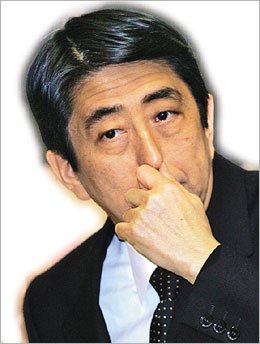
Japanese Prime Minister Abe Shinzo destroyed his
nation's long-standing party line on March 1 when he
said that there was no evidence of governmental
"coercion" of women and girls as young as 11 into
servitude in Japan's notorious world war II time
system of sexual slavery.

Japan's prime minister Abe Shinzo needs to fire his
team and control his youngsters' steam.

Abe wanted to make Japan a "beautiful country" based
on human values, but what came out after 6 months of
ruling, is a succession of scandals, harsh statements,
and last but not least, a succession of jolted
statements and insults to victims of Japan war in
Asia.

How come? He is intelligent, educated, liked by people
but if he is the first one to care about the awful
destiny of the Japanese abductees by North Korea in
the cold wars of the 60's and 70's. How come M. Abe
seems not to see the same relation of immorality in
kidnapping people during invasion wars such as Japan
war did in the 30's and 40's?

Both facts are immense pains and trauma for victims,
families, fellow citizens, humanists.

The current fracas about the so called "comfort women"
and Abe's remarks is between Japan and the US,
stemming directly from a proposed non-binding US
Congress Resolution asking Japan to "formally
acknowledge and apologize for the Japanese Imperial
Armed Forces' World War II-era coercion of some
200,000 young women into sexual slavery."

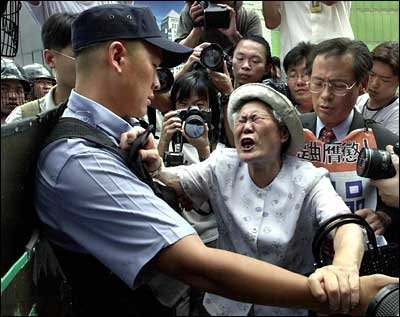


The prime minister Abe Shinzo's statements about the
comfort women system haven't generated anywhere near
the kind of outcry in Asia that Japanese leaders'
visits to Tokyo's Yasukuni Shrine or sovereignty
debates over a few islands have in recent years. Is it
a problem Asia has with respect to women, Japanese or
foreigners?

Leaders throughout the region have issued the standard
admonition that Japan "must learn its history", yet
only scattered groups of former comfort women and
supporters have gathered in front of Japanese
embassies, in marked contrast to the tens of thousands
on the streets of Beijing and Seoul two years ago,
smashing Japanese businesses and burning Japanese
leaders in effigy to protest Japan's unrepentant
behavior.
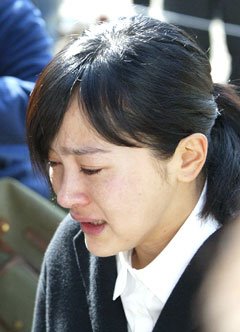


Growing economic integration and fading memory is one
reason. Reviving unpleasant memories of the surviving
comfort women makes their own societies nervous for
the obvious reasons of women's place in society and
the unease that the category of sex crimes generates.

Now if all nations could do a bit of introspection on
the issue of war victims one would have a lot of
surprises in USA, GB, France, Germany... and the
developing world... Won't we?

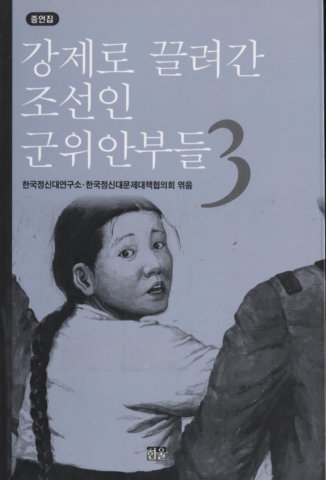


A moral update correction is a duty, to appease the
memory of the past events, to look at the future of
East Asia, and to build links and ties based on
admission of guilt and hopes of a better future.

But only the power of forgiveness can be assessed
after a study by scholars, politicians, social
workers, medias and religious or philosophical
congregations to begin with as it would eventually
dismiss for ever such outrageous statements that
remain as painful insults to the tens of thousands of
victims and their families of Japan's atrocities. Is
it inherent to this society that represses an
extraordinary violence in it with a delicate passion
for arts and polite customs? Even Prime Minister
Nakasone lots his words and his face when he was
"interrogated" recently by the foreign press in Japan
for his alleged involvement while he served in the
Japan Imperial navy during WWII.

And as author A Dudden said with these words: "Abe's
comment troubles US lawmakers and powerful neighbors
in the region, and could threaten Japan's chance at
winning a permanent seat on the UN Security Council."

If the 21st centry is the century of the networking
and smooth exchanges among young generations, it
should also apply or at leats be understood by the
oldies who govern Japan as their grand dad did in the
20's .

I'd say risk is it would jeopardize Japan's current
administration with a possibility to take distance
from the international standards of genuine
democracies. Worst for his leaders, such comments and
revisionists views are attempts to break the links
that unite the Japanese society, a much more human and
truly benevolent society, than their leaders seem to
know and who in fact appear from times to times as
wolves cuttings their own people in miserable pieces.

But as author S. Seagrave wrote for the author of this
blog : " The only way to delay the inevitable crash of
the dollar is to persuade Japan and China to continue
supporting the dollar by buying US debt. Abe knows
this, and he knows that Washington betrayed all
America's "traditional ethics" by supporting Kishi and
putting Japanese war criminals on Willoughby's and the
CIA pay-roll. So, Abe will be expecting Washington to
lick his feet. He has nothing to fear. He can say
anything he wants. Japan and China now "own" America.
The only fear Japan has is that China is becoming Top
Dog."

Money talks after all.

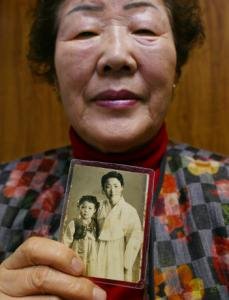
NB: Quote: "Comfort women, or "ianfu" as they are
called, are young Asian women who were forced sex
slaves for the Japanese Imperial Army. Some of the
women were dragged off with physical force as their
families wept, while others were actually sold to the
army by their destitute families. Still other were
officially drafted by the Japanese Imperial Army and
believed they would be factory workers or nurses .
Some Korean village leaders were ordered to send young
women to participate in "important business for the
Imperial Army" . Many Japanese soldiers referred to
comfort women as teishintai, which means ?volunteer
corps,? so those women who thought they would be
working in a factory would not understand what the
army really intended to do with them. "Jungshindae"
was the women?s labor corps in which the women would
work at a military factory and receive wages. Many
women believed this was what they would be doing when
they were recruited by the army (anonymous in
Schellstede 103). The horrific practice of using
comfort women for the army carried over from World War
II to the Korean War." (Text by Miala Leong, click the
title to access her story)

An horrendous crime not only involving Japan and not
terminated to this day as much remains to be studied
in the developed and developing world where politics,
crime and religions assemble as a preposterous trinity
of evil intentions.

Should the authors of such revisionist statements be
sent to the International Court of Justice for a
lesson of remembrance assisted with a good moral "
fessée " (smacking) ?
Monday, March 26, 2007

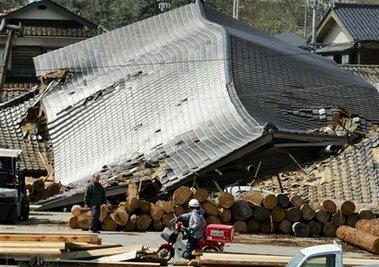
Japan aftershocks


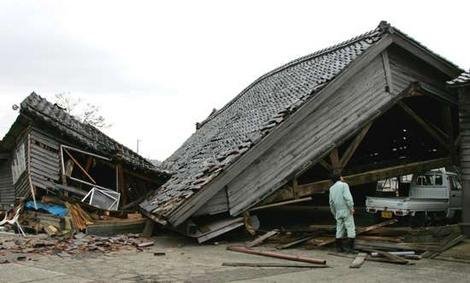
Hardest hit is Ishikawa prefecture on the Honshu
central island of Japan, the quake early Sunday killed
one person and injured 193 others. Powerful
aftershocks have struck the western coast of central
Japan, a day after. Some of the aftershocks measured
as much as 5.3 in magnitude and similar shocks were
also felt in Vanuatu, which was also hit by
earthquakes on Sunday. While the Pacific island
suffered no damage, in Japan some buildings were
affected, and water mains broken. The Japanese
government has pledged to help those affected by the
quake.

Japan is located on the "Ring of Fire", an arc of
volcanoes and oceanic trenches which partly encircles
the Pacific Basin. The Archipelago accounts for about
20 percent of the world's earthquakes of magnitude 6
or greater. A tremor occurs in Japan at least every
five minutes, and each year there are up to 2000
quakes that can be felt by people.

The Great Kanto earthquake of September 1, 1923, which
had a magnitude of 7.9, killed more than 140,000
people in the Tokyo area. Seismologists have said
another such quake could strike the city at any time.

On January 16, 1995, an earthquake with a magnitude of
7.3 hit central Japan, devastating the western port
city of Kobe. The worst earthquake to hit Japan in 50
years killed more than 10.000 on the spot and months
after, and caused an estimated $100 billion in damage.

On October 23, 2004, a 6.8 magnitude quake struck the
Niigata region, about 250km north of Tokyo, killing 65
people and injuring 3000.

The Tokyo metropolitan government said in March 2006
that a magnitude 7.3 earthquake under Tokyo would
probably kill more than 5600 people and injure almost
160,000. Official estimates of economic damage have
topped more than $1 trillion. Other reports panned
that a tremor would kill hundreds of thousands of
people, cause damage running into trillions of dollars
and have global economic repercussions. Each day is a
reminder of the risk for Tokyo-Yokohama metropolis,
with a population of 35 million. It has the highest
"at risk" rating from natural disasters such as
earthquakes of any of the world's 30 "megacities".

Sunday, March 18, 2007

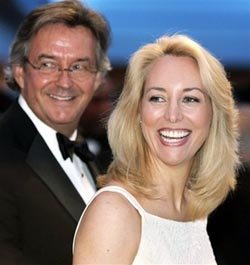
CIA spy Valerie Plame Wilson says betrayed by Bush administration


A former US spy at the center of a CIA leak case said
at a hearing of the House Oversight and Government
Reform Committee March 16th that she felt "hurt and
betrayed" by members of the Bush administration.

In their lawsuit US Ambassador Joseph Wilson and his
wife, Valerie Plame, accuse Dick Cheney and others of
endangering the lives of themselves and their children
by revealing her status. And, they allege, it was all
done for revenge.

This on-going saga began in 2002, when former US
Ambassador Joseph Wilson was despatched from
Washington to Niger - the White House apparently
hoping that he could gather detailed intelligence on
reports that Saddam Hussein was attempting to buy
uranium from the African country in an attempt to
build a nuclear bomb.

Ambassador Wilson's investigation found that those
allegations were untrue. His findings were at odds
with the administration's expectations and went
largely ignored: President Bush and others continued
to claim that Saddam Hussein was attempting to acquire
uranium from Niger.

Speaking in public for the first time about the
episode that touched off a scandal in the
administration, Valerie Plame Wilson said she felt as
though she had been "hit in the gut" when her husband,
Joseph C. Wilson IV, dropped a newspaper on their bed
on a July morning in 2003 and she saw that the
columnist Robert D. Novak had mentioned her CIA
status in passing. Plame, who has been accusing
members of the administration of leaking her identity
to the press to avenge her husband's anti-war
comments, said the administration knocked her off a
career path she was so proud of.


Her husband, a former diplomat with considerable
experience in Africa, traveled to the continent in
2002 to investigate rumors that Saddam Hussein was
trying to acquire uranium from Niger to build Iraq's
nuclear arsenal. In July 2003, an essay by Wilson in
The New York Times expressed deep skepticism about
Iraq's arsenal, and by implication skepticism about US
President George W. Bush's justification for the Iraq
war.

Friday, February 09, 2007

Tokyo, du rififi chez les tatoués

Update : Tokyo Yakuza 21/Jan/2014

I am in Tokyo, talking with a policeman, agent specialised in gangs, he tells me coldly that the scary Mexican gangs are now working in Japan and fight with the Japanese Yakuza for narcotics business in Japan (on trafficking amphetamines)

And I read in wikipedia “The Yoshitomi Group is known working together with the Los Zetas and the Beltrán-Leyva Cartel, in illegal drug trafficking, kidnapping and contract killing in the United States, as the cartel operates in Mexico, the Yoshitomi-gumi are evidently not involved with the human trafficking ring although they are involved in political corruption, that support this cause.”

(Wikipedia http://en.wikipedia.org/wiki/Yoshitomi_Group This page was last modified on 4 January 2014 at 02:05)


Update : Tokyo Yakuza 15/Fe/2007

Difficile de séparer les véritables gangsters des
milieux moins flambeurs intéressés eux-aussi par le
contrôle du centre de Tokyo...

Faits et citations:

Un gros bonnet du milieu yakuza, la pègre japonaise, a
été retrouvé mort jeudi à Tokyo, après un apparent
suicide, au moment où "une guerre de gangs" surgit
pour le contrôle du coeur de la capitale. Kazuyoshi
Kudo, 70 ans, a été découvert sur son sofa par un de
ses "soldats" venu lui apporter son petit-déjeuner, a
indiqué la police, qui dit privilégier l'hypothèse
"d'un suicide." M. Kudo était le parrain du clan
Kokusai, affilié à la "famille" des Yamaguchi, de loin
la plus puissante organisation mafieuse de l'Archipel,
a expliqué une porte-parole de la police. Le gangster
se serait "tiré une balle dans la tête." La police a
immédiatement ouvert une enquête sur un possible lien
entre le décès du chef du clan Kokusai et une récente
guerre de territoires entre syndicats du crime
japonais à Tokyo. Début février, une série de
fusillades entre yakuza a animé le quartier
cosmopolite de Roppongi, artère de bars et de
restaurants, en plein coeur de Tokyo. Un mafieux a
été tué.

Eng:
The boss of a gang affiliated with Japan's largest
crime syndicate was found dead at his home in Tokyo's
Taito-ku on Thursday, apparently after committing
suicide by shooting himself, police said. Kazuyoshi
Kudo, head of the Kokusui-kai, a gang affiliated with
the Yamaguchi-gumi crime syndicate, was found dead at
his home when police arrived at about 9:20 a.m. on
Thursday. A handgun was found near Kudo's body. Based
on evidence found at the scene, police suspect
70-year-old Kudo used the weapon to kill himself.
Investigators said Kudo was lying dead on a sofa in
the second-floor living room of his home, bleeding
from the head. A gang member who found him reported
his death to Asakusa Police Station.

(This month three shootings targeting Yamaguchi-gumi
gangs have occurred. The shootings, believed to have
been carried out by members of gangs affiliated with
the rival Sumiyoshi-kai crime syndicate followed the
fatal Feb. 5 shooting of a high-ranking member of a
Sumiyoshi-kai affiliated gang. In one incident a
bullet was also shot into a condominium housing a
Kokusui-kai affiliated gang office. On Feb. 8, the
Yamaguchi-gumi and Sumiyoshi-kai reportedly agreed to
discontinue fighting, and conflict between the two
crime syndicates had died down since then. The series
of shootings was believed to have been sparked by a
conflict between the Kokusui-kai and gangsters
affiliated with the Sumiyoshi-kai over gang turf.
Sources close to the gangs said that despite the
agreement between the two crime syndicates, talk on
the treatment of Kudo had continued. Police said it
was unlikely that Kudo's suicide would lead to more
rivalry between the gangs, but warned that internal
conflict within the Yamaguchi-gumi and Kokusui-kai
related to issues including Kudo's successor could
occur. The Kokusui-kai is based in Tokyo's Taito-ku
and has about 1,060 members and affiliates. Kudo
assumed leadership of the gang in 1991. In 2005 the
gang came under the direct control of the
Yamaguchi-gumi, and Kudo was appointed as a top
advisor to the Yamaguchi-gumi. (Agencies) )


Une guerre des gangs Yakuza a éclaté cette semaine sur
Tokyo pour le contrôle de leurs activités
traditionnelles comme le racket, les prêts usuraires,
le proxénétisme, la drogue, les jeux d'argent
illégaux, les technologies de l'information, les
firmes Internet.

Les deux plus grands syndicats du crime japonais ont
signé une trêve jeudi après de violents règlements de
comptes qui ont fait craindre à une reprise de guerre
des gangs entre le Yamaguchi-gumi basé à Kobe et la
Sumiyoshi-kai de Tokyo après la mort d'un Parrain de la
Sumiyoshi.

Les Yakuza se consacrent de plus en plus au
blanchiment d'argent sale et emploient à cette fin des
méthodes de plus en plus sophistiquées. Les Yakuza
sont célèbres pour leurs tatouages, leur obéissance
aveugle à leur organisation et leurs rituels,
notamment celui de l'auto-amputation d'un doigt pour
ceux qui se rendent coupables de manque de loyauté

"Les forces de l'ordre recensaient fin décembre 84.700
Yakuza dans l'Archipel, soit 1600 de moins qu'un an
plus tôt, indique un rapport de la police. Sur ce
nombre, seuls 41.500 travaillaient à temps complet
pour un syndicat du crime, les 43.200 restants ne
prêtant qu'un concours ponctuel aux organisations
mafieuses.

Ces criminels à temps partiel choisissent peut-être
délibérément cette situation "pour infiltrer plus
facilement les milieux d'affaires et le monde
politique", a expliqué une porte-parole de la police
nationale. "Qu'ils soient à plein temps ou à temps
partiel, ce sont tous des criminels".

"Outre leurs activités traditionnelles comme le
racket, les prêts usuraires, le proxénétisme et les
jeux d'argent illégaux, les Yakuza se consacrent de
plus en plus au blanchiment d'argent sale. Ils
emploient à cette fin des méthodes de plus en plus
sophistiquées.

Il existe au Japon quatre grandes "familles"
subdivisées en plusieurs centaines de clans. D'après
la police, la violence liée à la pègre est en
constante diminution depuis qu'en 2004 la Cour suprême
a statué que les chefs mafieux étaient responsables
des meurtres commis par leurs affidés. Sur les 53
fusillades signalées au Japon en 2006, 36 étaient le
fait de gangsters, soit 29% de moins qu'un an plus
tôt." (Texte et agences)

D'autres détails en anglais :


Police moved Thursday to ward off a swelling turf war
between Japan's two largest underworld gangs, sending
dozens of investigators to raid the offices of one of
the groups believed to be behind the violence. Ending
a yearlong hiatus in gang violence, the 43-year-old
boss of a gang affiliated with the Tokyo-based
Sumiyoshi-kai syndicate was shot to death on Monday.
The killing is believed to have prompted three more
shootings this week at gangland headquarters in Tokyo.
The murderer remains at large. No other injuries have
been reported. Hoping to keep the violence from
escalating, police on Wednesday arrested two members
of a gang that belongs to the Sumiyoshi-kai syndicate.
The two are suspected of firing shots into the front
door of an office used by the rival Yamaguchi-gumi.

About 40 officers, many in full body armor, also
raided the offices of the Sumiyoshi-kai affiliate on
Thursday. Police refuse to comment on the motive for
the shootings, but shooting into the doors or windows
of a rival gang's offices are the hallmark of
underworld retaliation in Japan. The Yamaguchi-gumi,
which with 21,000 members is the largest in Japan, and
8,000-strong Sumiyoshi-kai have frequently been
involved in turf wars in recent years. Police say the
strife has been generated by the Yamaguchi-gumi's
rapid expansion of its operations in Tokyo, the
Sumiyoshi-kai's traditional base. The Yamaguchi-gumi
is based not in Tokyo but in Kobe. The high-profile
violence has alarmed residents of Tokyo, where
shootings are rare, and police have moved quickly to
quell it.

Like gangsters in other parts of the world, Japan's
are involved in extortion, gambling, the sex industry,
gunrunning, drug trafficking, and real estate and
construction kickback schemes. Because handguns are
strictly banned, most shootings in this country
involving them are related to gangland violence.
Despite the recent respite in violence, crackdowns on
gangsters -- known here as "yakuza," which means
roughly "good for nothing," have had limited results.
The number of gangsters nationwide -- including
"freelancers" who aren't formal gang members but are
loosely allied with the groups -- has grown to about
84,500, down slightly from two years ago but up
considerably from the 61,000 or so in 1991, according
to police figures. The majority belong to the
Yamaguchi-gumi, Sumiyoshi-kai and Inagawa-kai, which
is also based in the Tokyo area. (Agencies)

Extracts of : David E. Kaplan and Alec Dubro

"Yakuza Japan's Criminal Underworld"

CHAPTER TEN

OLD MARKETS AND NEW

At the height of the bubble economy, police in Chiba
Prefecture, home to Tokyo's Narita International
Airport, finally started keeping tabs on just how many
yakuza were heading overseas. The officials
identified 2,916 yakuza traveling abroad in 1988, and
3,696 during the first nine months of 1989. Those
numbers are likely conservative, given the yakuza who
undoubtedly slipped through uncounted. The newspaper
Asahi reported that of some 87,000 yakuza in 1989, an
estimated 10,000 went abroad. Half of the gangsters
identified by Chiba police were headed to South Korea,
followed by the Philippines, Thailand, Hong Kong,
Taiwan, Saipan, and Guam. Only thirty-five said they
were going to the United States, a likely response to
tougher screening by U.S. Customs and Immigration
officials. Asked why they were traveling abroad, most
said they were tourists, traveling for golf, sex,
gambling, and gun-firing practice. Chiba officials
duly notified Japanese Customs to target the gangsters
on their return home, yet oddly no notice went out to
law enforcement overseas. The insular Japanese police
opted not to alert foreign officials that several
thousand gangsters were heading their way.

Click the title to access the chapter ten

Wednesday, February 07, 2007

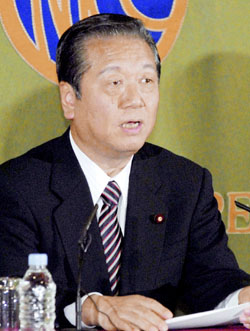
Iraq war "absurd"! Opposition leader Ozawa Ichiro tells press


Ichiro Ozawa, the leader of the opposition DPJ,
Democratic Party of Japan, said Tuesday at the Japan
National Press Club he would have urged U.S. President
George W. Bush not to start an "absurd" war in Iraq
in 2003 if he was prime minister at the time.

Ozawa also said the Japanese government should have
explained clearly the reason why Japan made the
decision to support the Iraq war, criticizing the
government for following what he termed as such a
problematic tendency in Japanese society of not being
assertive enough.

His comments came after recent controversial remarks
by Foreign Minister Taro Aso calling the U.S. policy
on Iraq "very naive" and Defense Minister Fumio Kyuma
saying the U.S. led invasion of Iraq was "wrong." "I
would have told Mr. Bush, "Don't do such absurd
things if I had been in the position" of Junichiro
Koizumi who was then prime minister of Japan, Ozawa
said in a press conference at the Japan National Press
Club.

"It is fine to say "we will cooperate," but what I
want to say is that you should clearly explain your
own thoughts such as "we will cooperate because of
this and that." Don't make nonsense quibbles," Ozawa
said.

On domestic politics: Ozawa stressed the importance
for the DPJ to attract voters in the local elections
in April and the House of Councillors election in July
by explaining party policies simply and easily.

As for the revision of the Constitution, which Prime
Minister Shinzo Abe has vowed to realize and highlight
as one of the major issues for the upper house
election, Ozawa said it will be difficult to become a
point of issue in the election campaign because the
public will be more interested in themes which are
closer to their daily lives.

Grilled on secret expenses by politicians: Ozawa also
indicated he may voluntarily disclose details of his
office expenses, which have been criticized by some
Cabinet ministers and senior ruling camp lawmakers for
their huge amount. "There would certainly be time
when such a method should be taken," Ozawa said.

Unclear office expenses have recently surfaced among
both ruling and opposition lawmakers, becoming a
political problem that has attracted public attention
in Japan especially since the resignation of
administrative reform minister Genichiro Sata in
December.

The Political Funds Control Law allows lawmakers to
report office expenses without attaching receipts,
thus leading some lawmakers to allegedly book
unrelated expenses.

On socia issues: Ozawa said previously at the
Parliament that Japan's income gap the top issue for
the opposition. "Politics should exist for the sake
of those who are vulnerable socially and
economically."


On minister Yanagisawa's comments : When Yanagisawa's
Health minister remark on "child-bearing machines" was
first questioned, many lawmakers in the ruling
coalition thought he should resign. One upper house
lawmaker of the Liberal Democratic Party said: "We
lost women's votes." (Yomiuri)


Japanese Prime Minister Shinzo Abe said he had issued
a warning to his health minister for degrading women
as "child-bearing machines", as approval for his
government continued to slide. Abe was grilled in
parliament by the main opposition, which said that the
premier had responsibility for the gaffe by Health
Minister Hakuo Yanagisawa. "If the remarks are true,
they are unforgivable, not as a politician but as a
human being," main opposition leader Ichiro Ozawa had
said previously in a parliamentary debate. (Text &
Agencies)

Whatever Mr Yanagisawa will voice from now on will be
targeted by media and there is not much he can say.
Maybe time to reflect on this latin maxime :
"Consultor homini tempus utilissimus." (Time shall
teach you all things)

Sunday, February 04, 2007

"Marianne" et les japonaises émancipées


Dans la serie, les japonais sont ils des robots, ce
que j'ai presente l'autre jour sur mon blog,
http://asiangazette.blogspot.com/ les evenements se
sont precipites pour le ministre de la Sante, ainsi
j'ai ete invite a commenter les propos du ministre,
monsieur Yanagisawa, qui estimait, par une metaphore
douteuse et qui n'en finit plus de faire scandale au
Japon, que les japonaises etaient des "machines a
enfanter" au point que sa tete est demandee.

Pour les medias, c'est une mine d'or, un focus a donc
ete fait dans le celebre programme du samedi soir "TBS
Broadcaster" http://www.tbs.co.jp/bc/cast.html ou l'on
a evoque longuement cette affaire avec des collegues,
et j'ai presente l'exemple de la politique de natalite
en France, (comme quoi...) et c'est au titre de
journaliste - correspondant francais au Japon que j'ai
ete invite a commenter la situation politique
japonaise et a expliquer ce qui se faisait en France
(2,0). Il m'arrive d'etre invite de temps a autres
sur cette chaine au titre de chroniqueur ou
d'interviewe.

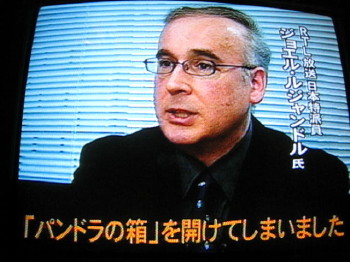
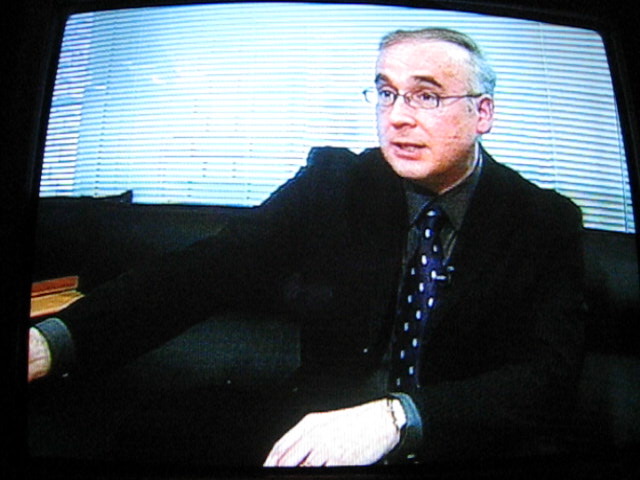
Ici (caracteres en lettre orange) je parle de
"Yanagisawa qui a ouvert la boite de Pandore" avec un
accent sur la necessaire reforme des politiques
sociales, educatives, d'egalite des chances, de
politique familiale et de liberte d'enfanter ou non
etc, et ne me suis pas prive de commenter les
comportements des hommes politiques et des japonais
macho... TBS en redemandait. Mon intervieweuse,
Mukoyama chan, etait toute ouie... Marianne et son
emancipation, un theme en or l'an prochain pour le
150e anniversaire des relations franco japonaises,
voire, un theme electoral...?


Wednesday, January 31, 2007

Jean Lassalle a t il gagné et sauvé ses emplois d'Accous ?


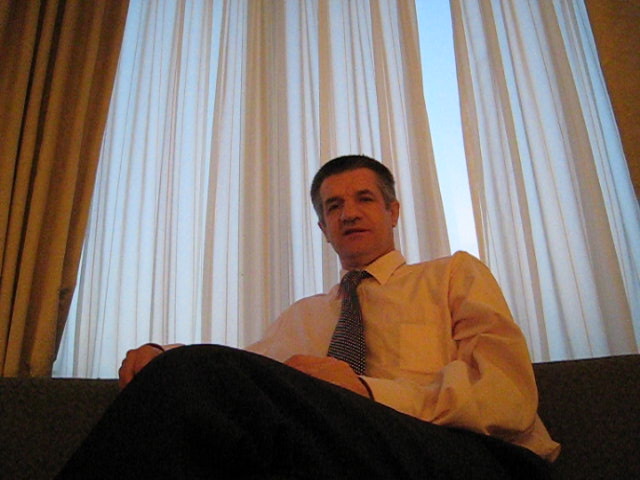
Photo de Jean Lassalle, Tokyo. (JjL)

Le député de la circonscription d'Accous, Jean
Lassalle, avait fait une grève de la faim de 39 jours
en 2006 qui avait pour but d'obtenir le maintien de
l'usine de Toyal en vallée d'Aspe, dans les Pyrénées,
car ce proche de François Bayrou craignait "une
délocalisation masquée". Avec 3,8 de tension, aux
portes de la mort, Jean Lassalle avait réussi à faire
plier les japonais de Toyo Aluminium KK, les pouvoirs
publics et les divers intervenants du dossier tel le
groupe pétrolier français Total.

Venu au Japon parallèlement à une délégation du
conseil d'Aquitaine, Jean Lassalle a reçu la nouvelle
qui est tombee en fin de journée mercredi: le PDG du
groupe japonais Toyo Aluminium KK, Masao Imasu, a
promis depuis Osaka de maintenir les emplois de son
usine à Accous dans les Pyrénées tout en exhortant le
gouvernement français à lui donner rapidement les
moyens d'y parvenir.

"Nous allons continuer et renouveler nos efforts pour
faire développer notre marché européen depuis Accous",
a déclaré M. Imasu à l'issue d'une rencontre avec le
président de la Région Aquitaine, Alain Rousset, (PS)
en visite à Osaka (centre du Japon). Dans une
déclaration signée par MM. Imasu et Rousset, la
société Toyal Europe, filiale de Toyo, s'est engagée à
"maintenir sur le site d'Accous l'effectif actuel qui
s'élève à 143 personnes".

En contrepartie, la Région Aquitaine s'engage
notamment à "soutenir les projets d'investissements en
recherche et développement de l'entreprise".
Toutefois, le patron japonais a demandé au
gouvernement français de "respecter sa parole dans
l'esprit du protocole" signé en 2006.

En avril 2006, le groupe nippon avait conclu un
protocole d'accord avec le ministre de l'Intérieur,
Nicolas Sarkozy, pour agrandir son usine d'Accous
après avoir voulu dans un premier temps acheter des
terrains à Lacq, propriété du groupe pétrolier Total,
situé à 65 km de là. M. Sarkozy avait alors assuré
aux dirigeants japonais que "l'Etat (français), Total
et les collectivités locales étaient prêts à compenser
financièrement le surcoût éventuel de l'implantation à
Accous". En novembre dernier, l'Etat et les
collectivités ont soumis à Toyal Europe une première
proposition sur l'aménagement d'une plateforme
industrielle à Accous, proposant de prendre en charge
90% du coût total des travaux, estimé à quatre
millions d'euros. Mais cette proposition, qui laisse
une participation de 460.000 euros à l'entreprise, est
"inacceptable" pour les dirigeants de Toyal.

Toyal Europe a présenté à l'Etat français une
contre-proposition, en offrant une participation de
58.000 euros, correspondant au prix du terrain à Lacq.
La négociation est en cours. "Déjà au mois d'avril
(2006), en signant le protocole, nous avions indiqué
que nous n'allions pas quitter Accous, mais il faut
que le gouvernement respecte l'esprit du protocole", a
souligné M. Imasu. Le président de la Région
Aquitaine et le député Jean Lassalle ont entrepris
depuis dimanche, séparément, une visite de plusieurs
jours au Japon afin de "rassurer" les dirigeants de
Toyo Aluminium KK.

Jean Lassalle doit rencontrer à son tour le PDG de
Toyo vendredi matin à Osaka. (Textes & agences)

Monday, January 29, 2007

Les "machines à faire des enfants" !

Nouveau dérapage d'un ministre japonais sur les
femmes.

Le ministre japonais de la Santé, Hakuo Yanagisawa, a
suscité des remarques virulentes après avoir qualifié,
durant une réunion politique, les femmes de "machines
à faire des enfants", leur demandant de relancer le
taux de natalité dans le pays.

"Le nombre de femmes entre 15 et 50 ans est fixe...
Etant donné que le nombre de machines à faire des
enfants ... est fixe, tout ce que nous demandons est
qu'elles fassent de leur mieux", a déclaré le
ministre.


M. Yanagisawa, 71 ans, a par la suite "demandé pardon
pour avoir employé le mot "machine". "Je suis désolé
d'avoir appelé (les femmes) des machines", a-t-il
ajouté. Ces commentaires ont suscité l'ire au Japon.
L'écrivain Michiko Yoshinaga a estimé qu'ils
révélaient "le vrai visage" du ministre, et elle lui
conseille de se pencher plutôt sur les raisons qui
empêchent les Japonaises de ne pas avoir plus
d'enfants. Le taux de natalité au Japon se situait à
1,26 enfant par femme en 2005 et devrait atteindre
1,21 en 2013.

Wednesday, January 24, 2007

"Bush was wrong on Iraq" Japan's new defense minister says.


Today I had a great news at my press club, the Japan
National Press Club in Tokyo (Nihon Kisha Club in
Japanese language). This guy is tough! Tokyo rumors
that he could be positioned as a future Prime Minister
should the political pendulum changes and bring back
the "doves" into the Japan's archipelago.

Quotes of agencies :

"Japan's defense minister has admitted that US
President George W. Bush was wrong to invade Iraq and
warned that Tokyo could not automatically renew its
air force mission to the war-torn country. The rebuke
from one of Washington's closest foreign allies came
hours after an embattled Bush used his annual State of
the Union address to plead for public support to send
more troops to Iraq.

"Mr. Bush went ahead in a situation as if there were
nuclear weapons, but I think that decision was wrong,"
Defense Minister Fumio Kyuma said of the 2003
invasion. Japan's former prime minister Junichiro
Koizumi, a close friend of Bush, strongly supported
the invasion and took the landmark step of deploying
Japanese troops to Iraq.

Koizumi withdrew the troops last year before leaving
office. But Japan has continued to deploy its air
force, which hauls personnel and goods into Iraq for
the US-led coalition and the United Nations. Kyuma
said Japan had not decided whether to extend the
mission when it expires in July. "We must look very
carefully at what the United Nations will continue to
request from Japan. Just because the US decided to
reinforce troops does not mean that Japan should do
the same. It's not so simple," he said.

"What can Japan do to reconstruct Iraq? Is it
impossible without Japan's (Air) Self-Defense Forces?
We must look at the overall assessment to give a final
decision," he told a news conference.

...

Kyuma, who took office in late September, has
repeatedly criticized the US handling of the Iraq war
and former US defense secretary Donald Rumsfeld. In
his latest remarks, Kyuma also rejected Bush's
frequent comparisons of Iraq to post-war Japan. The
US president has repeatedly pointed to the alliance
with Japan as proof that former adversaries can become
allies. "Just because it worked in Japan does not mean
it would work in Iraq," Kyuma said. "It worked in
Japan because the US left the emperor system."

...

Kyuma this month became Japan's first defense minister
since World War II after Prime Minister Shinzo Abe's
government pushed through a bill to give him cabinet
status. "By upgrading to a defense ministry, everyone
seems to have the illusion that ... Japan is becoming
a military power," Kyuma said. "However, it is
performing under the government's limited budget"
under which military funding is decreasing, he said.
"Also, if we maintain the current constitution, there
should be no such worry," he said." End of quotes.

If... we maintain the current Constitution is indeed
to watch. Japan is a rare nation with a peace
promoting Constitution. Might be that US pushes Tokyo
to become less pacifist, and the question remains,
will Japan's political world on Nagatacho (Nagata
Hill) have enough guts and courage to say "No" to
refuse the spiral of violence harvested by the
estrange military-industrial complex linked to the
security alliance imposed by the US to the point of
denying Japan's sovereignty ?

Saturday, January 13, 2007

"Amitiés à l'Asean, sauf aux Birmans"!


La Birmanie, Etat narco trafiquant pourchassant
impitoyablement les opposants qui croupissent en geôle
depuis des années ou ont été massacrés lors de féroces
répressions, ainsi que les minorités nationales des
hauts plateaux Birmans ou des zones frontalières
telles que les Karens, est à présent dans la ligne de
mire du président Français Jacques Chirac à l'occasion
de la première visite du japonais Shinzo Abe dont le
pays entretient des relations teintées de grande
ambiguïté avec la Birmanie. Un Etat aux riches
gisements énergétique avec lequel la France entretient
aussi de fructueuses relations gazières malgré des
accusations d'atteintes aux droits de l'homme portées
par des organisations "caritatives" américaines.

Citation agences :

"L'entrée du Japon au Conseil de sécurité de l'Onu et
la Corée du Nord ont dominé l'entretien et le dîner de
travail entre Jacques Chirac et le nouveau Premier
ministre japonais, vendredi soir à l'Elysée. Les deux
dirigeants se voyaient pour la première fois depuis
l'accession de Shinzo Abe à la tête du gouvernement
nippon, en septembre. Qualifiée de "très amicale" par
le porte-parole du président français, Jérôme
Bonnafont, la rencontre a notamment porté sur
l'élargissement du Conseil de sécurité, que Jacques
Chirac a qualifiée d'"urgente" et de "capitale".

En raccompagnant son hôte à sa voiture, Jacques Chirac
a demandé à Shinzo Abe de transmettre ses "amitiés aux
membres de l'ASEAN, sauf aux Birmans". Lors de
l'entretien, le président français a exprimé "le
souhait que la communauté internationale parvienne à
susciter une évolution démocratique dans ce pays". Il
a notamment évoqué le cas de la lauréate du prix Nobel
de la paix Aung San Suu Kyi, toujours assignée à
résidence à Rangoon. Quasiment au même moment, au
siège new-yorkais des Nations unies, la Chine et la
Russie opposaient leur veto à un projet de résolution
présenté par les Etats-Unis pour inciter la junte
militaire birmane à entamer une transition
démocratique.

Alors que Shinzo Abe cherche à promouvoir l'idée d'un
rôle accru du Japon dans les questions de sécurité
internationale, Jacques Chirac a "souligné
l'importance du dialogue entre l'Union européenne et
le Japon ainsi que l'intérêt des décisions prises lors
du sommet de l'Otan à Riga". Les deux dirigeants ont
également évoqué la situation en Afghanistan, au
Proche-Orient, la question du développement en Afrique
et celle de l'environnement. Le Japon doit participer
à la conférence sur la gouvernance écologique mondiale
prévue à Paris les 2 et 3 février.

Shinzo Abe termine par Paris sa tournée européenne de
quatre jours - la première depuis son accession au
pouvoir en septembre -, qui l'a emmené à Londres,
Berlin et Bruxelles."

Fin de citation


La presse européenne discriminée par Shinzo Abe?

Shinzo Abe a rompu avec la coutume qui est de recevoir
les journalistes correspondants de la presse
internationale accrédités au Japon avant sa tournée
européenne. Mais il a accordé une interview exclusive
a BBC et a Reuters TV! Le bureau du premier ministre
Abe a présenté ses excuses a certains journalistes,
expliquant que le temps était limité après les fêtes
de nouvel an et que le premier ministre donnerait une
conférence de presse ouverte a tous a son retour
d'Europe et de la réunion de Manille de l'Asean.

En outre, un article jugé insultant sur la personne de
l'épouse du premier ministre Abe, qualifiée
d'alcoolique par un article du quotidien le Figaro
citant, avec une certaine légèreté professionnelle, un
torchon réputé pour sa désinformation et ses
scandales, a attiré une grosse colère des services de
relations avec la presse.

Les 2 événements sont ils liés? Des collègues
japonais estiment que le fauteur de trouble japonais
et maitre-censeur n'est autre que le "Special Advisor
to the Prime Minister Hiroshige Seko", ancien chargé
des relations publiques de NTT, connu pour son ton
très arrogant et cassant avec les médias. Les
diplomates japonais se sont ainsi précipités sur les
médias français de Paris qui ont été conviés a
déjeuner, pour leur présenter habilement les buts du
voyage d'Abe Shinzo et ont démenti avec gravité ce
qu'ils estiment être des insultes prononcées contre la
First Lady japonaise, Akie sama, dont les journalistes
japonais connaissent bien le tempérament amical et
enjoué, héritière d'une dynastie de l'agroalimentaire,
dans la ligne de mire de la presse a scandale nippone.

L'auteur de ces lignes ayant lui-même rencontré Akie
sama, lors d'une présentation ou elle est apparue
élégante et sympathique, mais fragile et un peu
timide. L'administration du premier ministre Abe a
encore des leçons a prendre des grands communicateurs.