Friday, November 09, 2007

Women rulers disliked in Asia?


Detained Myanmar opposition head Aung San Suu Kyi is under house arrest for years and is told to be "very optimistic" about prospects of the U.N.-promoted process for reconciliation between the military government and pro-democracy forces, top members of her party said Friday.

But not far from Burma, in Pakistan, security officials barricaded former Prime Minister Benazir Bhutto inside her home behind barbed wire, concrete blocks and armored cars on Friday morning, and turned out in force in downtown Rawalpindi to quash a planned rally, dispersing protesters as they tried to assemble.

With conflict between Bhutto and Pakistani President Pervez Musharraf at a new height, police early Friday began surrounding Bhutto's home, under orders to prevent her from leaving to lead the Rawalpindi demonstration. A security official said the steps were for her protection.

The Rawalpindi protest, called to oppose the national state of emergency declared by Musharraf over the weekend, failed to materialize under a heavy police presence in the city and security barricades established on the roads leading into it. There were scattered clashes through the day between police and would-be protesters.

Thursday, November 08, 2007

A coffee with Akie Abe

I was queuing at the coffee break of an interesting seminar on Burma Asean and Japan organized by a famous Japanese foundation when suddenly my eyes got caught by a lady queuing too, just on my left arm, elegant, well dressed in a dark suit, tall and laughing. Mrs. Akie Abe the wife of the former Prime Minister Shinzo Abe.


We came into introducing each other and chatted as I reminded her that we had previously met a few times in the past and we talked about the first time I saw the lady to become the Japanese First Lady, in Tokyo, a couple of years ago introduced by a good friend of mine.

Immediately Akie sama spoke very freely and with kind word and gentleness about her husband, Shinzo. "He is fine" she told me "and he recovers well".


I encouraged his recovery and of course asked her if we could invite her to my press club (Press club) with her husband one coming day. "We ll see" what happens. "We wait for you" I answered. "Come to see us."

One other point I noticed about is her committed character, probably the reason why some Japanese and foreign media behaved ruthlessly in talking about her in some articles, probably without even approaching her. My impression about officials, trained with a few decades in reporting, convinced me that Akie sama is a very nice and warm hearted person. The first laughter she had was when I mentioned her studying foreign languages with one of my friend, a Japanese ex reporter of a national newspaper, a few years ago. Her comment was genuinely fresh and honest, "Well, I do not know if my English improved".

I then wondered how come it is possible that politics destroys people or hurts then so much in this country. Going on in the queue to our coffee cup, I saw how people seemed seduced by her free talks and elegant walk. How come this French man talks to the former First Lady so easily, some might have thought. After we poured coffee in the cups and exchanged a few words, I let her quiet and saw many ladies coming to greet her. Let's part and let her do her former First Lady work I told to myself.

Later on, Akie sama asked me how my Japanese was and I modestly confessed that it was still so-so and that I keep on studying, "Your Japanese must be better than my English" she told me with a clear smile before to wonder why my name also bears the name Koizumi... "Family matters", I answered with a twinkle in the eyes.

The seminar focused on the situation in Burma. I learned a lot there and one figure increased my worries for Burma's future: More than 1 million people already escaped from the country to get refugee status in neighboring Thailand. Akie sama stayed until the end of the seminar. The coffee was excellent too!

Wednesday, November 07, 2007

Pro Burmese junta tycoons targeted

After the testimony of Burma's refugees I wrote on this blog after my report in South East Asia "Esclave, pour fuir la Birmanie." I received many emails and talks of people interested in hearing other testimonies of witnesses enslaved in Burma or in the Burma neighboring nations, I shall write again about the enslaved Burmese citizens forced laboring in timber and construction firms based on what I heard and saw during my journey.

But prior to this, I read that Burmese tycoons seem to be scared after the US sanctions threats: One in particular has wet hands:

Picture of the sanctioned Burmese tycoon

Burma Air Bagan, Tay Za, left, speaks with Yangon Commander Maj. Gen. Hla Htay Win ,right, and Transport Minister Maj. Gen. Thein Swe, center, as they stand next to the airline's Airbus A310-200, during a launching ceremony of the first Air Bagan international flight Tuesday, May 15, 2007, at Yangon International Airport. Air Bagan airline formally launched its international service with a flight to Bangkok in neighboring Thailand. The airline was planning to extend its flights to future destinations including China, Singapore, India and Cambodia. (Agencies)

Close friends? Not for long, depending on international pressure on Burma. I also think the Singapore reaction to US financial sanction (the freeze of Burmese pro junta tycoons banks acconts) is quite amazing. Banks in Asia now are scared by the sanctions the US government wish to impose on Burmese junta. More on this with this article of Bertil Lintner that you can access clicking the title of this article.

I quote:
"... Tay Za is the 42-year-old manager of the Myanmar-based Htoo Trading Company, which among other subsidiaries controls the Singapore-registered Htoo Wood Products, Pavo Trading, and Air Bagan. Through the new sanctions, all of those companies are now blacklisted by the US government. The businessman is known to be very close to junta leader General Than Shwe and when he first launched into business he made a point of employing the children of powerful generals - which presumably paved the way for him to land lucrative government contracts. Among those currently or formerly on his payroll are Aung Thet Mann, the son of General Shwe Mann, the junta's third ranking official after Than Shwe and army chief General Maung Aye. According to a 2005 report in The Irrawaddy, Tay Za is also close to Than Shwe's son, Kyaing San Shwe, whom Tay Za presented with a US-made Hummer, for undisclosed reasons..."

Among the words, I noticed with irony the use of Pavo Trading (Pavo is a constellation, but if you add the letter "T", it gives "Pavot", which is the flower that produces the opium: Papaver somniferum. How cynical some say.) This Lintner article in Asia Times is quite different from this lenient information published by the Yomiuri in Japan based on a telex from Afp / Jiji press agencies. " Myanmar tycoon denounces US sanctions ".

Quote:
"...Flamboyant Myanmar tycoon Tay Za Monday denounced US sanctions against his airline and other firms which he said would only hurt the people of the impoverished Southeast Asian nation. US President George W. Bush last month ordered sanctions against seven companies with ties to Myanmar's ruling junta. Tay Za's Air Bagan was among seven firms blacklisted to pile more pressure on the regime after its bloody suppression of pro-democracy protests in September which left 13 dead and thousands locked up. "I hereby condemn the sanctions which were recklessly imposed and only hurt the people of Myanmar," Tay Za told officials, staff and businessmen in a speech for celebrations to mark Air Bagan's third anniversary..."

It looks like the report of Bertil Lintner indeed clarifies the litigious impressions (Click the title)

Friday, November 02, 2007

Esclave, pour fuir la Birmanie.

Ce témoignage est l'un des plus poignants de ceux que j'ai pu recueillir ces derniers jours, a la suite de fréquents déplacements que j'ai faits dans le sud-est asiatique. C'est le récit de Liaya (un pseudonyme), il démontre l'état de frayeur instauré par les militaires birmans (Myanmar) depuis la répression du régime de Rangoon (Yangon) sur les populations et les moines de Birmanie.

Fuir la mort pour entrer en esclavage, cette photo de Liaya a été coupée sous les yeux pour d'évidentes raisons de sécurité, avec son accord. Les 4 autres images viennent de la ville birmane de Kawthaung que Liaya a découverte après sa fuite de l'Etat Kachin ayant parcouru des milliers de kilomètres vers le sud, avec la crainte permanente d'être reprise, torturée, emprisonnée ou assassinée par des militaires ou des trafiquants qui pullulent dans cette partie du monde, impunis.

Liaya était d'un calme extraordinaire lorsqu'elle me parlait, sous une violente pluie de mousson, comme des millions de larmes versées sur ces destins d'infortunes.


"Je m'appelle Liaya, j'ai un peu plus de 20 ans et je vis depuis 15 jours dans le sud de la Thailande après avoir séjourné sur la frontière Birmane. Je suis originaire du Népal que mon grand-père avait fuit en raison de la violence du régime. Et il m'a emmené dans l'Ethnie birmane du Kachin. C'est au Kachin que j'ai grandi, presque normalement. J'ai pu entrer a l'université, a Rangoon, j'y ai appris la physique, mais je ne suis pas très au point, je pense.

Comme des centaines de milliers de réfugiés, Birmans, Népalais, Indiens, et ceux des ethnies du sud de la Chine qui s'étaient retrouvés par hasard ou par malheureuse destinée, je ne pouvais plus supporter la situation épouvantable du régime Birman. Je suis jeune et ma famille m'a dit que je devrais essayer de poursuivre ma route ailleurs. J'ai pensé aller a l'Est de la Birmanie, vers Mae Sod, mais les militaires Thai et Birmans ont des accords secrets pour expulser par "convois", la nuit, des centaines de réfugiés.

J'ai ensuite essayé de m'échapper vers la Chine, mais la aussi, ce n'est pas chose facile pour nous, les militaires chinois ont des amis et du commerce en Birmanie et ne laissent passer que les marchands ou des paysans, les marchands de drogue. On me disait aussi le danger d'être pris par les kidnappeurs de filles et d'enfants. Alors j'ai pris la route du sud, et je me suis retrouveée a Kawthaung au sud de la Birmanie, a un bras de mer de la ville frontière Thailandaise de Ranong.

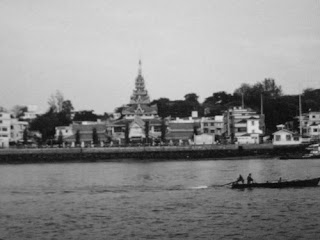


Des filières plus ou moins contrôlées par les Thai nous ont fait traversé le bras de mer qui nous séparait de Ranong. Ici même ou les terres de la Birmanie et de la Thaïlande se réunissent. Je suis reconnaissante a tous ceux qui m'ont permis de m'évader de cet enfer. Mon grand-père est un homme brave et courageux, je pense que j'ai hérité de sa force. Mais je suis seule. On m'a dit ensuite que je pourrais trouver du travail en Thaïlande, avec les touristes et avec le développement immobilier.


Je suis allé a la police Thai et j'ai demandé a être réfugiée. A ma grande surprise, ils m'ont dit que c'était possible de rester si je travaillais dans la construction ou dans le "farang business". (La prostitution ou les bars). Si je choisis la première solution, je peux rester 1 ou 2 ans, le temps des chantiers, mais la vie y est épouvantable, comme des bestiaux, avec interdiction de sortir du chantier ou du bâtiment ou tous les ouvriers sont parqués.

Les risques de viols sont fréquents, les kidnapping aussi. J'avais peur et j'ai demandé aux policiers en parlant longtemps avec eux s'il y avait autre chose pour moi qui suis diplômée d'université. Ils ont rigolé quand je leur ai parlé de mes universités birmanes. Alors sous le désespoir j'ai pris contact avec des filières népalaises car les infos passent vite et il y a des passeurs impatients qui sont bien installés en Thaïlande. J'ai trouvé mais je ne peux vous dire tout ce par quoi il faut passer, ou payer, ou promettre, c'était il y a 15 jours, j'ai un travail au sous sol dans un grand magasin qui vend des souvenirs, des bibelots ethniques, de la soie. Et puis j'ai fait des copines ici, certaines comme Ladia sont la depuis 3 ans. C'est la grande fille la-bas avec un Jean's qui parle avec les 2 filles Indiennes. Ladia elle est jolie, on la croit souvent Farang, italienne ou brésilienne. Moi je suis surtout une "intellectuelle". C'était le rêve de mon grand-père.

Mais j'en suis loin! Je suis vendeuse de bibelots! C'est un groupe étranger européen qui a construit un grand "Mall", un grand magasin et un hôtel avec des restaurants pas loin de la plage. C'était ça ou la prostitution dans les bars et le "sex business Thai." Je suis brave comme mon grand-père et je ne suis pas comme les filles Thai qui se vendent et sont droguées, je veux m'en sortir. Je ne veux pas être une fille de "Farang" alors c'est pour cela que vous pouvez me parler parce que j'ai acheté ma protection, et puis je ne suis pas idiote.

Je gagne 6.000 Baht par mois, je paye 2.000 Baht pour mon visa et ma carte de réfugiée et mon permis de travail, je paye 1.500 Baht pour ma chambre, je dépense 1.000 baht de nourriture, le reste je le garde pour économiser et préparer mon avenir. Je voudrais bien continuer mes études de physique chimie dans une bonne université a Bangkok ou en Malaisie. Mais c'est difficile, ma force c'est que je parle bien l'anglais, alors peut-être qu'un jour je pourrais aller étudier en Amérique ou au Canada.

Quand je pense aux ouvriers, je devrais dire aux travailleurs de force qui sont 12 heures dans les gravas et la poussière, et qui sont complètement isolés, je me dis que j'ai de la chance! Enfin, eux, ils ne paient pas 2.000 Baht de permis de travail, et comme ça, s'ils meurent, personne n'est au courant et personne n'ira demander leurs corps. Ca arrive, ils sont jetés dans la mer et on retrouve les corps flottant dans l'archipel Mergui ou en mer d'Andaman. La tête des touristes étrangers quand ils voient un corps gonflé pris dans leurs filets.

Je vais essayer de rester ici un ou deux ans, mais surtout ce que je voudrais c'est que vous disiez a tous les gens que vous connaissez par les médias qu'il faut absolument comprendre notre abominable situation, et je veux dire qu'il faut faire des pressions sur les Birmans, sur les militaires et sur les Chinois. Il n' y a que cela qui pourra arrêter cet esclavage dans lequel des centaines de milliers de réfugiés birmans se trouvent aujourd'hui. Des pauvres comme moi, sans famille, sans vie, sans destin. Des pressions, vous comprenez? Vous êtes libre, vous, et avec ces pressions des gouvernements étrangers, on pourra s'en sortir, alors je vous en prie, aidez nous! Aidez nous avant qu'ils nous tuent tous, comme les Khmers Rouges l'ont fait, en massacrant leurs enfants! Je vous en prie, s'il vous plait. "

Temoignage recueilli par Joel Legendre-Koizumi


NB: "Farang": Etranger, en langue thailandaise.

Geo Visitors Map

Wednesday, October 31, 2007

Enslaved by the need to be free!

"Burma's military government, already under criticism for abuses, is recruiting children as young as 10 into its armed forces". This is one of the multiple infamous faces of the Burmese regime. Soon, to be added on this blog I ll talk about the flow of Burmese refugees escaping to Asian neighbors to try to avoid misery, brutality, slavery and death, but to gain nothing better than an other slavery. On Asian Gazette a few chapters to be coming about the enslaved Burmese and about the responsibility of Asean nations in such despair, following my recent journey in South East Asia.

Saturday, October 13, 2007

Missiles hi tech battle in northern Asia


Nobody wants to get this one in his Japanese garden. So, how to screen any incoming missile on the northern coast? Here is the added defense jewel. After the big station, little ones. Still some Japanese seem or pretend to be unsatisfied in spite of the US Japan military alliance. Details on quotes, local press & agencies:

"US forces deployed a mobile missile-tracking station in Japan for the first time Friday, officials said, as part of efforts to defend against a potential attack from North Korea. The Joint Tactical Ground Station was being set up at the Misawa base in Aomori, the northernmost prefecture of Japan's most populous island of Honshu. But local authorities and media had criticised the deployment, saying they were not sufficiently informed. "The US military might not be able to disclose military secrets. However, we should not just let it be," the local To-o Nippo newspaper said in an editorial before the deployment. "The mayor must press the US military and the (Japanese) government to give us detailed explanation."

The mobile missile-tracking system is designed to receive launch data from early warning satellites, analyze the projected destination of missiles and forward the information to the U.S. military and Japan's Defense Ministry.


It is the first time the US military has deployed the mobile unit in Japan, although one is already in South Korea, said Yutaka Shirasawa, an official at Japan's defence ministry. The system consists of a vehicle equipped with three satellite antennas and information-processing equipment, which is meant to send news of any incoming missile to the US military and Japanese defence ministry.

It will be operated by 18 US servicepeople from an army base in the western US state of Colorado, Shirasawa said, adding the local government was informed of the deployment Thursday. Tokyo and Washington launched work on a missile defence shield for Japan after North Korea shocked the world in 1998 by firing a long-range missile over Japan into the Pacific Ocean. In March, Japan for the first time installed Patriot surface-to-air missile interceptors in the Tokyo area.

Japan will conduct its first missile test in mid-December, from an Aegis-radar equipped destroyer off Hawaii, "to confirm its ballistic missile defense capability," the Defense Ministry said separately in a statement.

Japan deployed its first advanced U.S.-developed Patriot missiles earlier this year, and plans to introduce SM-3 interceptors on its destroyers in the next few years, including one in December. The two countries held a regional ballistic missile defense drill in July. Another round of exercises is scheduled for November, followed by a test launch of the U.S.-developed SM-3 missile interceptor from Japan's Aegis-class destroyer Kongo during the week of Dec. 17 off a Hawaiian island of Kauai, the ministry said.

The United States last year installed Japan's first anti-missile system on the southern island of Okinawa, the hub of the 40,000 US troops in Japan."

Tuesday, October 09, 2007

No strict sanctions from Tokyo on Burmese junta


Japanese journalist, Nagai Kenji, on the road, killed during Burmese demonstrations.

Tandis que la junte birmane brûle les cadavres de ses opposants, victimes des tirs de ses soldats, Tokyo évite de s'impliquer, perdant une nouvelle fois l'occasion de faire entendre sa voix, et le poids de ses sanctions, sur le régime militaire narco - trafiquant, et pendant ce temps, plusieurs centaines de personnes, dont de nombreux ressortissants birmans, ont assisté aux obsèques du cameraman japonais Kenji Nagai, abattu à l'âge de 50 ans le 27 septembre pendant les manifestations pro-démocratiques à Rangoon. L'hommage à Nagai s'est déroulé dans un cimetière du centre de la capitale japonaise.

Le cameraman été tué quand les militaires ont ouvert le feu sur les protestataires. Des images du drame semblent montrer que Nagai a été tué à bout portant par un soldat. L'autopsie a indiqué que Nagai aurait été tué dans le dos d'une ou plusieurs balles ayant atteint le foie et divers organes vitaux. Le régime militaire au pouvoir en Birmanie affirme qu'il a été tué par accident. La police japonaise a effectué une autopsie pour déterminer les circonstances exactes de la mort du cameraman, ce qui pourrait conduire Tokyo à réduire son aide au Birmanie à hauteur de 500 millions de yens (4,27 millions de dollars).

Le Japon, le principal donateur de la Birmanie, a déjà restreint son aide économique à la Birmanie, notamment son aide humanitaire. Il "considère maintenant la possibilité de la diminuer encore", a déclaré le chef de la diplomatie japonaise Komura. Jusqu'ici le Japon finançait principalement des programmes destinés à la santé, à l'éducation et des projets humanitaires. En 2005, ses subventions ont atteint 1,3 milliard de yens (11,2 millions de dollars, 7,9 millions d'euros), alors que l'aide technologique était de 1,7 milliard de yens (14,7 millions de dollars, 10,3 millions d'euros), selon les chiffres du gouvernement.

La nouvelle des manifestations en Birmanie n'avait pas alarmé les autorités japonaises comme j'ai pu le constater, une fois la "révolution safran" couverte et reprise par la presse internationale. Cette crise a été révélée lors de la session des Nations Unies a New York et monté en épingle par la présidence américaine, ce qui a fait dire que G. Bush souhaitait occulter le drame irakien des débats onusiens et agiter l'opinion sur le sort des Birmans...

Durant les journées d'agitation médiatique, insufflée par les agences de presse américaines, le Japon marchait sur des oeufs ainsi que les diplomates nippons et les services du premier ministre le laissaient entendre. Il a fallu attendre la mort d'un vidéo - reporter de 50 ans, monsieur Kenji Nagai, employé d'une société de production japonaise du nom de A.P.F., pour que le gouvernement Fukuda réagisse avec un peu de vigueur une fois l'annonce de la mort du journaliste.

Dans les journées qui ont suivi, le Japon a modéré ses commentaires afin de contenir l'impact déplorable de la mort d'un "Nihonjin" sur les médias et la fragile société nippone plus soucieuse de son bien être insulaire que des questions humanitaires et des graves enjeux de la politique internationale. Pire, les commentaires des autorités Tokyoites étaient évasifs concernant l'impact sur les violations des droits de l'homme en Birmanie avec lequel le Japon entretient de bonnes relations depuis la seconde guerre mondiale et la colonisation de l'Asie du sud-est. Des relations douteuses au point que Tokyo reçoit régulièrement les dirigeants de la junte birmane. Motif? Le Japon a des relations industrielles avec la Birmanie et ses gisements gaziers. A ce propos, cliquer sur le titre pour accéder a cet article :"Companies doing business in Burma".

Citations

(Anglais): "Burma's gas industry brought more than 2 billion dollars in revenue to the country's military last year, providing its single largest source of income. Most of this money was generated from just two gasfields, Yetagun and Yadana. The latter, situated in southern Burma, has been developed by a consortium led by Total, since 1992. Human Rights Watch pointed out this week that there is no transparency about how income derived from gas sales is used, although the military is believed to receive the lion's share, with a comparatively paltry sum reserved for health, education and other social services. Investors in the Burmese oil and gas sector hail from such countries as Australia, China, the British Virgin Islands, Thailand, Malaysia, South Korea, Russia, France, the U.S., Japan, Singapore and India. " (Sources IPS) http://www.ipsnews.net/news.asp?idnews=39496/)


"Japan, which generously provided aid to Burma over decades, imposed cuts in 2003 when pro-democracy leader Aung San Suu Kyi was placed under house arrest. Yet, during 2006, Japan’s grants amounted to 1.35 billion yen (11.1 million US dollars), besides technical assistance worth 1.73 billion yen (14 million dollars). Historically, the financial flow goes back to the two-billion-dollar war reparations paid by Japan to Burma for having invaded the country during World War II. Gen. Ne Win, who engineered a coup in 1962, successfully developed pro-Burma sentiments among Japanese leaders and reaped huge aid programmes. Japan was among the first countries that approved the State Law and Order Restoration Council (SLORC), set up by the military junta that seized power in l988. " (Sources IPS http://www.ipsnews.net/news.asp?idnews=39559/)

Monday, October 08, 2007

Japan and strategic history


I read this article in the press on Sunday, and even if there is a trade context in the back stage, I felt it would again cause uproar in the columns and the assemblies:

"A Shizuoka Prefecture railway firm on Sunday restarted regular operations of a Japanese-made steam locomotive used in Thailand until 1979 to mark the 120th anniversary of the signing of the 1887 Japan-Siam amity treaty. Oigawa Railway Co held a ceremony at the platform of its Shinkanaya Station to mark the restart of the Class C56 locomotive's operations, with its exterior color returned from black to green, the same exterior color when it was used in Thailand. Popular Thai actress Kanyarat Jiraratchakit celebrated the resumption of the operation at the ceremony by opening up a "kusudama" decorative ball which had been hung from the platform's ceiling."

Then I received an email from a friend who sent me this blog address Tokyonodoko: From there, here I quote:

"On entering the Yasukuni shrine, where some of the worst war criminals are enshrined, the museum foyer visitors are greeted by a Model C56 Locomotive 31, a large restored stream engine sitting peacefully next to the escalators, (the same type of steam loco as the Kanchanaburi Thailand River Kwai museum, Added by Jlk.)

"In the Yasukuni museum (Yushukan) a plaque informs the visitor that locomotive 31 was produced in 1936 by Nippon sharyo and operated in the Nanao region of Ishikawa prefecture until being commandeered to the ‘south’ for the Greater East Asian War. The engine played an important role in Thailand including the opening of the Thai-Burma Railroad.

After the war it was used by the Thai national railroad until retirement in 1977, where members of the southern forces field railroad section who were involved in the construction of the Thai-Burma railroad gave money to have the engine shipped back to Japan, restored, and placed in Yasukuni Jinja."

"A question arises whether it is important that the Thai-Burma Railway is also know as the Death Railway. It was built from Thailand to Burma (now Myanmar) by the Japanese Imperial Army during World War II to complete the route from Bangkok to Rangoon and support the Japanese occupation of Burma. It was so called ‘The death railway’ because of the human cost of its construction.

About 100,000 conscripted Asian laborers and 16,000 Allied prisoners of war, 6,318 British, 2,815 Australians, 2,490 Dutch and the remainder from the USA or unknown died while being enslaved. And, theirs was no ordinary death. Most of the slave prisoners were weakened by malnutrition before succumbing to disease, medical treatment being withheld. Many were brutally murdered."

I know! People will think that Foreign round eyes look for the evil everywhere. But was it necessary to reactivate such infamous nightmares for millions of people around the world and in particular Asian nations who fell victims of the imperial armies whose heirs, among them some politicians, historians, right wingers of the worst caliber, not so much offending their "elites", pretend as if nothing else than an Asia liberation from the "whites" had happened? Preposterous. Comfort the sanitized sleepy society with an infamous strategic history is all it takes to build a modern society? Many would object.

Wednesday, October 03, 2007

Sarkozy et l'Asie...


Les premieres questions posees sur la presidence de Nicolas Sarkozy par un important representant de la presse officielle chinoise en poste en Asie. Nous sommes en haut du building de la presse nippone, invites par le celebre Foreign Press Center pour son remarquable cocktail annuel reunissant journalistes-correspondants, diplomates, gouvernements locaux, artistes et entrepreneurs. C'est ici, depuis un siecle, a Tokyo que se font les meilleures observations sur l'Asie, un fait explique par les extraordinaires reseaux d'influences exerces par les entrepreneurs nippons des "Shosha" et aux infos distillees par les "Asia Watchers" bases au Japon.

Un "pack" de reporters chinois, dont quelques tres grosses pointures pekinoises appreciant le bon vin francais servis ce soir ouvrent le cercle au francais present, qu'ils connaissent bien... et mon collegue chinois chef de bureau du plus grand et influent quotidien chinois me demande ouvertement : "Selon vous, Nicolas Sarkozy est-il le Junichiro Koizumi francais?" Voila la question qui interesse naturellement ces plumes de la grande presse de l'Etat chinois, plus interessees par Paris que par les premiers (faux) pas du gouvernement de Yasuo Fukuda.

Est ce un compliment pour ce qu'ils me decrivent comme etant selon eux (et pour beaucoup des francais) l'esprit de reforme, d'ouverture, de transformation des mentalites des francais ou bien s'agit il de critiques naissantes pekinoises sur les intentions de "Sarko l'americain", vu par l'Empire du Milieu comme un bulldozer populiste, habile manipulateur des medias, insensible aux aspirations des pays situes "a l'Est, en Asie et au Sud" et menant une vie un peu trop "boheme" pour les neo- confuceens...?

Sarkozy est il le Koizumi francais? Question neanmoins tres interessante sur l'ADN de la politique asiatique de la France sous Sarkozy avant sa prochaine visite en Chine a l'automne et au Japon pour le sommet du G-8 de Hokkaido-Toyako en 2008. Je leur reponds sur le meme ton franc et directement, et les questionne concernant les intentions chinoises vis a vis de l'Asie et des americains:

"Nous, les chinois, voulons d'abord, comme l'ont fait les pays fondateurs de l'Europe, nous reunir pacifiquement avec le Japon et la Coree, bien nous entendre avec le sud de l'Asie, batir ensemble nos ponts et nos institutions selon nos modeles," regardez Singapour par exemple, "et prier poliment les americains de se cantonner a leurs frontieres ou de bien vouloir comprendre nos realites."

"Notre revolution aujourd'hui", ajoute un diplomate chinois, "n'a pas disparu, contrairement a ce que vos collegues eloignes ecrivent sur la Chine. La revolution chinoise, c'est la reforme partout et pour tout." Bien vu. Que voulez vous avec la France lui ai je demande? "Beaucoup. Il faudra revoir tout cela apres les J.O. de Pekin et l'Exposition Universelle de Shanghai, nous avons quelques idees. Venez nous voir."

Apres les jeux... le pain ? Vaste programme que les Asia Watchers devront suivre attentivement.
Jlk

Sunday, September 30, 2007

Burma's tragedy


Yesterday at FCCJ, the Foreign Correspondents' Club of Japan, Tin Win, a former member of the National League for Democracy in Burma, told me that not only the Burmese junta used forced labors but also foreign companies did. Tin Win spoke on the record.


Now a few quotes:

"Japanese foreign minister Masahiko Komura protested in the strongest terms at the killing of the 50-year-old journalist, Kenji Nagai, with his Burmese counterpart at the United Nations headquarters in New York, the Japanese press agency Kyodo reported Saturday. Komura also demanded an account of the circumstances surrounding the journalist's death. As far as could be gleaned from media reports, he was shot at close range and was not caught in crossfire, he said...According to reports in the Japanese daily Mainichi Shimbun, the reporter was filming the protests Thursday at the Sule Pagoda, which has been a focal point for several of the demonstrations in Rangoon, when a military commander ordered soldiers to shoot. Nagai filmed the soldiers chasing protesters and then fled, but was pursued by a soldier who then shot him at close range. A Japanese doctor who examined his body said that the bullet had pierced his heart, according to the reports.

.../...

"Lawyer Shogo Watanabe, who represents many Burmese asylum-seekers in Japan, said the Japanese government should strongly reproach the Burmese junta and even try to take the international initiative to get the military government to move toward democratization of the country.

"The junta has put their hands on monks, who are untouchables (in their Buddhist culture), which showed that they will do anything to remain in power," Watanabe said. "But I think the people have stood up with a strong determination (to fight against the military regime.) And they won't stop now because they're afraid they may not have the chance to move toward democracy again for another 19 years, or even forever." (JT Saturday, Sept. 29, 2007 "Scholars split over sanctions")

.../...

"On the other hand, Toshiro Kudo, a senior research fellow at the Institute of Developing Economies at the Japan External Trade Organization, opposes isolating Burmese government by imposing strict economic sanctions, calling for continuing dialogue instead. An expert on Asian diplomacy, Kudo said such sanctions will not improve the situation because Myanmar would simply rely on its connections with China, India and Thailand. Japan's decision to cut economic ties with the country will hurt the civilians the most and break its already tenuous connection with the junta. "Once the junta judges that Japan is no different from the U.S., it will close all doors of negotiation with Japan," Kudo said. The close relations between Burma and Japan are based on history, he added, noting that Japan played a role during World War II in putting the country on the path to independence." (JT Saturday, Sept. 29, 2007 "Scholars split over sanctions")

.../...

"French oil group Total says it has not made any new acquisitions or investments in Burma since 1998, after French President Nicolas Sarkozy on Wednesday urged the company to freeze investments in the southeast Asian country. Total defended its business in Burma, saying companies that would take their place in the country may be less ethical. The French oil giant directly employs at least 240 people in Burma, and operates the Yadana offshore gas field, selling the majority of its product to Thailand. Chevron, a U.S. oil company, also has a stake in the Yadana project. Critics say the money brought in by foreign investors like Total keeps the current military regime in power. Burma is thought to have substantial supplies of natural gas and oil that have attracted energy companies from China, India, and Malaysia."

.../...

"August 11, 2002: Bush’s Advisers Advocate Attacking Saudi Arabia, Iran, Egypt, and Other Countries. A Newsweek article suggests that some of Bush’s advisers advocate not only attacking Iraq, but also Saudi Arabia, Iran, North Korea, Syria, Egypt, and Burma, shocking many. One senior British official tells the magazine: “Everyone wants to go to Baghdad. Real men want to go to Tehran.” [Newsweek, 8/11/2002; Newsweek, 8/11/2002]"