Saturday, May 13, 2006

Clearstream : La guerre des Tenebres


Notre Rouletabille japonais, Seiryu san, m'a fait de
nouvelles confidences hier soir a Tokyo entre deux coupes
d'un delicieux Ginjo-shu.

"Clearstream ? Une affaire a tiroirs "on" a decide
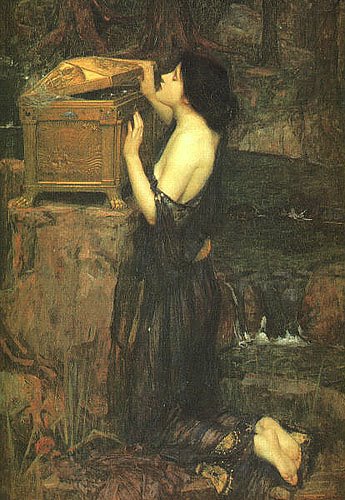
d'ouvrir la boite de Pandore. Catherine de Medicis aussi
avait ses poisons. Je crois que les redactions
Parisiennes maintenant savent pas mal de choses mais
ignorent beaucoup de choses qui se sont produites au
Japon avec Jacques Chirac et l'important est de voir ce
qui va ou non sortir dans la presse et l'edition.

D'apres ce que j'en ai discute avec mes collegues
parisiens, c'est le trouillometre maximum. La meute
attend l'ordre pour tuer. Les japonais m'ont parle et
j'ai transmis divers elements a mes collegues.

Albessard, lors de l'affaire des fregates : une mort
joliment instrumentalisee. Osada Shoichi, le "banquier
de Chirac", innocente l'automne dernier malgre les griefs
accumules, serait "mort" lui-aussi tant il existe
d'autres facons de vivre ou de mourir, dans les jardins
japonais. Longtemps surveilles, a courte distance, les
banquiers sulfureux se croyant a l'abri a Tokyo,
comptaient leur fortune 2, 16, 4, devisant impunement
sous les arbres a Kaki, entoures par l'elite des services
et encadres d'uniformes. Les comptes en banques? Mais
appelez n'importe quel banquier ou assets - manager et il
vous dira comment ca se passe.

En colere le Japon ?

Probablement un fond de verite. "Nous attendons une
certaine comprehension a l'egard de notre culture et nos
traditions" me disait on.

Le Japon est une sorte de village d'Asterix sympathique
et bon vivant et qui porte son chef en grande estime et
ne supportera pas longtemps que la famille imperiale soit
melee, malgre ses responsabilites, a un scandale politico
- financier etranger et soit meprisee par des cyniques.

Pourquoi ?

Parce que ceux qui ont cree ce Prix Imperial japonais, le
Praemium Imperiale, ont tout fait pour doter son jury de
jeunes ou moins jeunes VIP connus (Nakasone, Heath,
Rockfeller, dont J. Chirac puis R. Barre) depuis son
lancement en 1988 en l'honneur de la famille Imperiale.

Les patronages se sont faits par des transferts de fonds
prives consequents. Et cela ne s'est pas arrete la.
Bien avant le lancement de ce prix Imperial, des membres
de la famille imperiale*** japonaise ont ete sollicites
par des personages japonais influents et sous influences
diverses. (Lire la presse) En echange de cela, des
"temoignages de soutiens a l'Institution Imperiale" ont
ete pris en consideration (dons et parrainages habituels)
et des dedommagements (voyages, sejours, manifestations
diverses) verses a des VIP etrangers dont J Chirac. Mais
pas seulement lui.

Le prix va t il s'arreter la? La megalomanie de certains
entrepreneurs et financiers nippons a t elle des limites?

Non. L'autre liste a se procurer est celle de tous les
beneficiaires des Faveurs et des Opportunites du Japon...

Naviguez sur Internet pour voir comment ca marche ici :
http://www.japanentrepreneur.com/200404.html

Extraits : (anglais) "Some insiders say it's impossible
for Japan's banks to be truly entrepreneurial. From the
perspective of Mikuni Akio, a respected economic analyst
and founder of Japan's leading independent bond-rating
agency, banks are captives of the Ministry of Finance
(MOF) and the Financial Services Agency (FSA).
Primarily, they serve as tools for implementing
government policies, some official, some not. The banks
exemplify, Mr. Mikuni says, the Japanese bureaucracy's
past success in displacing both market risk and legal
risk from the finance sector, which depends heavily on
bank lending. Mr. Mikuni dubs this phenomenon the
"socialization of market and legal risk.")

Ensuite re lisez cela :

News agency : Tuesday, June 25, 2002 Chirac accuses
spooks of mudslinging From Adam Sage in Paris.

Extraits : (anglais) "... Sources at the Elysee Palace
said that the presidential anger was sparked by a DGSE
operation to delve into M Chirac's relationship with a
Japanese banker, Shoichi Osada, who was arrested in Japan
two years ago on suspicion of false accounting. Mr
Osada, who is famous for his flamboyant lifestyle and his
collection of about a hundred Impressionist paintings,
has been friends for 50 (hum?) years with the French
President. Little is known of their ties, except that as
Mayor of Paris M Chirac stayed at the tycoon's luxury
hotel on the Japanese island of Awashima for a night in
1994, the year that M Osada was awarded the Légion
d'Honneur in France. According to an article in the
Japanese tabloid newspaper Shukan Gendai (Post?) in 1999,
Mr Osada provided a young Japanese actress as company for
M Chirac during his stay on Awashima. At about the same
time as those allegations appeared, a department within
the DSGE - the Protected Affairs Unit - produced a
report, ostensibly on Mr Osada, for M Jospin's
Government. The Elysée believes the unit's real aim was
to look into the banker's links with M Chirac in the hope
of finding compromising details of financial transactions
between the two men. In 2000, the agency produced
another report on the collapse of Tokyo Sowa Bank. M
Chirac is a frequent visitor to Japan, a connoisseur of
the country's culture and an ardent fan of sumo
wrestling. He is also rumoured to have enjoyed a number
of romantic encounters in Japan, a claim that appears to
have been the subject of DGSE scrutiny..."

Donc ?

Clearstream = Degats collateraux: l'Institution Imperiale
japonaise = Tabou = Le village japonais a envoye ses
reclamations a Paris. Les circuits des elites japonaises
se confondent ils avec les recyclages de capitaux et
financements occultes? Derriere quels paravents
numeriques se cachent les noms, les comptes, les preuves?
Probablement a toutes ces rumeurs, un fond de verite mais
attention aux bonimenteurs officiels.

La presse FR fait elle son boulot?

Les JT d'hier de la TV francaise sont surrealistes mais
reels! "Les personnes cles devant le juge" dit une
presentatrice d'une chaine... Sauf n, x, y, z. J'ai
bien aime aussi le sujet de fin de 20H00 d'une autre
chaine. On y voit un chanteur qui chante faux et entonne
"Toreador prends garde a toi..." Savoureux!

On continue a enqueter", me dit Seiryu san.

Sur quoi ?

Sur la levee du secret defense sur les documents
concernant la vente de fregates par la France à Taiwan.

Ouh!


*** Par exemple, en 2001 le Prince Hitachi, frere de
l'actuel Empereur du Japon Akihito, patronne la
manifestation et a remis le prix aux laureats 2001 dont
Jean Nouvel (Architecture). On me dit que cela risque de
peser lourd contre Chirac deja plus vraiment en cour au
Japon depuis la vente d'armes francaise a la Chine. Mais
on ajoute que lui au moins respecte la culture japonaise.

http://www.kunaicho.go.jp/e01/ed01-01gr-01.html


Les Fregates de Taiwan :

Investigations relatives à l'affaire des frégates
Lafayette?

Citation : (Radio Taiwan international, le 11-05-2006)

"Un progrès important a été réalisé dans le cadre de
l'enquête sur la vente des frégates Lafayette, avec la
mise en examen d'un nouveau suspect, Kuo Wen-tien, le
frère de Kuo Li-heng, l'officier de la marine nationale
déjà condamné pour corruption. Ce résultat a put être
obtenu grâce à l'examen des dossiers transmis par la
justice suisse, à Taiwan. Une somme de vingt millions de
dollars américains aurait été versée sur le compte de Kuo
Wen-tien et de Kuo Li-heng. D'après les résultats du
groupe d'enquête taiwanais sur la vente des frégates, le
montant des commissions sur la vente se serait élevé à
486 millions de dollars américains, tandis que 120
millions de dollars américains auraient été consacrés à
l'achat de la complaisance d'officiels, de militaires et
d'hommes politiques taiwanais. Une somme additionnelle
de 366 millions de dollars aurait été versée par Thomson,
à Andrew Wang, pour acheter les officiels chinois et des
hommes politiques français. Les autorités judiciaires
taiwanaises ont averti que les poursuites judiciaires
pourraient mettre cinq ans, avant de définitivement
aboutir."

Citation Defencetalk :

http://www.defencetalk.com/news/publish/article_00595

"It may take three to five years to conclude the lawsuit,
judicial authorities said, adding that Taiwan might still
seek judicial assistance from several other relevant
countries, including France and Luxembourg, to back its
request for Switzerland to return the money. Moreover,
the lawsuit will be very expensive. According to a
preliminary estimate, the cost of retaining foreign
lawyers alone could exceed NT$100 million. "The Ministry
of Justice must appropriate funds for the lawsuit," he
added. The files, which are written in English, French
and German, also include a number of previously hidden
overseas bank accounts related to the US$2.8 billion
Lafayette deal, as well as information about relevant
capital flows in Switzerland, judicial authorities said,
adding that the Swiss court files clearly document
deposit times and destinations of the capital. Wang has
been charged in absentia with murder, corruption, money
laundering and fraud."

A suivre...
Monday, March 27, 2006

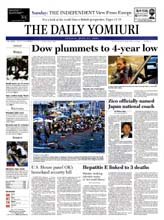
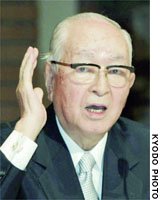
Japan Tycoon Watanabe of conservative Yomiuri shimbun : "Japan needs to apologize more for WWII"


Yahoo Image of Yomiuri Chairman Watanabe Tsuneo

Influential media baron Tsuneo Watanabe pounds that Japan
owed more wholehearted apologies for its militarist past
and urged the next prime minister to stop going to a
controversial war shrine. "Japan is to blame for the war
of aggression," said Watanabe, chairman and editor in
chief of the Yomiuri Shimbun, the world's largest
newspaper by circulation. "Japanese leaders have
apologized only incompletely. Now we need to make real
apologies for the past errors," he said. Watanabe, 79,
is one of the most powerful figures in Japanese media and
is known for his close ties with politicians. He also
enjoys influence over national sports as owner of the
country's most popular baseball team, the Yomiuri Giants.
Watanabe last year changed editorial line at the
conservative newspaper, which has turned critical of
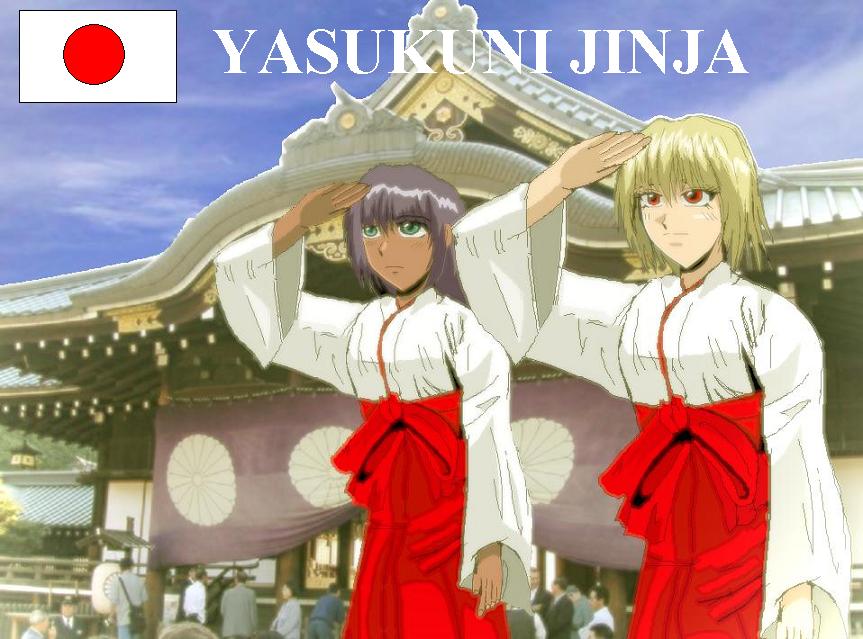
Prime Minister Junichiro Koizumi's visits to the Yasukuni
shrine.

- Watanabe, in a speech to the foreign press, at FCCJ,
demanded that Koizumi's successor not go to the Shinto
shrine, which honors 2.5 million Japanese war dead
including 14 top war criminals. Koizumi, who steps down
in September, has infuriated China and South Korea by
going each year to the shrine since he took office in
2001. Watanabe said he wanted Yasuo Fukuda, a veteran of
the ruling Liberal Democratic Party who opposes Koizumi's
shrine visits, to run in the party election to decide the
next premier. Koizumi in an October cabinet reshuffle
sidelined Fukuda and gave Shinzo Abe the powerful chief
cabinet secretary's post, making Abe the frontrunner to
succeed him. Koizumi has repeatedly apologized for
Japan's war atrocities and says he visits Yasukuni shrine
to mourn the dead.


The Yomiuri Shimbun chief said that Japanese prime
ministers have been "wishy-washy" about Japan's wartime
past. "Before talking about the complaints by China and
South Korea, Japan needs to study its own war
responsibility more thoroughly," he said. He called on
the prime minister to apologize for the war "not by
compensation but in a more psychological manner." "Unless
mass media take the initiative, politicians would never
take action," he added.

- But! Main point for all of us, journalists is about
why the media are worried about the future of the print
press. Coming from a media baron who sells more than 12
million newspaper per day, this was the hot question.
So, I did ask this question to the tycoon nicknamed
affectionally "Nabetsune" about his current analysis of
press crisis in the world and quoted what he said to his
young staff in the 80's at Yomiuri when he became Chief
of the Editorial board writers. At that time, Mr
Watanabe explained to his young assistant Ms. KK that
Japan business was an empty and difficult business
activity. Today Chairman Watanabe who also is the editor
in Chief of the Yomiuri described with the same vigor the
major challenges to the press, print, broadcasted or
online, and called for vigilance regarding free press
assessed as a serious competitor and already attacking
journalists, the 4th power...!


The solution is in the technology because today's media
uses and habits by consumers dramatically changed to
access information. One clear example since April 1st in
Japan with this extraordinary TV Phone. Your favorite
channel on your mobile phone Foma. There is no end to Hi
- Tec challenges to knowledges and media corporations.


But this is not all:

80's years old veteran journalist Tsuneo Watanabe, who
claimed he was closed to the communists in his youth also
challenged conventional view within his own conservative
publication regarding the relations between China and
Japan.

Quote :

"Wakamiya Yoshibumi and Watanabe Tsuneo: Calls for a National Memorial to Replace Yasukuni

Many older Japanese conservatives are deeply committed to pacifism as a result of their personal experiences in World War II, despite recent Japanese government efforts to assert the right to belligerence in the present and the legitimacy of Japan?s wars in the 1930s and 1940s. Nonaka Hiromu, the former Secretary-General of the Liberal Democratic Party, retired from politics last year. But he still openly criticizes Prime Minister Koizumi?s visits to Yasukuni Shrine, his foreign policy, and the LDP's planned revision of Japan?s Constitution. He lost his cousin and uncle in the Asia-Pacific War. Gotoda Masaharu, who served as Chief Cabinet Secretary for the Nakasone Cabinet in the 1980s and was also highly critical of both Koizumi?s foreign and domestic policies, died last year. He was also as a staunch supporter of Article 9, the ?no-war clause,? of Japan?s Constitution. Watanabe Tsuneo, the Editorial Chief of the Yomiuri Newspaper, belongs to this same circle of conservatives whose wartime experiences prompted strong anti-war sentiments, although he is less supportive of Article 9.


From mid-2005, Watanabe suddenly began expressing highly critical views of Koizumi?s visit to Yasukuni Shrine, where the spirits of Japanese soldiers are enshrined. At the same time, he initiated a series of articles on Japan?s war responsibility in the Yomiuri, the world?s largest-circulation newspaper. Yomiuri was, and is, regarded as a conservative paper, articulating views indistinguishable from those of the Japanese government on many important issues. Its traditional liberal rival has long been the Asahi News. It thus came as a surprise to readers to find this series of "progressive" articles, which clearly reflect Watanabe's critical attitude toward the national amnesia on the part of other conservatives and the Japanese government regarding war responsibility. He argued that the Japanese Government should build a new secular war memorial like those in other countries and cease official visits to Yasukuni, the preminent symbol of Japan?s wartime claim that it had a divine right to dominance in Asia. The precise center of controversy is often the fact that the individuals convicted of war crimes after the war were later enshrined at Yasukuni. Apparently he feels that time is running out and that he is one of the very few remaining persons in the old guard who still has power to influence Japanese politics and popular opinion on this issue.

Watanabe may have been responding in part to the fact that recently both Yomiuri and Asahi have lost considerable numbers of subscribers, while the readership of the Sankei News - the most conservative paper of all - has increased dramatically. Given that many younger people, including university students, no longer read any newspaper, it is difficult to gauge the extent of Yomiuri's effort to raise public awareness about Japan's war responsibility. The fundamental issue confronting the Japanese press, as well as peace activists and educators, is how to motivate young people to become interested in reflecting on history and establishing peaceful and productive relationships with other nations, particularly the Asian nations that suffered from Japanese colonialism and war.

Currently Yasukuni shrine is a major flashpoint as a result of Koizumi?s visits and Foreign Minister Aso?s provocative suggestion that the emperor should visit the shrine, both of which have strained diplomatic relations with China and Korea. This was the context for a discussion between the editors of the Yomiuri and Asahi papers on Yasukuni, the war, and historical responsibility, published in the February 2006 issue of Ronza magazine.


Dialogue Yomiuri and Asahi Chiefs :

" As rivals, The Asahi Shimbun and The Yomiuri Shimbun often adopt different editorial viewpoints. Yet, a recent discussion between Wakamiya Yoshibumi, chairman of The Asahi Shimbun's editorial board, and Watanabe Tsuneo, chairman of The Yomiuri Shimbun group found some common ground regarding Prime Minister Koizumi Junichiro?s controversial visits to Yasukuni Shrine.

Wakamiya: I was surprised by an editorial that appeared in The Yomiuri (on June 4, 2005) with the headline, "A national memorial for the war dead should be built immediately." Although the Yomiuri has long argued for the construction of such a secular war memorial, I believe it was the first time a Yomiuri editorial had clearly stated "(the prime minister) should not visit Yasukuni Shrine, where 'Class-A war criminals' are memorialized."

I had come to believe the Yomiuri was in favor of the Yasukuni visits, and, based on the editorials of the past several years, I felt the Yomiuri had moved excessively to the right, and that now there is very little difference between the Yomiuri and the Sankei Shimbun. So I was very surprised by that editorial.

Around the time it appeared, you were quoted as saying that you opposed Koizumi's Yasukuni visits. You also began arguing that the very existence of Yasukuni was the source of the diplomatic rift in Japan's relations with China and South Korea. Since I have the opportunity to talk with you directly, I would first like to ask about this change.

Watanabe: Ever since I was in university, I have argued against war. In the last war, several million people died in the name of the emperor. I was drafted and made to work like a slave as a buck private.

Fortunately, I survived, but what was especially cruel was the system that gave birth to kamikaze pilots. As the war situation worsened, the pilots were made to fly in planes without sufficient fuel to return to base, forcing them into suicide missions.

It escalated further when they began using gliders. Pilots were made to sit in gliders that were attached to planes and released to fly toward their targets. The only strategy left was suicide bombings. During the war, I truly felt that no nation should be allowed to do such things, especially in the name of the emperor. I still cannot erase the hatred I felt toward the military leaders who gave such orders and to the politicians who overlooked such actions.


In 2001, when Prime Minister Koizumi said he would visit Yasukuni Shrine on Aug. 15, the anniversary of Japan?s surrender, I called him and said "I'm opposed." I told him, "You should not go on Aug. 15. If you have to go, go on Aug. 13. Politically, it would be a bad decision to go on Aug. 15."

After that, I moved to a residence near Yasukuni Shrine. While I began taking walks to the shrine, I still have not prayed there.

The Yushukan war memorial that stands next to the main hall at Yasukuni is wrong. That facility praises militarism and children who go through that memorial come out saying, "Japan actually won the last war."

This means that Yasukuni Shrine operates a war museum that incites militarism and displays exhibits in praise of militarism. It is wrong for the prime minister to visit such a place.

I subsequently looked into what the head priest at Yasukuni said about why Class-A war criminals were memorialized there and the difficulty of removing their spirits. I came to the conclusion that it was totally wrong.

Wakamiya: The Yushukan was rebuilt in 2002. It is quite a fine-looking facility. But the contents can in no way be considered as having a contemporary feel about them.

It is true that the letters left behind by kamikaze pilots exhibited there do move readers to tears. But the tone of the exhibits, which cover the Sino-Japanese War of 1894-4 and the Russo-Japanese War of 1904-5, as well as the events from the Manchurian Incident of 1931 to the Pacific War, consistently describes the fighting as honorable, designed to liberate Asia, and for the defense and survival of Japan. There is no sense of shame at all.

For example, there is a Zero fighter plane on display on the first floor. The explanation says the Zero made its debut over Chongqing in China, and that during dogfights over Chongqing, it shot down a large number of the Soviet-made fighters used by the Chinese, thus giving the Zero world renown.However, the museum does not reveal that after the Zero fighters established Japan's air superiority over Chongqing, bombers flew over the city, killing countless civilian residents.

Those bombings became notorious internationally as the forerunner to indiscriminate bombings. While displaying such items boastfully at Yasukuni Shrine, it is very inappropriate for Japan?s leaders to insist that China has no right to criticize the prime minister's visits.

Watanabe: This is why we started a campaign in our pages from Aug. 13, 2005, to clarify where the responsibility lies for the last war. We will continue the series for a year. After the year is up, we plan to run a story on or around Aug. 15, 2006, summarizing the degree of responsibility by various military and government leaders of that time.

Of course, since we are not a judicial organization, we will not hand down death sentences or life imprisonment. But we plan to set specific standards to assess the severity of moral responsibility for the results of the war and in that way say who was the most responsible, who can be forgiven, and
who should never be forgiven.

Wakamiya: There has been considerable debate about the legitimacy of the Tokyo war crimes trial. By contrast, you are planning to have the Japanese themselves clarify the responsibility for the war. Although I believe there will be considerable overlap with those who went on trial as Class-A war criminals at the Tokyo war crimes trial, do you have any idea of how much overlap there will be and are you also planning to focus on the responsibility of individuals who may not have been put on trial but had a greater responsibility than determined by the Tokyo war crimes trial?

Watanabe: Looked at from the perspective of international law, since Japan accepted the verdict of the Tokyo war crimes trial in Article 11 of the San Francisco peace treaty, the verdict can be said to be legally binding. However, when thinking about moral responsibility for the war, Shigenori Togo, who was foreign minister at the start of the conflict, took action from an early stage to end it. Perhaps people like that should not be considered in the same vein as Class-A war criminals.

Also,while it was wrong for the Japanese to have killed people in other countries, millions of Japanese also died. A large number of the people memorialized at Yasukuni were themselves victims. I think a distinction has to be made between those who did the killing and those who were killed. Once that is done, the level of responsibility of the perpetrators should be examined. Only then can we address the issue of the kind of trouble that we caused China and South Korea.


A soul-searching on our part that will satisfy them is absolutely necessary. While the Yomiuri will do what it can, I believe this is something that the nation-state should do at its own initiative, for example, by setting up a historical examination committee in the Diet.

On the other hand, as a representative of the journalism sector, I feel that we have an obligation at our newspaper to think through the issue. We may, of course, have been a little late in starting this.

When then-Prime Minister Nakasone Yasuhiro visited Yasukuni on Aug. 15, 1985, I told him I was opposed. I told him, "I will never forgive him or his faction," He said, "I did not go to pray for Tojo. My younger brother died during the war and his spirit lies there. I went to meet my brother."

At that time, I accepted his explanation. However, after thinking about the issues, I focused on the fact that the war victims' relief bureau of the Ministry of Health and Welfare had enshrined the Class-A war criminals at Yasukuni.

The Tokyo Shimbun recently reported that many former military officers worked in the war victims' relief bureau, and they handed over a list of Class-A war criminals for memorialization at Yasukuni Shrine in 1966.

Wakamiya: Yes. The head priest at the time was Tsukuba Fujimaro, a former member of the Yamashina branch of the imperial family. During the twelve years Tsukuba was head priest, the Class-A war criminals were not included at Yasukuni.

It was said that Yasukuni Shrine backed off because the shrine officials wanted to pass a bill in the Diet for its maintenance by the state. They wanted to avoid measures that could stimulate negative public opinion, such as memorializing Class-A war criminals. It was also said that consideration was given to the feelings of the imperial family as well as the Imperial Household Agency.

However, after Tsukuba died suddenly, he was succeeded as head priest by Matsudaira Nagayoshi. Matsudaira was a former Imperial Japanese Navy lieutenant commander who totally rejected the verdict of the Tokyo war crimes trial. Soon after he became head priest, Matsudaira worked to have the Class-A war criminals memorialized and achieved that goal in 1978. But the Showa Emperor wouldn?t visit Yasukuni after that. I have argued for the construction of a new war memorial that the emperor, who is the symbol of national unity, can visit. If it is built, foreign leaders could also visit.

Watanabe: On that issue, I am in total agreement. I believe that in thinking about war responsibility we have to look at everything from about the time of the Manchurian Incident in 1931. Initially, the Manchurian Incident was considered a move to build a paradise on Earth as a form of idealism on the part of Ishihara Kanji, who was a high-ranking officer in the Kwantung Army. However, Ishihara was also involved in illegal acts, such as the bombing of a railway line at Liutiaohu. Therefore, Ishihara cannot be forgiven, even though he subsequently argued against expanding the war.

Wakamiya: Ishihara Kanji was not included among the Class-A war criminals,
strange as that may be.

Watanabe: That's right. He was not considered a war criminal. But we have to think about his responsibility. An even worse case is an even higher-ranking officer in the Kwantung Army, Itagaki Seishiro, who engineered the invasion of northern China. After that, as the nation proceeded toward the Pacific War, I believe that Konoe Fumimaro, who was prime minister, was up to no good.

At first, young radical army and navy officers attempted a coup on May 15, 1932, and later a group of army officers staged the Feb. 26 coup in 1936. Terrorism seriously affected politics. As a result, political parties became weak.

Konoe became prime minister after those developments. He should have tried to normalize the political situation, but he ended up creating the Imperial Rule Assistance Association. It can be said that there is no way to question his crimes because he committed suicide. Furthermore, it was Kido Koichi, lord keeper of the pvivy seal, who recommended that Tojo become prime minister. He must have known what would happen to the country if Tojo was made prime minister. For that reason, I believe Kido bears a very grave responsibility.

Wakamiya: You said that establishing war responsibility should occur in Japan rather than on the say-so of another nation. I agree that rather than wait until other nations speak up, we have to think for ourselves. However, I slightly disagree with your editorial in the Yomiuri that other nations have no right to criticize.

Watanabe: Unless the Japanese themselves admit that crimes were committed, East Asian nations that were victims of invasion during the war will never be convinced of Japanese sincerity.

Ronza: Moves that glorify and justify the war are becoming quite noticeable, although in limited quarters. That leads some Japanese to question why it is wrong for the prime minister to visit Yasukuni Shrine. What are your thoughts on these recent developments?

Watanabe: I am 79 years old. When we are gone, there will be nobody who remembers the realities of that war and I worry that there will only be debate on ideas about it rather than on experiences. Chinese and South Koreans are building museums and taking other means to preserve extreme aspects of the war for the next generation and thereby fanning anti-Japan movements.

I believe I should talk about what I actually experienced in the war and keep records. I should talk and write that the Japanese military did terrible things.

Wakamiya: I don't think Prime Minister Koizumi is a rightist. And since he said in the Diet that Class-A war criminals are indeed war criminals, I don't think he visits Yasukuni Shrine to pay tribute to the Class-A war criminals enshrined there per se. I don't really doubt that he goes to the shrine to honor the spirits of the 3 million Japanese soldiers and to pray for peace in future. His thoughts in this matter are probably along the same line as his shedding tears for the youths who died as kamikaze suicide pilots.

The problem is the fact that the prime minister's visits to the shrine give joy and strength to people who think Class-A war criminals are not bad and that they were wrongly accused, a thought that is promoted in the shrine's war memorial museum Yushukan.

As a politician, Koizumi should use his imagination a little more. The more active rightists become, the more China and South Korea will come to see Japan as a "dangerous nation" and inflame anti-Japan sentiments. Politicians with firm convictions will shift positions a little if they think the course is headed for a diplomatic disaster, not only in Japan but also in China and South Korea."

This article appeared in the 2006 February 9 issue of Ronza.

End of quote


Freedom...!

Thursday, March 16, 2006

Agent Green : war on narco


Burma, Afghanistan, Colombia bio war on narcotics but...
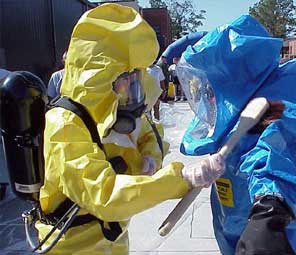
US House of Representatives has passed a bill that
advances a US plan to wage biological warfare against
Colombia and other countries where illicit narcotics are
produced. If passed by the US Senate, the bill (HR 2829)
will require the US Drug Czar to quickly formulate a plan
to field test biological weapons designed to eradicate
illicit crops.

"The Sunshine Project will call upon the BWC to prevent
violation of the treaty by the United States. In April,
the Sunshine Project will distribute an Agent Green
dossier to governments attending a preparatory meeting
for the BWC's upcoming 6th Review Conference. If the US
bill is signed into law, the Sunshine Project will press
for multilateral action by the BWC 6th Review Conference
itself, when it meets in November."


Opposition in South America, the primary target of the
plan, spans the political spectrum. When first
confronted by US biowarfare pressure in 1999-2000, the
Colombian government decided against testing and use of
biological agents to eradicate illicit crops. Other
Andean countries also oppose the plan, as do many
environmental and peace NGOs. So do indigenous peoples
who grow coca for cultural purposes unrelated to the drug
trade, a constituency that includes Evo Morales, the
recently-elected President of Bolivia.

Speaking to the Colombian daily El Tiempo on Monday,
former Colombian President Andrés Pastrana, now Bogotá's
Ambassador in Washington, emphatically reiterated
Colombia's opposition to the plan, telling the paper,
"During my government we opposed it. And Colombia's
position, now under President Álvaro Uribe, has not
changed."

Ouh! Colombia politicians supported by ... (self-censored)
The main biological weapons agents under US consideration
are strains of the fungus Fusarium oxysporum that attack
coca and other illicit crops. With its serious human
health and environmental risks, F. oxysporum has been
dubbed "Agent Green" by civil society opponents, who
liken it to the defoliant Agent Orange that was used by
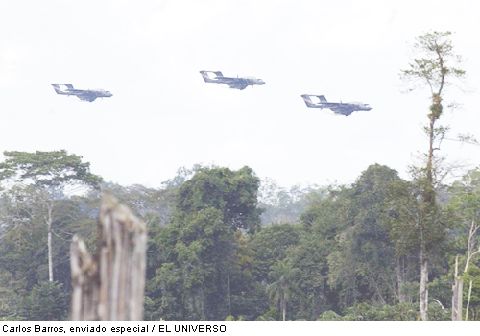
the US in Vietnam. In the US conception, huge amounts of
specially-formulated Fusarium would be sprayed from large
military aircraft to blanket large portions of Colombia
and, potentially, other countries.


The HR 2829 provision does not specifically mention
Colombia or Fusarium, although it does specify that the
testing plan should be for a "major drug producing
nation". This opens the possibility that the tests could
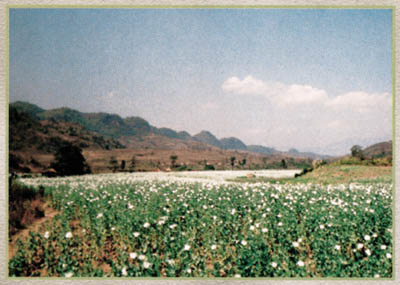
be conducted elsewhere, such as Central Asia, where the
US has supported development of biological weapons for
use against opium poppy. Given past events, however, the
bill's language is widely interpreted to refer to
Colombia."

And... ?


Thursday, March 09, 2006

Shigenobu, a political prisoner, daughter May said


Lawyer states : The conviction last month of a Japanese
Red Army leader for a 1974 attack on the French Embassy
in The Hague was based on politics and not hard evidence.

Once a charismatic leader, Shigenobu now suffers a tumor
in the neck that requires a removal operation and she is
"rethinking" her past revolutionary activities, said her
daughter, May Shigenobu at the FCCJ March 8th, Tokyo.

"She says she did the best she thought at the time, but
of course, looking back, she thinks maybe there were
other ways in which the fight could've been more
effective, more useful, or more efficient," May Shigenobu
said. The founder of the now-defunct group filed an
appeal with a higher court Monday.

Her daughter, May Shigenobu, said the sentence was
unnecessarily severe. "I think it's really a political
case," she said. "I think we really shouldn't just
accept this 20-year punishment and say that this was a
fair trial because this really (was) very, very unfair,"
she told reporters. "She is 60 years old now."

Her mother, a former soy-sauce company worker turned
militant supporter of the Palestinian cause in the 1970s,
had lived in the Middle East for about 30 years before
resurfacing in Japan in 2000 when she was arrested.

Prosecutors originally demanded a life sentence against
her and also filed an appeal Tuesday, a decision that was
criticized by Shigenobu's lawyers. "Prosecutors filed
the appeal with the strong intention of not letting her
out of prison until her death," said one of her lawyers,
Kyoko Otani.

The Tokyo District Court said in the ruling that
Shigenobu did not take part in the 1974 siege personally
but coordinated the operation with the radical Popular
Front for the Liberation of Palestine (PFLP).

"We live in a different era," said May Shigenobu, whose
father was a Palestinian PLFP militant. "It was an era
in which everywhere people were fighting, thinking and
being active against the Vietnamese War and other
oppression around the world. "We forget all that
background and we just pick up a person from there and
choose to sentence him in today's sense, today's values
and today's way of thinking."

Shigenobu's daughter and lawyer also criticized the
inhumane treatment of prisoners at the Tokyo prison where
she is held. They said the former leftist suffers from a
tumor in her neck but is not allowed to have substantial
medical care to diagnose whether it is cancer.

" Fusako Shigenobu, 60, was sentenced in February to 20
years in prison after the Tokyo District Court found her
guilty of kidnapping, confinement and attempted murder in
the 1974 attack. Shigenobu had pleaded innocent, saying
she was not present at the crime scene. But the court
ruled that Shigenobu conspired with three fellow Red Army
members in the attack and played a key role, including
obtaining weapons. One of her lawyers, Kyoko Otani,
however, said Wednesday that the conviction was merely
based on an assumption that Shigenobu must have been
responsible because she was the leader of the group."

"In establishing a conspiracy theory, the court must
provide details such as when, where and how it was
carried out, but the court never did. The conviction was
based on extremely loose fact-finding," lawyer Otani told
reporters at the Foreign Correspondents' Club of Japan.

"The ruling is largely a political decision, which labels
Shigenobu as a terrorist," Otani added.

"NB : The Japanese Red Army, a liberation army group
sympathetic to Palestinian causes, was formed in 1971.
It took responsibility for several international attacks
in the 1970s, including the takeover of the U.S.
Consulate in Kuala Lumpur, Malaysia, in 1975. The group
is also suspected in a 1972 machine-gun and grenade
assault on the international airport outside Tel Aviv,
Israel, that killed 24 people. Shigenobu was arrested in
western Japan in November 2000 after more than 25 years
on the run, most of it in the Middle East. She released
a statement from her detention cell in 2001, announcing
her group was disbanded. The National Police Agency says
seven other members are still on the run. Another key
member is serving his life sentence in the case, with a
third still awaiting trial."

Saturday, March 04, 2006

Hong Kong spy bill


Hong Kong's government has published a proposed
wiretapping and covert surveillance bill. Analysts
predict that discussion over the proposed legislation
will be stormy and contentious as it opens the
possibility that Beijing could help determine who might
be targeted under the law.

The 88-page bill was approved by the Executive Council on
Feb. 28 and distributed to legislators the next day. The
legislation is largely a continuation of previous
Legislative Council proposals and incorporates several
earlier, controversial measures that pro-democratic
legislators have criticized for weeks.

If the bill is enacted it will establish a judicial panel
along with a commissioner on interception of
communications and surveillance, which will have the
power to decide on wiretap and surveillance applications
in "highly intrusive" cases. Cases determined not to be
"highly intrusive," where "a person is not regarded as
being entitled to a reasonable expectation of privacy"
would only require officials to seek permission from an
intra-departmental authorizing officer.

Sunday, February 26, 2006

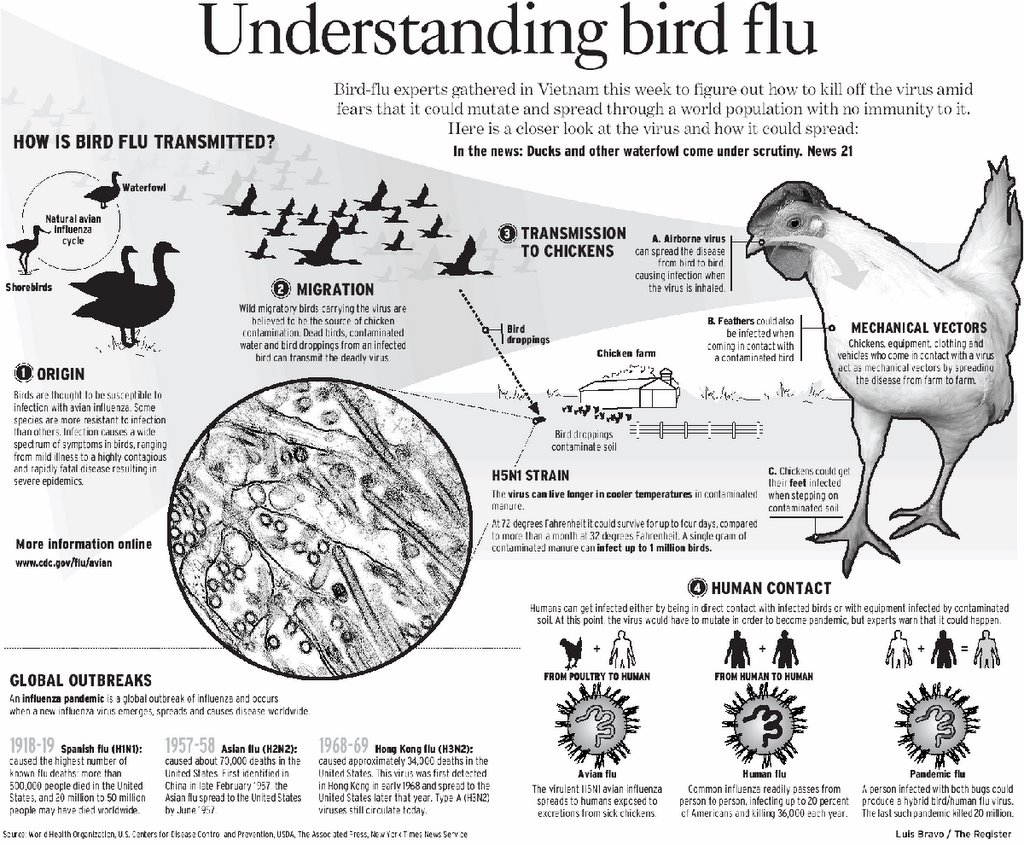
World chronic crisis in the agricultural industry ?


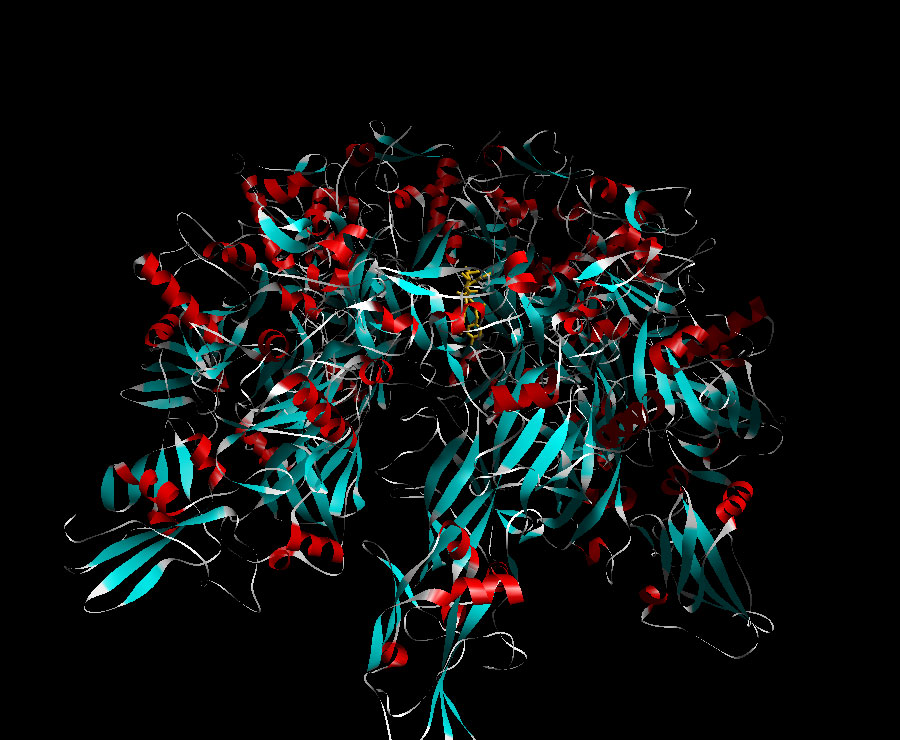
(Image of the anthrax toxin protective antigen heptamer
by Carlo Petosa of EMBL Grenoble Outstation, France)

BSE, H5N1, toxins ...

"Bacterial toxins are the major Biological Weapon
reagents, however, fungal toxins (mycotoxins) and algal
toxins (phycotoxins) are also considered as targets in
future. These toxins are already discussed in the
standpoint of food safety, it is time to set-up an Asian
research center for myco and phyco-toxins to study the
fungal/algal origins, toxicology, residue in foodstuffs,
human/animal exposure, and handling."

It is a matter of importance as we can see that food
chain is threatened by natural or human manipulation
causes. Today: mutton, beef, poultry, tomorrow... the
sea ? This is the analysis from a world specialists on
Bioresearch. His name being protected for obvious
reasons by the owner of this blog.


Japan's decision Friday to suspend imports of French
poultry and poultry products, including foie gras,
signaled the potential impact and pschycological fear on
food and toxicity, even before the confirmation that the
deadly H5N1 virus had decimated a farm of more than
11,000 turkeys at Versailleux in southeastern France.

Japan imported 1,664 tons of duck and other poultry meat
and 416 tons of internal organs, including foie gras,
from France in 2005. In France itself, there has been a
drop of up to 30 percent in poultry purchases in recent
weeks. President Chirac visiting on friday the Salon de
l'Agriculture noted the "economic and social
consequences" of panic and said the French must not fall
into such a trap. Chirac himself ate chicken and voiced
his concern to the Japanese authorities to re consider
their decision regarding the imports of food not linked
to the H5N1 alarm.


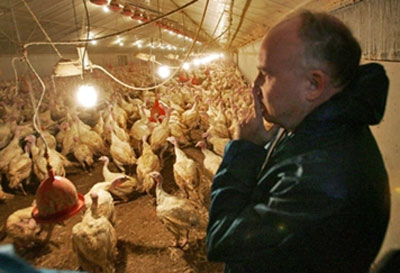
On this photo, President Chirac ate some chicken to prove his point

Chirac was informed that the H5N1 strain of the avian flu
virus had been confirmed at a commercial poultry farm
near Lyon just hours before he was supposed to inaugurate
the annual agriculture show in Paris. Around 11,000
turkeys had to be slaughtered while the farmer and five
family members were given Tamiflu as a precaution. In
addition, the family was taken to a nearby hospital and
put under quarantine.


Nevertheless, Chirac appealed to the French press not to
create an atmosphere of alarm. "There is no interest in
provoking a psychosis, a panic, it's scandalous," he said
at the agriculture fair that was conspicuously absent of
any poultry not withstanding the piece of chicken that
the president was eating to demonstrate the safety of
French fowl.

It is the first time a farm in the European Union has
been affected. France already had cases in wild ducks.
Despite reassurances that it is safe to eat cooked
poultry, sales in France have dropped by up to 30%.
"Unfortunately you can see a completely unjustified sort
of total panic developing" President Chirac say.

Japan has already announced an import ban with immediate
effect. The turkey farm in the eastern Ain department of
the country where the poultry case of H5N1 was
discovered, is just 200m from the lake where the two wild
ducks were detected. A massive vaccination programme is
already under way.

No need to confuse entrepreneurs, markets and consumers!

The real question is that "Global agricultural
authorities should harmonize with the public-health
sector to ensure the exchange of flu virus samples, and
establish a single international standard for vaccines,
say Robert Webster and Diane Hulse of St Jude Children's
Research Hospital, Division of Virology, Memphis,
Tennessee. Some discussions ahead... But what for now?
The virus is spreading.

"We know that a flu pandemic will occur, but not when.
Already in Asia the H5N1 avian flu virus has infected
people, and killed. For these outbreaks to become a
pandemic, the only ingredient lacking is consistent
human-to-human transmission. We do not know yet if the
H5N1 vector has this capability ? if it does, the
effects will be catastrophic."

Certain aspects of pandemic planning have been well
considered. But a global strategy for preventing
pandemics at their source, in the animals, mostly
poultry, that carry the virus, had received relatively
little attention.


The lethal strain has spread from Asia to at least 10
European countries and Africa, and scientists fear it
could mutate into a form that is easily transmitted
between humans, sparking a pandemic. The disease has
killed at least 93 people, mostly in Southeast Asia.

Indonesia recorded its 20th human death from bird flu
Saturday, as China reported two new cases of human
infection and India said two poultry farms in western
Gujarat state had been contaminated by the virus in that
nation's second known outbreak.

No human cases of bird flu have been reported in the EU
but French authorities sealed off the infected turkey
farm Thursday.

The farmer's family was quarantined and vehicles passing
through a protection zone around the farm were required
to ride through a 100-foot-long trough of disinfectant.


News that bird flu had spread to farm stocks was
particularly bitter for France, which has been working
for months to prevent and prepare for an outbreak.

France has some 200,000 farms that raise 900 million
birds each year. In 2004, the latest year for which
figures are available, the French poultry sector
generated more than $3.6 billion in revenues - more than
20 percent of the EU's total poultry production.

The head of France's powerful farm union, Jean-Michel
Lemetayer, asked Chirac to demand financial aid from the
EU. Agriculture Minister Dominique Bussereau said Friday
that authorities were perplexed about how the virus
appeared in commercial poultry despite precautionary
measures.

The farm is located in a protection zone set up after two
wild ducks died and were confirmed infected with H5N1.
There was speculation the outbreak may have been caused
by duck droppings on straw placed in the turkey pens,
France's Poultry Industry Association said. Claude
Lassus, the veterinarian for the Versailleux farm, told
to the French radio Friday that he believed the straw
theory was the only explanation for the infection.


France who announced its immediate measures, in a move
based on transparency and guarantee of moral
responsibility towards world consumers, confirmed the
presence of the H5N1 avian flu virus in farm poultry in
the Ain region, Feb. 25. The jump from wild birds to
domestic poultry indicates too that concern over the
avian flu has turned into a chronic issue in the world's
agricultural industry, same cannot be said by the US and
Canada as illustrated with the recent US Beef BSE (mad
cow) cases. Worst : What about the sanitary situation of
emerging nations or exporters lacking healthy ethics?


Contrary to the USA where cases proved and complaints
mean investigations, in Europe the announcement followed
a meeting of EU health ministers to develop awareness and
discuss preventive measures to be taken in case of a flu
outbreak. France also orchestrated a simulation to test
hospital reactions to human cases of avian flu.

The threat remains highest among the bird population, and
the jump from wild to domestic birds will cause Europe to
cull of millions of poultry and to lose billions of
dollars. Other nations in EU started massive investigations.

The EU Commission approved a request Feb. 23 from France
and the Netherlands to vaccinate certain bird flocks. The
Netherlands plans to inoculate free-range birds, which
are most vulnerable to contact with wild fowl. France, on
the other hand, has been granted permission to vaccinate
wild birds, not domestic poultry, in three regions where
the virus was found. The Feb. 25 announcement could
spur France to request permission to widen the net of
bird vaccinations.

Some European states, including Germany and Italy,
disagree with vaccinations; but others, like the United
Kingdom, are considering the approach. The Netherlands
required protections from market discrimination against
inoculated poultry, but this measure applies to countries
within the European Union, not markets abroad. Concern
over importing vaccinated poultry will undoubtedly worry
customers. Japan, which already bans American beef,
barred French poultry imports on Feb. 24.

Inoculations, however, are a stopgap measure. Shots do
not prevent infection, which means the virus is not
eliminated fully. Birds live, but still can be infected,
allowing the virus to mutate. Farm conditions often
hasten the speed of transmission in Europe, unlike in
Asia where most infections occur on smaller farms. The
French farm where the infected turkey is not considered a
large facility; it had more than 11,000 birds.


Officials are culling every turkey on the French farm,
but every bird on every farm surrounding that farm will
also have to be culled. The pattern will repeat itself
every time a domestic bird with avian flu is found across
the continent. This is devastating for France's poultry
industry, which is the largest in Europe.


Europe is the continent where regulations work and are
followed with effects since the mad crow crisis of the
80's, because of a strong consumers association and NGOs'
awareness working in dual effects with the administration
of 25 EU nations. Key is the regulation power. But
other cases of H5N1 already follow across the world, more
frightening as fears remain high on lack of sanitary
control in the USA, Canada, Asia and Africa where
unscrupulous meat and poultry traders lack clear rules and
medical expertise. These are urgent questions to be
addressed.

A point well taken by the Japanese pharmaceutical
industry asking for consultation to the Institut Pasteur
and to the French scientific community of the the CNRS
institute whose president Bourguignon came to Japan on
friday to discuss various aspects of sciences, research
and development, and pathologies with some Japanese
medical experts and pharmaceuticals giants such as
Hayashibara Corp. located in the Okayama prefecture.


But there is an other cause of concern : One example is
scary. A scientist : "During the 1960s and early 1970s,
military biological weapons contractors with intimate
ties to leading drug industrialists prepared mutants of
influenza and para-influenza viruses recombined with
acute lymphocytic leukemia viruses. In other words, they
stockpiled a quick spreading cancer virus which may also
be deployed."

The United Nations released a report that stated as many
as 150 million people worldwide might die from this avian
flu. Well, then OK. No need to panic. But time to act!

Prior to H5N1 Avian Flu, what was highly suspicious,
mysterious and terrifying including with the arrival of
SARS, however, was TIMING. It synchronously arrived with
the global war on terrorism, and the Anglo-American war
with Iraq. Now a big thrill. (To take with a pinch and
read with magnifying glass;-))

Quote :

"Avian Flu - Vaccination Fraud Debunked " An other
confabulation of Dr. Leonard G. Horowitz :

"New biological threats, the "war on terrorism," and
increasing numbers of "natural disasters" including
space-based threats and super-storms were considered
economically and politically expedient compared with the
first and second world wars. These "conflicts short of
war" were decidedly more manageable and economically
viable. For this reason, especially their profitability,
they were leading options among Anglo-American policy
makers.

Nelson Rockefeller's protégé, Henry Kissinger, for
instance, as National Security Advisor (NSA) under
Richard Nixon, oversaw foreign policy while considering
Third World population reduction "necessities" for the
U.S., Britain, Germany, and other allies. This Bush
nominee to direct the 9-11 conspiracy investigation, a
reputed war criminal, then selected the option to have
the Central Intelligence Agency (CIA) develop biological
weapons, according to the U.S. Congressional Record of
1975. Among these new man-made biological weapons were
germs far deadlier than the avian flu.


For example, by 1968, when Kissinger requested and
received updated intelligence on useful "synthetic
biological agents" for germ warfare and population
control, mutant recombinant flu viruses had just been
engineered by Special Virus Cancer Program researchers
O'Conner, Stewart, Kinard, Rauscher and others. During
this program, influenza and parainfluenza viruses were
recombined with quick acting leukemia viruses (acute
lymphocytic leukemia) to deliver weapons that potentially
spread cancer, like the flu, by sneezing. These
researchers also amassed avian cancer (sarcoma) viruses
and inoculated them into humans and monkeys to determine
their carcinogenicity. In related efforts, Raucher et
al. used radiation to enhance avian virus's
cancer-causing potential. These incredible scientific
realities have been officially censored and generally
neglected by the media's mainstream.

Similarly, the Institute of Science in Society (IoSS) in
London raised the genetic engineering question in the
origin of SARS. "Could genetic engineering have
contributed inadvertently to creating the SARS virus?"
they asked. "This point was not even considered by the
expert coronavirologists called in to help handle the
crisis, now being feted and woed by pharmaceutical
companies eager to develop vaccines." Those living in
glass houses should not throw stones. The above emphasis
is added to show IoSS they had "not even considered"
intentional SARS deployment in their scientific,
allegedly unbiased, purview.


Conflicts short of war, like the "War on AIDS," "War on
Drugs," "War on Terrorism," "War on Cancer," and now "War
on the Avian Flu" require sophisticated propaganda
programs employing fear campaigns for social acceptance
and popular support of legislated policies." End of
quote.

"Avian Flu - Vaccination Fraud Debunked " is an other
confabulation of Dr. Leonard G. Horowitz, of course.

But... what if... ?

Thursday, February 16, 2006

Tokyo says : New threats with Biological Weapons


- Twenty-six nations exchanged views February 14th and
15th on controlling biological weapons in Tokyo.

"New and diverse threats are around", French ambassador
and permanent representative to the Geneva Disarmament
conference Francois Rivasseau said at the BWC conference
- seminar of the Gaimusho and later on at a lecture
organized at JIIA Tokyo.


"There is a need of a better more efficient defensive
program and we need to consider the perverse development
and perverse effect of the biological weapons" he added.

"The threat is present, evolving, polymorphic, and it is
necessary for the international community to renew our
concepts as we cannot remain unprotected" ambassador
Francois Rivasseau said to Asian Gazette readers. He
described the various threats and tools for terrorists,
such as criminal pollution of the water resources, food
chain, and emphasized the need to monitor under certain
framework, the scientific research calling for
"cooperation of the scientific community", a theme
echoed by Professor Graham Pearson of Bradford
University (UK).


"Today new paradigm", ambassador Rivasseau stated in
front of an international panels of biotech and
biowarfare specialists, "is to shift from eliminating to
preventing, and delete the ambiguity about the labs and
nations doing secret research or hiding possessions of
dangerous substances".

There is a need to reconcile new and old threats as we
live in a more insecure world, and we have to focus on a
global scale approach : "Now is the time of national
cooperation and multination answers to the biotech
threats", Francois Rivasseau concluded.

Biowar in the Andes (CounterPunch; June 2000)

Timely indeed as U.S. President George W. Bush's
administration walked out of international talks on
biological weapons after he took office 2001 but said it
would re-enter negotiations in 2006.

These two-day talks, which wrap up on Feb. 15, included
France, Germany, UK, and most European nations, and
specialists and lobbyists of the United States, as well
as India and Pakistan.

The meeting will prepare for negotiations in Geneva in
December 2006 on the Biological Weapons Convention
(BWC).

The Tokyo conference was aimed at lubricating the
conference with oil by offering an unofficial meeting
before the Geneva meeting in November, a Japanese
foreign ministry official said.

The Geneva meet will be the first in five years on the
BWC, the 1975 treaty covering 155 countries that bans
the development, production and reserves of biological
weapons.


On the defensive, the US delegation admitted that the
Bush administration said that intrusive checks could
compromise U.S. security and trade secrets. The United
States stated that it ended its biological weapons
program by executive order in 1969. An assertion denied
by various international scientific community NPO's and
NGO's (See the Sunshine Project on biochemistry and non
- lethal weapons on this blog).

Doubts remain in the evaluation of threats, example with
Iran which has ratified the BWC but is often regarded as
distrustful and accused of of harboring biological
weapons along with China, India, Pakistan and Russia,
which had been hesitant about inspections.


There is a need of new security perception by focussing
actively on criteria of what threats are by thoroughly
identifying the nature of biological weapons, including
monitoring genetical modification, animal
experimentation, and synthetic biology. One scary
question remained unanswered : How long time before
human experimentation kicks off fueling the emergency of
getting to a... successful conclusion of a monitoring
of the BWC.

- Let's look behind our shoulders, at a time when US
stated that it had no program on B& C weapons Here is an
interesting outlook on the BBC :

Quote :

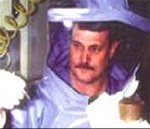
"Hidden history of US germ testing


Seventh Day Adventists were human guinea pigs in
Operation Whitecoat Fifty years ago, American scientists
were in a frantic race to counter what they saw as the
Soviet threat from germ warfare. Biological pathogens
they developed were tested on volunteers from a pacifist
church and were also released in public places.

The remarkable story is told in a BBC Radio 4
documentary, Hotel Anthrax.

In the 1950s, the Seventh-day Adventist Church struck an
extraordinary deal with the US Army. It would provide
test subjects for experiments on biological weapons at
the Fort Detrick research centre near Washington DC.

The volunteers were conscientious objectors who agreed
to be infected with debilitating pathogens. In return,
they were exempted from front-line warfare.


Fort Detrick was working on weapons it could use in an
offensive capacity as well as ways of defending its
troops and citizens.

Hotel Anthrax uses declassified documents, evidence from
Senate investigations and personal testimony to trace
the American bio-weapon programme during this period.

The research involved anthrax, other lethal bacteria and
biological poisons. The scientists also conducted tests
on an unsuspecting American public.


Rabbit fever

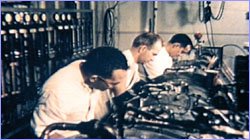
More than 2,000 volunteers, nicknamed the "white coats",
passed through Fort Detrick between 1954 and 1973, where
they worked as lab technicians, as well as offering up
their bodies for science.

One white coat, George Shores, tells of how he was
infected with tularaemia or rabbit fever.


Even my gums hurt. I don't think I have ever been so
sick in all my life George Shores A giant metal sphere,
known as the Eight Ball because of its resemblance to a
snooker ball, was used in the experiment. Technicians
exploded prototype bio-weapons inside the structure.

"They had like telephone booths all the way around the
outside of the Eight Ball and you went into the
telephone booth and shut the door and put on a mask like
a gas mask.

"It was hooked up to the material that was inside the
Eight Ball and you breathed it in," explained Mr Shores.

He began to feel ill before too long.

"Even my gums hurt. I don't think I have ever been so
sick in all my life. First it started as a headache and
achy feelings and it just kept progressing.

"I just wanted to breathe enough to keep alive. I would
just take little gasps of breath and I would hold it for
as long as I could because it hurt so bad.

"I can imagine if someone was using that agent in the
battlefield the soldier would just have to lie down - he
would not be able to function."


Fort Detrick is a US Army biological warfare research
facility The white coat volunteers were not infected
with the most lethal microbes. Their role was to test
the effectiveness of new vaccines and antibiotics and as
soon as they became ill, they were given medical
treatment. Within a few days, George Shores began to
recover.

But America's Institute of Medicine is conducting a
study of more than 6,000 veterans who say their health
has been compromised by secret tests in the Cold War
years.

Some of these were veteran sailors who were involved in
tests known as SHAD - Shipborne Hazard and Defense -
which involved spraying lethal chemicals such as sarin
and nerve gases in the open sea.

The BBC programme makers also obtained declassified
documents prepared by the US Department of Veterans
Affairs which refer to a study of nearly 100 SHAD
veterans who have since died.

It found the veterans were three times more likely to
have developed one of a group of killer diseases as a
sample group in the general population.

It concludes: "This study does suggest that veterans who
participated in Project SHAD may be at increased risk
for cerebrovascular and respiratory diseases."

Subway experiment

But it wasn't just the white coat volunteers and sailors
who were subject to experiments. Scientists used what
they thought was a harmless simulant in major bio-weapon
tests across US cities and on public transport.

It was a bacteria which they believed was harmless but
which would mimic the dispersal of deadly biological
agents such as anthrax.


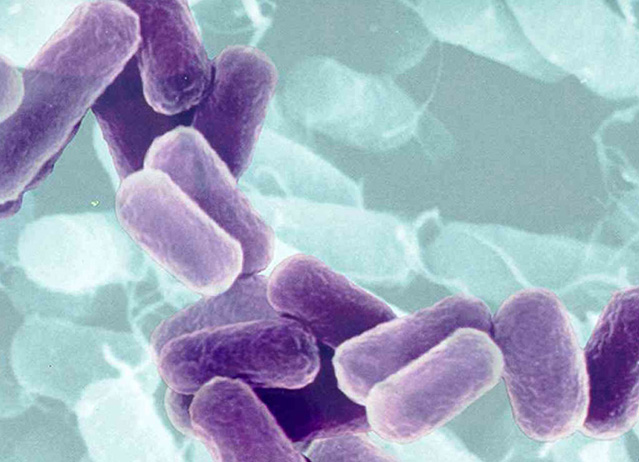
But later research showed that the strain of Bacillus
globigii, or BG, did pose a risk to people who were ill
or whose immune system was failing.

The programme hears from a retired scientist whose job
in 1966 was to drop light bulbs carrying BG on the New
York subway. He would then measure how the simulant
might spread in the event of a real attack, using a
motorized vacuum devise concealed inside a suitcase.


Wally Pannier, 82, recalls: "We'd just drop light bulbs
with the powdered stimulant inside.

"I think it spread pretty good because you had a natural
aerosol developed every few minutes from every train
that went past."

It's very hard to try and put today's ethics on
standards 20, 30, 40 years ago Dr Michael Kilpatrick In
1994, the Senate Committee on Veterans' Affairs
conducted what it described as a comprehensive analysis
stretching back 50 years of the extent to which veterans
were exposed to potentially dangerous substances without
knowledge or consent.

It was chaired by John D Rockefeller.

In a damning report, it concluded that the Department of
Defense (DoD) repeatedly failed to comply with required
ethical standards when using human subjects in military
research - and that the DoD demonstrated a pattern of
misrepresenting the danger of various exposures and
continued to do so.

Dr Michael Kilpatrick, a medical adviser to the DoD,
claims the concerns which SHAD veterans have been
raising may, finally, be changing that behavior.

"It's very hard to try and put today's ethics on
standards 20, 30, 40 years ago. That's not to excuse
it. I think they were trying to protect people using
the medical science that was available at that time.

"We're taking a look at any current tests that require
consent of our military personnel.

"We're making sure that there is an archive, a registry,
a way to get back to all of the information."

Hear part 1 of Hotel Anthrax at Radio 4's Listen again
page. Part 2 is on Monday, 20 February, 2006 at 2000
GMT."

Copy the BBC URL and paste it on your favorite Internet browser :
http://news.bbc.co.uk/1/hi/programmes/file_on_4/4701196.stm
End of quote 1


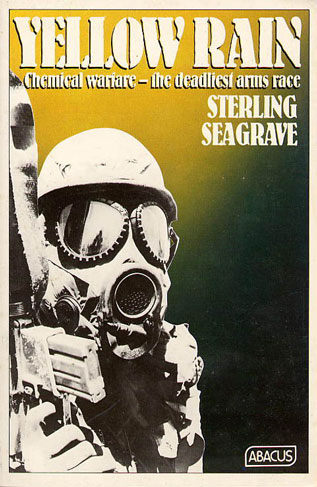
"His story is a terrifying one. . . He does not
confine his investigation to the Russians alone. He is
equally critical of American deceits over chemical and
biological weapons." The Times of London.

- Quote 2 Sunshine Project :

BIOWARFARE AND TERRORISM

by Francis A. Boyle


This book outlines how and why the United States
government initiated, sustained and then dramatically
expanded an illegal biological arms buildup. Most
significantly, U.S. expert Francis A. Boyle reveals
how the new billion-dollar U.S. Chemical and Biological
Defense Program has been re-orientated to accord with the
Neo-Conservative pre-emptive strike agenda--this time by
biological and chemical warfare.

Linking U.S. biowarfare development to the October 2001
anthrax attack on Congress--the most significant
political attack on the constitutional functioning of
democracy in the United States in recent history--Boyle
sheds new light on the motives for the attack, the media
black hole of silence into which it has fallen, and why
the FBI may never apprehend the perpetrators of this
seminal crime of the 21st century.

Biowarfare and Terrorism should raise public concern at
what the vastly expanded US biowarfare research and
purported civilian preparedness programs hold in store
for America. Will the American people allow the Bush
administration to pursue these programs, despite their
incitement to a global biowarfare arms race, and the
risk of accidents and reprisals? This book provides a
unique tool for understanding the magnitude of the
danger, and for countering it.

ABOUT FRANCIS A. BOYLE Francis A. Boyle is a leading
American professor, practitioner and advocate of
international law. He was responsible for drafting the
Biological Weapons Anti-Terrorism Act of 1989, the
American implementing legislation for the 1972
Biological Weapons Convention. He served on the Board
of Directors of Amnesty International (1988-1992), and
represented Bosnia- Herzegovina at the World Court.
Professor Boyle teaches international law at the
University of Illinois, Champaign. He holds a Doctor of
Law Magna Cum Laude as well as a Ph.D. in Political
Science, both from Harvard University

CLARITY PRESS, INC. http://www.claritypress.com

ISBN: 0-932863-46-9 Paper $12.95 2005

Biowarfare Bulletin, Updates, Table of contents,
synopsis and reviews available at :

http://www.boyle-biowarfareandterrorism.info
Click the title to access the page.