Saturday, July 01, 2006

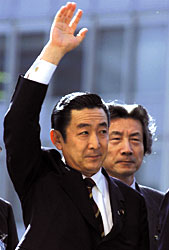
Ryutaro Hashimoto, l'homme du dialogue avec la Chine et le Moyen-Orient, disparaît brutalement a 68 ans.


"Je m'efforcerai de promouvoir des relations de confiance
entre le Japon et la Chine en gardant à l'esprit les
leçons de notre histoire. Ceci est le but premier de ma
visite en Chine" disait le premier ministre Ryutaro
Hashimoto en septembre 1997 lors de sa visite officielle
en Chine. Le chef de l'exécutif nippon a instauré en
Chine sa politique de "diplomatie eurasienne", qu'il
caractérisait auprès de nous par un réchauffement des
liens avec la Russie et dont la détente des rivalités en
Asie du Nord-Est constituait l'objectif prioritaire.
Politique remise en cause par Junichiro Koizumi.

Ryutaro Hashimoto, 68 ans, est décédé samedi des suites
de problèmes intestinaux, a annoncé l'institut où il
était soigné. M. Hashimoto, qui avait dirigé le
gouvernement nippon de 1996 à 1998, avait été admis au
Centre médical international du Japon début juin. Il y
avait été opéré du gros intestin, souffrant d'une
ischémie, a précisé un responsable des relations
publiques de l'établissement.


L'ancien chef de gouvernement avait annoncé en août 2005
son retrait de la vie politique, après avoir été
éclaboussé pendant des mois par un scandale. En juillet
2004, il avait dû démissionner de la direction de la plus
grande faction du Parti libéral-démocrate (PLD, au
pouvoir) à la suite d'une affaire de don non déclaré. La
presse japonaise l'accusait d'avoir reçu un chèque de 100
millions de yens (près d'un million de dollars) de
l'Association dentaire japonaise, elle-même frappée par
des scandales, juste avant les élections sénatoriales de
juillet 2001, et de n'avoir pas déclaré ce don.


L'ancien Premier ministre avait affirmé ne pas se
souvenir de ce chèque. Appartenant à une importante
faction du PLD, M. Hashimoto était un opposant à la ligne
de l'actuel Premier ministre Junichiro Koizumi dont il
disait qu'il n'agissait que par entêtement et n'était
qu'à l'écoute de Washington. Les médias n'ont pas manqué
de spéculer que sa chute avait été orchestrée par
l'entourage du chef du gouvernement.


En arrivant au pouvoir en 2001, M. Koizumi s'était engagé
à "détruire" la vieille garde et les vieilles habitudes
du PLD, et à "éradiquer" la corruption de la politique.

Mandaté député à 14 reprises, M. Hashimoto fut Premier
ministre de janvier 1996 à juillet 1998, date à laquelle
le PLD avait perdu les élections à la Chambre haute. Ce
revers avait été imputé à la décision de M. Hashimoto de
relever la taxe sur la consommation de trois à cinq pour
cent. Cette hausse avait été jugée responsable du
ralentissement de la reprise économique du Japon.
Négociateur chevronné, amateur d'art martial, Maitre de
Kendo, il a été le premier réformateur a l'origine du Big
Bang de la rénovation entreprise par le Japon en 1996.


A la tête du gouvernement, M. Hashimoto avait plaidé en
faveur de réformes financières et administratives et
ouvert la voie à une cure d'amaigrissement de la
bureaucratie du gouvernement central. Sur le plan
diplomatique, il a fait entendre la voix du Japon en 1998
lors des sommets du G7 a Birmingham et de l'Asem a
Londres, il était un ami de l'Europe, de la Chine et des
pays arabes. Il a débloqué en février 2004 avec Takeo
Iranuma les difficiles négociations avec l'Iran sur les
gisements d'Azadegan qui recueillaient l'opposition des
Etats-Unis. L'ancien Premier Ministre Hashimoto avait en
outre âprement négocié avec les Etats-Unis sur les
questions commerciales et militaires. M. Hashimoto avait
été pour la dernière fois au gouvernement comme
secrétaire d'Etat chargé des réformes administratives
dans le cabinet du Premier ministre Yoshiro Mori de
décembre 2000 à avril 2001.


Diplômé de la faculté de droit de la prestigieuse
université de Keio à Tokyo, il avait été élu pour la
première fois en 1963 à l'âge de 26 ans dans la
circonscription de son père, après le décès de ce
dernier. Francophile, proche du président français
Jacques Chirac, il a co-présidé le Forum de dialogue
franco-japonais, une réunion annuelle consacrée aux
échanges économiques et politiques entre les deux pays.
Mais "le Dragon" (son prénom en japonais) était aussi un
défenseur passionné par les questions liées à la
protection de l'environnement.


Ryutaro Hashimoto considérait que la résolution des
problèmes liés à l'eau serait le grand défi du 21e siècle:

Citation:

"Quelque 2 milliards d'humains sont confrontés à des
pénuries d'eau. Notre planète Terre a perdu l'équilibre
entre les quantités d'eau disponibles et la demande, et
même celui entre l'écosystème et notre capacité à
coexister avec la nature. Le déséquilibre entre le volume
d'eau disponible et la demande a non seulement conduit à
des pénuries d'eau mais également à d'autres problèmes
aussi graves que la baisse des réserves souterraines, la
pollution de l'eau et la détérioration générale des
ressources en eau. Ces problèmes ont provoqué une baisse
de la diversité des espèces associées à l'eau et une
augmentation du nombre des espèces en voie d'extinction à
travers le monde. On dirait vraiment que la Terre hurle.
L'année dernière, elle s'exprima à travers les nombreuses
inondations qui frappèrent diverses régions du monde, y
compris l'Europe qui est rarement confrontée à ce
problème. Rien d'étonnant donc à ce que l'on entende
parler de "crise de l'eau". De plus, compte tenu de
l'accroissement continu de la population mondiale, il
n'est pas exagéré de dire que les questions liées à l'eau
constituent le principal défi du 21e siècle si nous
voulons protéger notre Terre nourricière."

"Le Dragon" s'est éteint à l'âge de 68 ans.

Après le théâtre Koizumi, le Karaoke Koizumi!


Après les vives tensions créées par la Corée du Nord qui
menace de lancer un missile balistique, le Premier
ministre japonais, Junichiro Koizumi, en visite
officielle aux Etats-Unis, s'est détendu jeudi à la
Maison Blanche. Koizumi est un fan inconditionnel
d'Elvis Presley. Il est d'ailleurs né le même jour que
le « King », un 8 janvier.

Itinéraire d'un Premier Ministre japonais singulier sur
les pas d'Elvis et de la Grande Alliance Nippo-US :

Le Japon est fermement engagé sous le parapluie nucléaire
des Etats-Unis, et Washington base environ 50.000 soldats
dans des bases et dans les ports japonais. Les deux pays
mettent progressivement en place une coopération
militaire qui s'étendra bien au delà des frontières
naturelles de l'archipel japonais de l'Asie Pacifique au
Moyen Orient devant une Europe empêtrée dans ses
discordes.

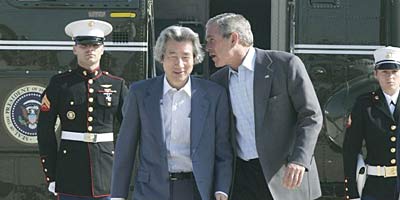
L'ombre d'Elvis a accompagné le dernier jour de la visite
aux Etats-Unis du Premier ministre japonais Junichiro
Koizumi. Après lui avoir offert un jukebox des années 50
proposant 25 titres de son chanteur favori, George W.
Bush a fait visiter à son invité Graceland, la propriété
de la légende du rock'n'roll à Memphis (Tennessee).


Gentiment poussé par le président américain -"Vous êtes
un très bon interprète d'Elvis..."-, le chef du
gouvernement a entonné sans se faire prier des succès
comme "Love Me Tender" et "Wise Men Say, Only Fools Rush
In"', confirmant sa propension à pousser la chansonnette
dès que l'on évoque son idole.

Et de roucouler avec ses deux guides exceptionnelles pour
la visite de la propriété, la fille et unique héritière
du "King" Lisa Marie, et la mère de cette dernière,
Priscilla. "I Want You, I Love You" ("Je te désire, je
t'aime"), a-t-il lancé à la première, l'entourant de son
bras en chantant "Hold Me Close, Hold Me Tight"
("Serre-moi contre toi, serre-moi fort").

Les déhanchés, costumes à paillette et décors exhubérants
n'étant pas la tasse de thé de George W. Bush, qui
s'arrange le plus souvent pour échapper aux excursions,
même celle au Taj Mahal en Inde, emmener son invité, au
surplus en avion, dans un tel haut-lieu touristique
montre à quel point il l'apprécie depuis cinq ans qu'ils
se connaissent. Même si le chef de la Maison Blanche a
toujours préféré la diplomatie détendue et personnalisée
aux dîners d'Etat.


Selon ses conseillers, le président a considéré qu'une
visite à Graceland et un jukebox spécial Elvis étaient
les meilleurs cadeaux à offrir à un Premier ministre qui
quittera ses fonctions en septembre après s'être illustré
comme l'un des plus ardents alliés et défenseurs des
Etats-Unis.

"C'est une telle joie d'être ici, à Graceland", a déclaré
George Bush lors de la promenade dans la résidence de
couleur blanche et de style colonial. "C'est un rêve", a
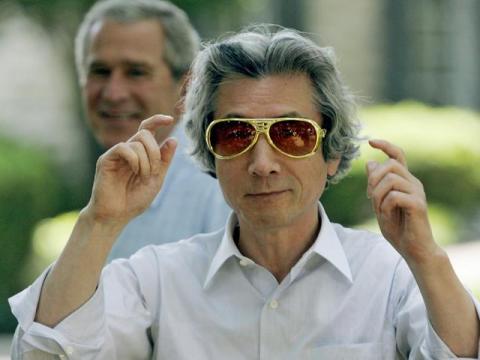
répondu Junichiro Koizumi, qui a essayé les lunettes de
soleil de son chanteur favori.


Dans l'avion présidentiel Air Force One, il avait pu se
régaler avec "Love Me Tender", "Don't Be Cruel" et autres
chansons d'Elvis Presley, ainsi que des DVD des films du
chanteur, tout en se voyant proposer les spécialités
culinaires préférées du "King": beurre de cacahuète
grillé et sandwiches à la banane. Les deux dirigeants
ont passé leur tour sur les casse-croûte et, pour ce qui
est de la boisson, M. Bush a opté pour le café et M.
Koizumi pour le thé vert.


A Graceland, les deux hommes ont suivi le parcours
imposé, passant par la Jungle Room au décor
simili-aricain, mais, toutes personnalités qu'ils soient,
ils n'ont pas eu accès à l'étage privé, où est mort Elvis
en 1977. La visite à Graceland couronnait deux jours de
sérieuses consultations et de pompe toute protocolaire.


Pour découvrir quelques uns de ces défis lancés au monde
par l'alliance Nippo-US, cliquer sur le titre afin de
lire l'étude : " The Japan-US Alliance, 21st Century
Challenges in East Asia " par H.D.P. Envall (Electronic
journal of Contemporary Japanese Studies).

Thursday, June 29, 2006

Junichiro Koizumi to the US: " I want you, I need you"


Junichiro Koizumi and President Bush can hang around the
Jungle Room all they want. Japan's prime minister can
even warble another rendition of "I Want You, I Need You,
I Love You," as he did at a birthday party for Bush last
year. But there are some things even presidents and
prime ministers can't do at Elvis Presley's Graceland.
As a guest of the president and first lady Laura Bush,
Koizumi will visit the Presley home on June 30, and
they'll pretty much have the run of the place. Presley's
private bedroom and the adjoining bath where he
collapsed... ...and died in 1977 will remain off-limits,
however. "You can't visit the upstairs at the White
House, either," said Jack Soden, chief executive of Elvis
Presley Enterprises.


Koizumi, a big-time Elvis fan with a suspiciously
Presley-like hairdo, leaves office in September. He and
Bush meet June 29 in Washington, and the Memphis trip is
a farewell gift from the president. For the most part,
Koizumi and the Bushes will see the same Graceland other
visitors see: the shag carpets and ceramic monkeys of the
Jungle Room, which Elvis famously furnished with a
30-minute shopping spree; the glossy black baby grand
piano near the living room's white, 15-footsofa; and
hundreds of gold records, jumpsuits and guitars in
Graceland's museums. Graceland opened in 1982, and each
year, more than 600,000 tourists tromp through its first
floor and basement playrooms and visit Presley's grave
beside the swimming pool. But the home's upstairs is
closed to the public. The tour won't be completely
standard fare, however. It will be led by Presley's only
child and heir, daughter Lisa Marie, and her mother,
Priscilla. Lisa Marie Presley turned over management of
Graceland and sold the rights to her father's name and
image last year to CKX Inc., an entertainment company
that also owns the "American Idol" TV show.


Graceland's new bosses won't be around for the
president's visit because "they didn't want to get in the
way," Soden said. "This is not a photo-op for the prime
minister," he said. "This is truly a heartfelt desire to
tour Graceland, and the president and the first lady want
the prime minister to have that experience."


Bush and Koizumi are the first sitting heads of state to
visit Graceland, but Soden's staff is accustomed to
dealing with high-profile visitors, including foreign
ambassadors, movie stars and rock 'n' rollers paying
homage to Presley. "We're always ready for visitors
great and small," Soden said. "Every hour of every
daywe're fulfilling somebody's dream. They dream of
coming and seeing Graceland and this is their moment. And
that's true for the prime minister." The visit would be
such a moment, too, for many of Koizumi's countrymen.
Presley has been one of Japan's most popular American
entertainers since the 1950s and more than 2,000 Japanese
tourists visited Graceland last year.


The Elvis Presley Fan Club of Tokyo boasts more than
3,000 members, and The Elvis Presley Society of Japan
lists 2,000. Four years ago, Japanese fans quickly
bought all 200,000 copies of a limited-edition Elvis CD
featuring 25 songs selected by Koizumi. Yoko Hika,
president ofa club called C'mon Elvis Fans, said many of
the Japanese faithful are getting old, however, and the
prime minister's Memphis trip may encourage more young
people to give Elvis a try. "I hope the attention from
Koizumi's visit to Graceland makes them curious and want
to listen to his music," Hika said. (Agency)


The Koizumi-Bush chemistry has been very important to
both men and to the strength of U.S.-Japan relations.
Bush and Koizumi are therefore sure to discuss how to
respond if North Korea, which declares that it has
nuclear weapons, tests a long-range missile. Japan is
within range of North Korea's missiles, and its
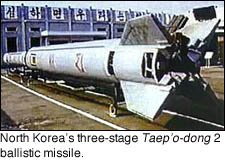
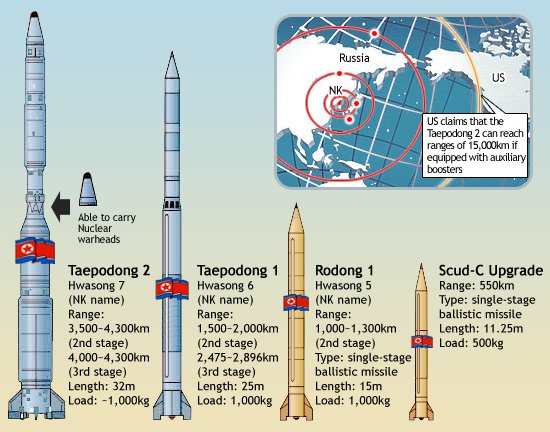
Taepodong-2 missile also is believed to be capable of
reaching parts of the United States. North Korea has
refrained from long-range missile tests since 1999.


A defense official said Wednesday that while some
intelligence analysts believe the North Koreans fueled
the missile last week, others have concluded that they
didn't. U.S. intelligence agencies rely heavily on
satellite images of North Korea, and while they can show
missiles being moved to launch pads and fuel hoses being
connected, they don't show whether any fuel was pumped
through the hoses. The U.S.-Japan alliance has
guaranteed stability in the Asia-Pacific region for
decades, and the two countries want to preserve that
power as China grows. If China can't be contained, and if
China and the United States have to compromise on
everything there are serious reasons to worry about the
future of East Asia.

Tuesday, June 27, 2006

Haste makes waste!


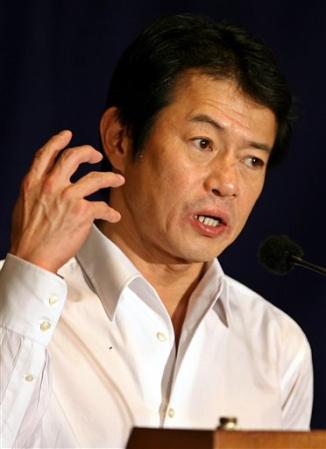
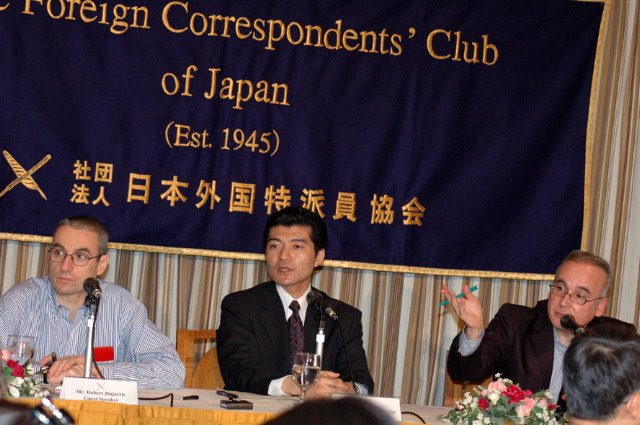
Japan's Agriculture Minister Shoichi Nakagawa spoke to
the press at the Foreign Correspondents' Club of Japan
during his press conference in Tokyo Friday, June 23,
2006. Cabinet Minister Nakagawa, Tokyo University
graduated and long time veteran politicians elected in
Hokkaido, called a U.S. proposal to impose sanctions on
Tokyo if it doesn't resume imports of American beef soon
"nonsense." "The fact that the senators have chosen this
moment to submit the bill I think is nonsense,"
Agriculture Minister Shoichi Nakagawa said. He added
that safety procedures must be properly examined, saying
"haste makes waste." The U.S. Senate is considering
legislation that contains a nonbinding call for trade
sanctions unless the imports are restarted by the end of
the summer.


Japan says it wants to ensure the facilities measure up
to Japanese food-safety guidelines amid fears of mad cow
disease, but some U.S. lawmakers accuse Japan of another
stall tactic after months of negotiations. Japan plans
to send three inspection teams the United States on
Saturday, but Health Ministry official Kenichi Watanabe
would not say what meat-processing facilities would be
their first stops. Each team will consist of three
officials from either the health and agriculture
ministries. The ban, first imposed in 2003 over concerns
that U.S. beef might be infected with mad cow disease,
was lifted at the end of last year. But in January,
Japan again halted imports of American beef after one
shipment was found to contain prohibited parts of cows
believed at risk of the disease.

At stake is a trading relationship that was worth $1.4
billion annually to the U.S. beef industry when Japan
banned American beef in response to the first U.S. case
of mad cow disease in 2003. Nakagawa said he and his
U.S. counterpart, U.S. Agriculture Secretary Mike
Johanns, "both realize there are still issues that must
be addressed" in the inspections. The one-month audit
will tour 35 meat-packing plants to ensure the facilities
comply with Japanese import regulations. Inspectors will
also review procedures at ranches, feedlots and mills.


Mad cow disease is formally known as bovine spongiform
encephalopathy, or BSE. In humans, eating meat
contaminated with BSE is linked to variant
Creutzfeldt-Jakob Disease, a rare and deadly nerve
disease.

A study of an epidemic caused by cannibalism indicates
the human form of mad-cow disease may incubate for more
than 50 years before developing into the fatal illness,
researchers said in a medical journal.

The findings suggest the eventual size of a variant
Creutzfeldt-Jacob disease epidemic may be much bigger
than previously thought, U.K. researchers including John
Collinge of the University College London wrote in this
week's The Lancet.

Bovine Spongiform Encephalopathy, or mad-cow disease, was
first found in the U.K. in 1986. Humans catch the
disease through meat from cattle that have eaten feed
mixed with ground-up parts of infected animals. About
160 U.K. residents have been diagnosed with the disease,
with cases also reported in the U.S. and Japan.


"A human BSE epidemic may be multiphasic,'" Collinge
said in The Lancet. "Recent estimates of the size of
the variant Creutzfeldt-Jacob disease epidemic based on
uniform genetic susceptibility could be substantial
underestimations."

The disease is caused by abnormal prions, a type of
protein that damages the patient's central nervous
system. The prions unfold in the brain, creating vast
dead spots.

The researchers studied kuru, a disease caused by
cannibalism that reached epidemic proportions in some
areas of Papua New Guinea. The cannibalism, which was a
ritual mourning practice, was stopped by Australian
authorities in the 1950s. The researchers identified 11
patients with kuru and found that estimated incubations
periods were as long as 56 years and may have been seven
years longer.

The incubation period for BSE prions in humans may be
even longer because infection between species typically
takes longer than within species, the researchers wrote.
The patients identified so far may "represent a distinct
genetic subpopulation with unusually short incubations
periods for BSE," Collinge said.


A scenery of the Hokkaido landscape, region of Japan
known for its agriculture and its environmental
protection.

Wednesday, June 21, 2006

Taepodong 2 : New missile crisis ?


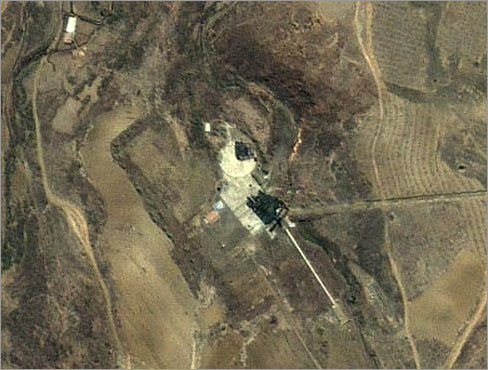
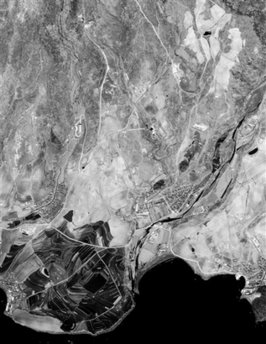
Taepodong missile launch complex in North Korea,
Musudan-ri, image in May 2006.

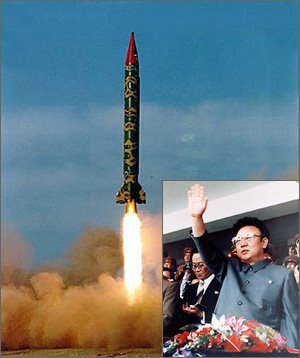
North Korea declared Tuesday it has a right to carry out
long-range missile tests, despite international calls for
the communist state to refrain from launching a rocket
believed capable of reaching the United States. The
bristling statement from North Korea to Japanese
reporters in Pyongyang came as France and the U.N.
secretary-general raised the alarm over what are believed
to be the reclusive nation's preparations for a test of
the Taepodong-2, with an alleged range of 6.000 km.


The rhetoric could sour hopes that North Korea might
scuttle the test in the face of international criticism.
But it was unclear whether the comments indicated a
willingness to go ahead with the launch, or reflected
North Korea's penchant for threatening bluster as a
bargaining tactic. The international campaign to block
the launch widened Tuesday, with the French government
and U.N. Secretary-General Kofi Annan calling for a halt
to test preparations. "I hope that the leaders of North
Korea will listen to and hear what the world is saying.
We are all worried," said Annan, who was in Paris. He
called for all parties in the standoff to avoid an
escalation of tensions.


Experts believe North Korea is preparing to test launch a
new missile which could reach the United States. In
1998, it test launched an earlier model which flew over
Japan and landed in the Pacific Ocean. North Korea
reportedly rejected Tuesday any outside criticism of its
actions. Valerie Niquet, head of the central Asia
department at the French Institute for International
Relations in Paris, says the international community can
put economic and other pressure on impoverished North
Korea to give up its program. "The possibility of
putting pressure on North Korea is not very high in
military terms - nobody would want to envision the risk
of war for whatever motive. But economic pressure can be
inflicted on North Korea, and it's very effective," he
said. Niquet says it is also essential that Japan be
included in any negotiations with North Korea. Concerns
about North Korea may be raised Wednesday, when U.S. and
European leaders meet in Vienna.


(French M-4 missile, 4000 km range for M-4A and 5000 km
for M-4B) French Prime Minister Dominique de Villepin,
speaking after talks with Annan, said any North Korean
missile test must draw a "firm and just" international
response.


(Eurocopter Tigre France)

Former South Korean President Kim Dae-jung has canceled a
trip to Pyongyang planned for next week because of
tensions over apparent preparations by North Korea for a
ballistic missile test, an official in Seoul said on
Wednesday.


"It is practically impossible for him to visit in late
June because of the unexpected circumstances," South
Korean official Jeong Se-hyun, who was negotiating the
trip. Kim, who orchestrated an unprecedented summit with
North Korean leader Kim Jong-il in 2000, had hoped to use
the meeting to help restart stalled six-country talks on
ending Pyongyang's nuclear programs.

Kim, who was president from 1998 to 2003, won the Nobel
Peace Prize in 2000 for orchestrating the meeting in
Pyongyang. His visit began a rapid warming of ties
between the two Koreas, which are still technically at
war because only a truce was declared at the end of the
1950-53 Korean War. Kim Jong-il has yet to reciprocate
with a visit to the South.

The Bush administration is weighing responses to a
possible North Korean missile test that include
attempting to shoot it down in flight over the Pacific,
according to US defense officials.


China's foreign ministry spokeswoman Jiang Yu dodged
questions concerning North Korea's possible trial of a
new long range ballistic missile on Tuesday.

Jiang made her debut as a Ministry of Foreign Affairs
spokesperson last week and appears not to have a complete
grasp or confidence in articulating the bandwidth of
policy information the PRC is willing to make public at
its twice weekly press briefings. Her answers were
either terse one sentence statements or boilerplate
commentary that did not address the questions being
asked; her responses were usually a combination of both,
contributing to uncertainty at possibly a critical time.

The Chinese foreign ministry spokeswoman said her country
had "heard of reports" about the impeding North Korea
missile test, but repeatedly refused to offer details on
when and where China had first learned about the planned
trial.

Any launch, successful or otherwise, would ratchet up
tensions in the ongoing crisis over North Korea's
ambitions for nuclear weapons. U.S. Secretary of State
Condoleezza Rice warned the test was "a very serious
matter and a provocative act," saying Washington's stance
on the matter was of the "utmost seriousness."


There was an intense flurry of diplomatic activity over
the weekend, with Secretary Rice discussing the
possibility of a North Korean missile launch with her
Japanese and Chinese counterparts, pressuring the PRC in
particular to have its client state put a halt to the
test.

When queried about China's reaction to Rice's comments,
the spokeswoman sidestepped by giving a bland statement
about her government wanting "peace on the Korean
peninsula and working with relevant parties" towards that
end.


The U.S. rebuffed a North Korean offer made in early
June for its chief nuclear negotiator, Christopher Hill,
to visit Pyongyang for discussions. The North insists a
resolution to the nuclear crisis can come about only
through direct talks and a non-aggression pact with
Washington.

The Bush administration continues to support the six
party process -- sponsored by China and involving the
United States, North and South Korea, Japan and Russia --
as the best means to resolve the key multilateral crisis
facing East Asia.

Talks have bogged down since the North has refused to
return to the table after an American crackdown on banks
in Macao dealing with the North Korean government and
companies suspected of laundering drug money and
counterfeiting U.S. currency.

Analysts believe the silence shown by the PRC on the
issue is an effort to downplay reports North Korea has
fueled its Taepodong-2 missile and stands on the
precipice of testing a weapon system that in its most
advanced three stage version would be capable of reaching
most of the United States.


The test would break a moratorium on North Korean missile
tests that has held since 1999. The last test of a
long-range missile, a Taepodong-1, was fired over Japan
in 1998.

Members of the American intelligence community believe
the missile on the launch pad is a two stage version
rocket which has the capability of hitting Alaska.

Some U.S. and Japanese officials believe North Korea is
poised to launch because the Taepodong-2 missile has been
fueled. It has been five weeks since the first satellite
imagery showed launch preparations underway at the
Musudan-ri missile facility in North Hamgyong province in
northeastern North Korea.

Bad weather at the launch site delayed any test of
missile system on Tuesday June 21st.

U.S. experts think that North Korea has sufficient
plutonium for a minimum of six nuclear weapons and is
continuing to beef up its atomic arsenal. Defense
specialists say it is plausible the North might be able
to build a nuclear warhead small enough to be fit on a
missile.

A western diplomat speaking on condition of anonymity
told United Press International the North Koreans "were
putting on a show of brinksmanship and bluster," but did
not think an actual launch would take place for fear of
"alienating the regime's big brother."

Despite recent efforts by South Korea to help its
brethren north of the 38th parallel, North Korea remains
wholly dependent upon China for its security against any
possible U.S. use of force targeting either its nuclear
or missile facilities. The PRC also offers multiple
forms of economic support to keep its communist neighbor
from disintegrating.


When reporters asked what China's response would be if
North Korea conducted its missile test and why her
answers on this urgent issue were so brief, spokeswoman
Jiang retorted by saying she "wouldn't discuss
hypothetical situations" and that "this is a press
briefing, not a symposium."

Because North Korea is secretive about its missile
operations, U.S. officials say they must consider the
possibility that an anticipated test would turn out to be
something else, such as a space launch or even an attack.

Thus, the Pentagon is considering the possibility of
attempting an interception, two defense officials said,
even though it would be unprecedented and is not
considered the likeliest scenario.

The officials agreed to discuss the matter only on
condition of anonymity because of its political
sensitivity.

Pentagon spokesman Bryan Whitman said he could not say
whether the unproven multibillion-dollar U.S.
anti-missile defense system might be used in the event of
a North Korean missile launch. That system, which
includes a handful of missiles that could be fired from
Alaska and California, has had a spotty record in tests.


Although shooting down a North Korean missile is a
possibility, the Pentagon also must consider factors that
would argue against such a response, including the risk
of shooting and missing and of escalating tensions
further with the communist nation.

Even if there were no attempt to shoot down a North
Korean missile, it would be tracked by early warning
satellites and radars, including radars based on ships
near Japan and ground-based radars in Alaska and
California.

Robert Einhorn, a senior adviser at the Center for
Strategic and International Studies, said a U.S.
shootdown of a North Korean missile on a test flight or a
space launch would draw "very strong international
reaction" against the United States. He saw only a small
chance that the U.S. would attempt a shootdown.

Signs of North Korean preparations to launch a long-range
ballistic missile, possibly with sufficient range to
reach U.S. territory, have grown in recent weeks,
although it is unclear whether the missile has been fully
fueled. U.S. officials said Monday the missile was
apparently fully assembled and fueled, but others have
since expressed some uncertainty.

Bush administration officials have urged the North
Koreans publicly and privately not to conduct the missile
test, which would end a moratorium in place since 1999.
That ban was adopted after Japan and other nations
expressed outrage over an August 1998 launch in which a
North Korean missile flew over northern Japan.


At the time of the 1998 launch, the United States had no
means of shooting down a long-range missile in flight.
Since then, the Pentagon has developed a rudimentary
system that it says is capable of defending against a
limited number of missiles in an emergency ? with a North
Korean attack particularly in mind.

The Government Accountability Office, Congress'
investigative arm, says the Pentagon has spent $91
billion on missile defense over the past two decades.

The 1998 event turned out to be a space launch rather
than a missile test; U.S. officials said the satellite
failed to reach orbit.

U.S. and international concern about North Korea's
missile capability is heightened by its claims to have
developed nuclear weapons. It is not known whether they
have mastered the complex art of building a nuclear
warhead small enough to fit a long-range missile,
although in April 2005 the director of the Defense
Intelligence Agency, Vice Adm. Lowell Jacoby, told
Congress that North Korea was capable of arming a missile
with a nuclear warhead. U.S. officials have since
called it a "theoretical capability."

No administration official has publicly raised the
possibility of bombing the North Korean missile before it
can be launched. Jan Lodal, a senior Pentagon policy
official during the Clinton administration, said in an
interview Tuesday that he would not rule out a
preemptive strike. He said it would be the surest away
of eliminating the threat of being surprised by the
launch of a Taepodong-2, an intercontinental ballistic
missile that some believe has enough range to reach U.S.
territory.

David Wright, a senior scientist at the private Union of
Concerned Scientists, said he strongly doubts that the
Bush administration could back up its claims of having
the capability to shoot down a North Korean missile.

"I consider it to be rhetorical posturing," Wright said.
"It currently has no demonstrated capability."

The last time the Pentagon registered a successful test
in intercepting a mock warhead in flight was in October
2002. Since then, there have been three unsuccessful
attempted intercepts, most recently in February 2005.

Rick Lehner, chief spokesman for the Pentagon's Missile
Defense Agency, said the next intercept test is scheduled
for the August-September period, to be followed by
another before the end of the year. Lehner said that
beginning about a year ago, the system has periodically
been placed in "operational status."

Baker Spring, a Heritage Foundation analyst and strong
advocate of U.S. missile defenses, said he believes that
"in theoretical terms" the U.S. system is a capable of
defeating a North Korean missile. And he thinks that if
the North Koreans launched on a flight pattern that
appeared threatening to the United States, the
administration "would be well within its rights" under
international law to shoot down the missile.

The Washington Times reported Tuesday that the Pentagon
has placed its missile defense system in an active status
for potential use.

Officials in France and elsewhere called Tuesday for a
strong response by the international community to any
possible missile test by North Korea. A senior U.S.
official says the possible North Korean missile test is
raising alarm in Asia as well.

(Mirage 2000)

Wednesday, June 14, 2006

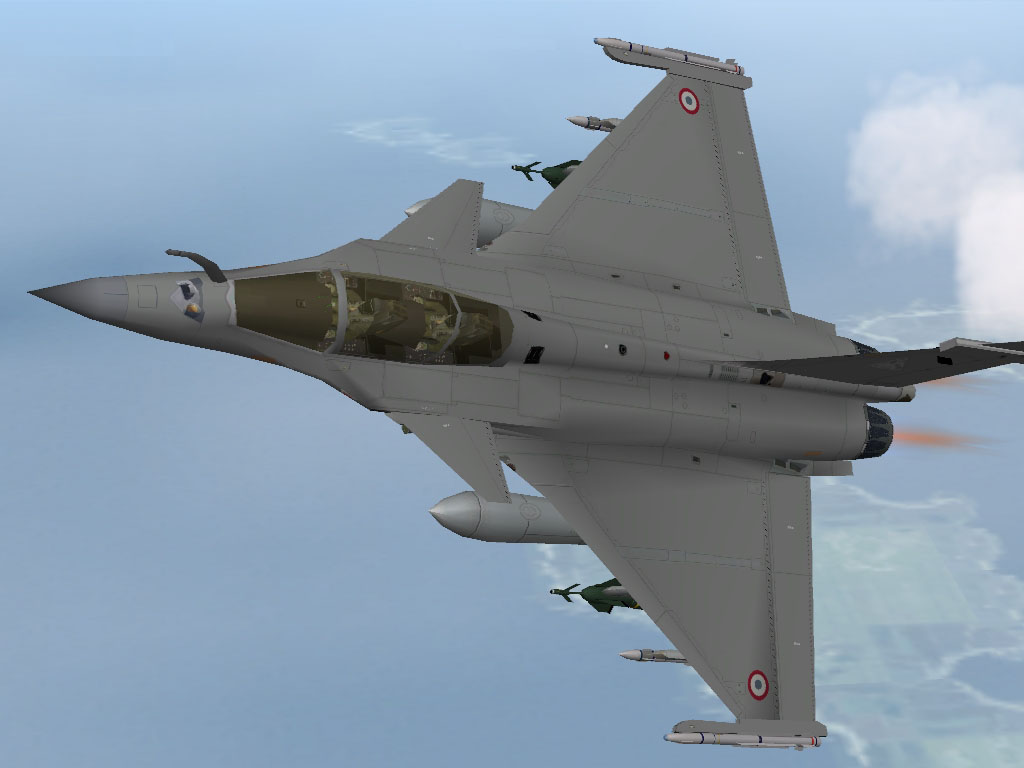
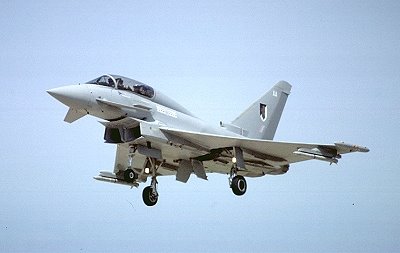
Rafale et Typhoon : Comment cibler les marches asiatiques


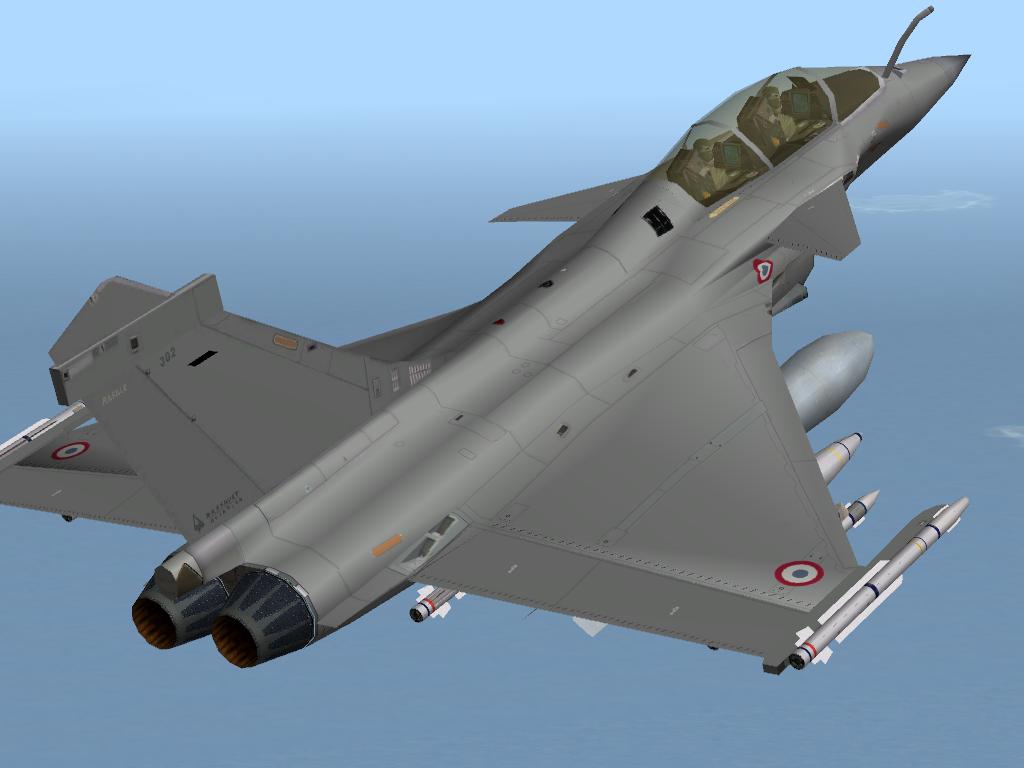
(Rafale)

Rafale et Typhoon, le Sukhoi discounté pose problème :

Rafale et Typhoon, les deux avions de combat fournis par
l'industrie européenne, constituent, à en croire les
experts, les meilleurs compromis possibles en matière de
performances, de technologies et de capacités
d'évolution.

Contrairement à leurs compétiteurs américains, les F-22
et F-35, le choix de la furtivité, plus adapté à l'époque
de la guerre froide qu'à la situation présente ou
imaginable à moyen terme, n'a pas pesé plus que
nécessaire sur la conception des deux avions européens.
Lesquels seraient ainsi parfaitement adaptés aux besoins
actuels et prévisibles.


(Rafale)

Néanmoins, les perspectives des ventes export du Rafale
et du Typhoon s'avèrent aujourd'hui minimalistes.
L'Europe, en matière d'avions de combat, entrevoit
aujourd'hui un paysage paradoxal. Son marché domestique
constitue actuellement le seul au monde à même d'offrir,
dès le lancement d'un programme, des effets de série
comparables à ceux dont bénéficient les produits
d'outre-Atlantique.

Ainsi, ce ne sont pas moins de 992 Tornado qui sont
sortis des chaînes italiennes, allemandes et
britanniques. Et les partenaires du Typhoon ont prévu
d'en acquérir, à eux quatre, pas moins de 620 (dont 392
déjà commandés). Des quantités plus qu'honorables.


(Typhoon)

Même au regard du marché américain : l'USAF peine en
effet à trouver le budget nécessaire à la commande de 183
F-22 Raptor ! Et pourtant, loin de consolider ce marché
domestique, l'Europe continue à se tourner vers les
produits américains. C'est ainsi que des pays ne
participant pas aux « grands » programmes d'avions de
combat européens ont encore récemment acquis des F-16
tandis que même les nations phares, telles la
Grande-Bretagne et l'Italie, ont intégré le programme
F-35, acceptant de la sorte de basculer au profit de
l'industrie américaine des budgets de R&D qui auraient
probablement pu mieux servir, s'ils avaient été employés
sur d'autres programmes, les intérêts européens.

Mais là n'est pas l'unique paradoxe de cette Europe qui
s'offre le luxe de développer en son sein plusieurs
programmes concurrents dont des systèmes d'armes parmi
les plus évolués au monde... (Sources: Défense)


(Rafale B)

Cela dit les marchés potentiels ont évolué, et il n'est
pas sans risques de proposer du matériel militaire
sophistiqué a des pays aux gouvernements déconsidérés
prêts a disparaître au profit du nouveau panarabisme, ce
qui signifie que subsistent 2 marchés désormais :
asiatiques et européens, sans oublier l'Amérique du Nord
(bien qu'assez limité). Mais des problèmes de paiements
existent dans bien des pays, et de sécurité des équipes
de maintenance (2/3 a 3/4 d'un contrat)

Le volet financier n'est pas le critère essentiel des
marchés ciblés, qui disposent de très forts potentiels
technologiques, matériels et humains s'entend. Sur ces
marchés ciblés actuels ne faudra t il pas alors se
défendre devant de nouvelles menaces par le jeu
d'alliances sur les hommes, sur les régimes et le
matériel ?

C'est ainsi qu' intervient le facteur "interoperabilité".
Tout cela ne dénote t il pas que de nouveaux
impérialismes sont décelables dans un futur proche?

A lire (en anglais)

Citations : (Cliquer le titre pour accéder a l'article de
Patrick Cronin du IHT (15 Juin2006)

The return of Japan

"Prime Minister Junichiro Koizumi is preparing to leave
office with a bang. Capping five and a half years of
assertive Japanese leadership - hitherto an oxymoron -
Koizumi's cabinet is proposing legislation that would
create a real defense ministry, and thereby bid farewell
to the existing Japan Defense Agency. After renouncing
the right to wage war as a means of settling disputes
following its defeat in World War II, Japan has been
seeking to gradually become a normal power again. The
rise of China and America's post-9/11 focus on terrorism
and the greater Middle East has provided further impetus
for Japan to put this element of its history behind it."

Ce que j'ai fait observer il y a déjà quelques temps
(années) dans mes reportages dans la presse écrite, sur
les Radios et TV françaises.

./.

Monday, June 12, 2006

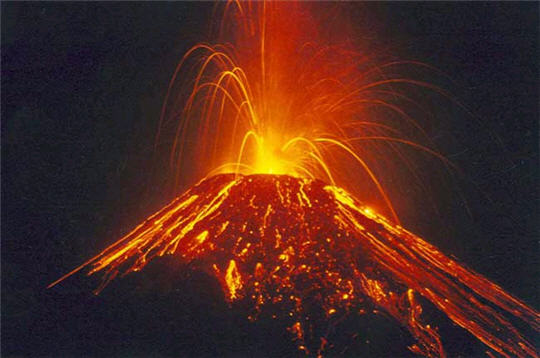
Ceinture de Feu : Le réveil des volcans


Les tremblements de terre et éruptions volcaniques sont
fréquents en Asie, en particulier en Indonésie et au
Japon, immenses archipels formés de milliers d'îles et
d'îlots, situés sur la "ceinture de feu" du Pacifique.


Le 26 décembre 2004, un tremblement de terre d'une
extrême violence survenu au large d'Aceh avait provoqué
un tsunami, qui avait ravagé les côtes de l'océan Indien,
tuant plus de 220.000 personnes.


Le volcan japonais Sakurajima, qui avait craché des
nuages de cendres la semaine dernière, présente des
signes de nouvelle éruption. L'Agence a publié un
bulletin spécial faisant état de la forte probabilité
d'une nouvelle éruption volcanique sur l'île de
Sakurajima, dans la préfecture de Kagoshima (sud de
l'Archipel nippon).


Le mont Sakurajima (1.117 m) est considéré comme l'un des
volcans les plus actifs du Japon. Il a une activité
permanente sur le flanc sud depuis un demi-siècle, mais
l'éruption de mercredi dernier était la première sur son
côté oriental depuis soixante ans. Les milliers de
petites éruptions annuelles du Sakurajima en font une des
attractions touristiques favorites de la région.


Les autorités de la grande ville de Kagoshima, située à
quelques kilomètres, organisent régulièrement des
exercices d'évacuation. Depuis 1955, le volcan est entré
en éruption de 100 à 200 fois par an, occasionnant des
nuages de cendres sur l'agglomération de Kagoshima.


D'autres cratères sont récemment entrés en activité au
Japon, parmi lesquels le volcan Oyama, situé sur l'île de
Miyakejima (dans l'archipel d'Izu) à 180 km à l'est de
Tokyo et le Meakandake qui se trouve sur l'île
septentrionale de Hokkaido. L'Archipel japonais se situe
sur un arc volcanique, baptisé "le cercle de feu". En
2000, une forte éruption du Mont Oyama avait provoqué
l'évacuation de tous les habitants de l'île de
Miyakejima.