Les personnes de langue maternelle anglaise, si on les
compare a celles de langue maternelle chinoise,
traitent les calculs mathematiques differemment, selon
une etude conjointe du McKnight Brain Institute de
l'Universite de Floride, du Banner Alzheimer Institute
en Arizonie et de la National Science Foundation de
Chine.
Des recherches ont ete faites sur ces deux groupes en
leur faisant faire des calculs arithmetiques faciles
(3+4, par exemple) et en prenant des images cerebrales
des sujets simultanement. Chaque groupe utilisait,
entre autres, la partie du cerveau appele cortex
inferieur parietal (c'est dans cette partie du cerveau
que se trouvent les capacites de representation
quantitative et les capacites de lecture). En
revanche, les personnes de langue maternelle anglaise
et de langue maternelle chinoise utilisaient en
complement des parties differentes de leur cerveau
durant ces operations. Les personnes de langue
maternelle anglaise montraient de l'activite dans la
partie du cerveau consacree au traitement des langues,
tandis que les personnes de langue maternelle chinoise
avaient plus d'activite dans la partie du cerveau
responsable pour le traitement de l'information
visuelle. Ces resultats impliqueraient alors que les
personnes de langue maternelle anglaise ont une
maniere differente des personnes de langue maternelle
chinoise pour resoudre les problemes mathematiques.
Richard Nesbitt, le directeur du "Culture and
Cognition Program" de l'Universite du Michigan avait
egalement fait une etude l'annee derniere sur les
americains du nord d'origine europeenne et ceux
d'origine asiatique, en etudiant les differences dans
l'activite du cerveau quand ils regardaient une image.
Les americains du nord avaient tendance a se
concentrer sur les details et les objets du premier
plan, tandis que les asiatiques se focalisaient sur
l'arriere-plan et toute l'image. Selon le Dr.
Nesbitt cette nouvelle etude sur les langues et les
maths confirme son hypothese selon laquelle il y a des
differentes facons -au sens de l'activite cerebrale-
de voir le monde et meme de penser.
En fin de compte, ces resultats peuvent aider les
chercheurs a comprendre les avantages de penser a la
maniere "asiatique" ou "occidentale". L'etude a paru
dans les "Proceedings of the National Academy of
Sciences" en juin.
Sources : - Randolph Schmid. " Chinese, English
speakers vary at math ". ADIT.
Wednesday, August 23, 2006
Wednesday, August 16, 2006
Fulfilling a pledge! Junichiro Koizumi visits Yasukuni August 15th
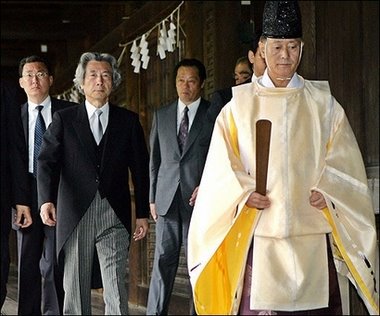
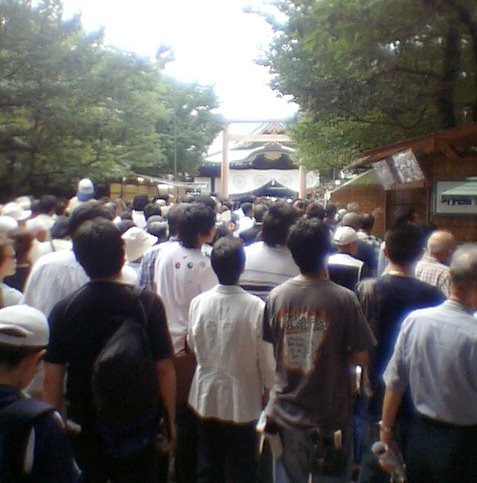
Yasukuni Shrine, Tokyo, August 15th 2006 08h00 : It
was awfully warm and crowded with thousands of prayers
and visitors. Then Prime Minister Junichiro Koizumi
arrived, pictured here in mourning official suit,
praying at the Yasukuni shrine.
On Tuesday Koizumi apologized again for the "huge
damage and suffering" Japan inflicted on Asian nations
in the 20th century, hours after his visit to the
controversial war shrine. "Our country caused huge
damage and suffering to a number of countries,
particularly people in Asia," Koizumi told a secular
official ceremony marking the 61st anniversary of
Japan's surrender.
But on the same day Japanese Junichiro Koizumi's visit
to the Yasukuni Shrine, a symbol of Japan's past
militarism, has stirred anger and protests from people
across China and in other Asian countries.
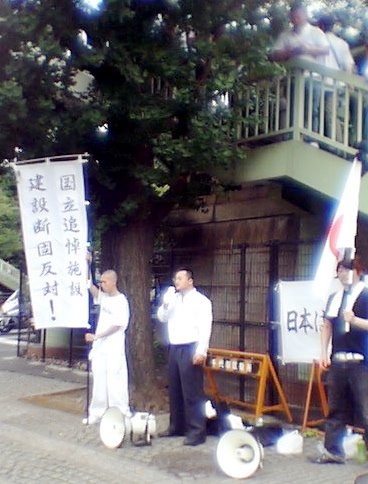
One BIG difference : he simply bowed once, fast, and
entered into the Shrine. A way to show the simplicity
of his visit according to commentators and not a
religious visit accomplished as Prime Minister...
Families of the tragedy of a war launched by Japanese
militarists and their Zaibatsu allies using Hirohito
as the head felt some comfort but Asia got mad.
Symbolic of the Japanese rulers discrepancy between
words and actions of peaceful coexistence's promises.
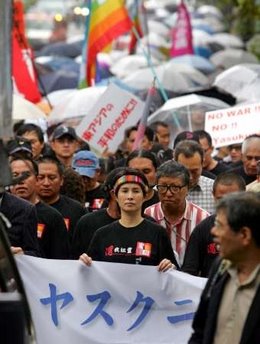
Member of Taiwan's Parliament Kao Chin Su-mei and
other demonstrators from Japan and Taiwan protested
against Japan's Prime Minister Junichiro Koizumi's
visit. Anti-Japan protesters demonstrate outside the
Japanese Embassy in Beijing. The banner reads
'Congratulations on the 61st anniversary of Japan's
fascist surrender'. It was Koizumi's sixth visit to
the shrine since taking office in 2001, but his first
on the highly symbolic Aug. 15 anniversary of Japan's
1945 defeat. Last protesters outside the Japanese
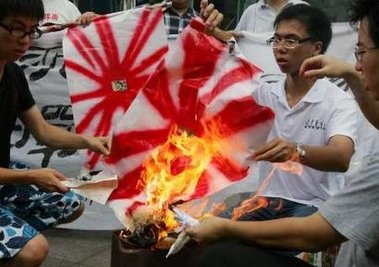
consulate in Hong Kong burnt a Japanese military flag
featuring a photograph of Japan's Prime Minister
Junichiro Koizumi defying warnings from South Korea
and China not to go.
The China-Japan Friendship Association issued a
statement yesterday, expressing "outmost indignation."
The shrine is the "ideological prop and a tool of
Japanese militarists during World War II. It still
honours 14 war criminals whose hands were stained with
the blood of the people in China and other countries,"
it said. "Koizumi's act resurrects Japan's wartime
militarism," the statement says. More than 30 Chinese
people gathered outside the Japanese Embassy in
Beijing yesterday morning, protesting Koizumi's shrine
visit for about 20 minutes.
In Nanjing, capital of Jiangsu Province, She Ziqing, a
74-year-old survivor of the Nanjing Massacre, was
outraged by Koizumi's visit. "How can he feel no
regret for the brutal deeds of Japanese militarists?"
he asked. At least 300,000 Chinese, most of them
civilians, were slaughtered by Japanese troops in a
six-week orgy of killing, raping, looting and burning
in 1937 when the city, then the national capital, was
overtaken. Another survivor, Li Xiuying, 76, made a
simple comment on Koizumi: "I hate him." In Hangzhou,
capital of Zhejiang Province, survivors of Japan's
germ warfare were also "indignant." Yang Dafang, whose
father died as a result of Japanese germ warfare in
1940, said Koizumi's repeated visits to the shrine
have hurt the feelings of the Chinese victims. During
the war, the Japanese army's Unit 731 developed many
biological weapons using plague, anthrax and other
bacteria, and conducted experiments on humans.

In Hong Kong, angry activists took to the streets to
condemn Koizumi's shrine visit. At least 30 people
marched to the Japanese consulate, carried banners and
shouted slogans. They set a Japanese flag alight and
demanded the country pay compensation and apologize
for war crimes. David Ko, chairman of the Action
Committee for Defending the Diaoyu Islands, said
Koizumi's move aims to stir Chinese anger against
Japan on the 61th anniversary of Japan's surrender in
World War II. "He just wanted to provoke Asian
countries. He's about to step down but the spirit of
Koizumi will not stop. That puts peace and safety in
Northeast Asia under serious threat," Ko said.
The Democratic People's Republic of Korea, the
Republic of Korea, Singapore and other countries
yesterday also protested against Koizumi's shrine
visit.

Tokyo Gov. Shintaro Ishihara made his seventh
straight Aug. 15 visit to Yasukuni since 2000, which
was his second year in office.National Public Safety
Commission Chairman Tetsuo Kutsukake, one of the 17
ministers in Prime Minister Junichiro Koizumi's
Cabinet, visited Yasukuni. In addition, three senior
vice ministers and three parliamentary secretaries
went to Yasukuni on Tuesday as part of a nonpartisan
group that makes visits en masse to the shrine.
Fifty-six members of the group, including ruling
Liberal Democratic Party and opposition Democratic
Party of Japan lawmakers, paid homage together
Tuesday. Seven members of another group comprising
LDP lawmakers serving their first terms also paid
their respects at the shrine.

Junichiro Koizumi offered flowers as he paid tribute
at Chidorigafuchi national cemetery, Japan's
nondenominational tomb of the unknown soldier, in
Tokyo after he visited the nearby Yasukuni shrine.
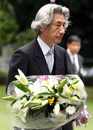
His visit to Chidorigafuchi : A symbolic Japanese
national statement towards the future Asia
reconciliation from soon to be and extremely popular
in the archipelago Diet man Junichiro Koizumi?
Nevertheless it also is a possibility that a mark of
commemoration by one war looser nation will continue
to be seen as an international incident by other Asia
nations.
Time for Asia to work on history and German France
reconciliation.


Verdun, France 22nd of September 1984
Jlk
Monday, August 07, 2006
From Tokyo to Tahiti, Islanders' Talks about Delicacy
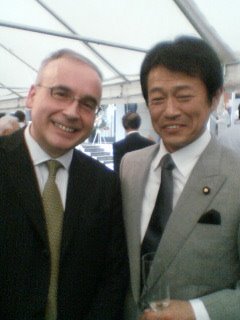
Japanese minister of Agriculture Nakagawa Shoichi
engaged in a chat with the author of Asian Gazette at
the French embassy National Bastille Day July 14, 2006
in Tokyo. A recent delegation of Japanese experts'
visited Tahiti to target and to evaluate potential
methods of bi-lateral cooperation and was initiated
from French Polynesia President Oscar Temaru's visits
to Japan last August and last May. During the May
visit, President Temaru told Japanese Agriculture and
Fishing Minister Shoichi Nakagawa he would be
interested in having Japanese experts visiting Tahiti.

Tahiti Island, Society Islands, French Polynesia,
central South Pacific Ocean. The largest of the
Society Islands, it occupies an area of 402 sq mi
(1,042 sq km) in their eastern group. Papeete, the
capital of French Polynesia, is on Tahiti.

The island's interior is mountainous, rising to 7,339
ft (2,237 m) at Mount Orohena; its towns are located
on the coastal plain. Long inhabited by Polynesians,
it was visited by British Capt. Samuel Wallis in 1767
and in 1768 by Louis-Antoine de Bougainville, who
claimed it for France.

It became a French colony in 1880 and is now part of
the self-governing overseas territory of French
Polynesia. Continued French nuclear testing in the
area has angered the inhabitants and brought calls for
independence. Tourism is economically important.

Attracted by the Polynesian culture and spectacular
climate and scenery, both Paul Gauguin and Robert
Louis Stevenson lived in Tahiti and expressed its
romantic allure through their works.

Maritime activity has a broad spectrum. Fishing and
farming, defense and security, tourism industry,
cultural diversity, sustainable development, a theme
dear to French president Chirac. For instance, about
defense, the Japanese white paper on defense proposed
to advance the status of defense agency to a defense
ministry. It empowers the defense minister to put up
proposals to cabinet independently, conduct marine
preparation activity, make relevant laws and propose
independent budget in order to get more military funds
in the national budget. Research and developement
included.

French Polynesia President Oscar Temaru met late July
with three Japanese experts prior to an exploratory
visit to Tahiti linked to several projects and more to
come in connection with an aquaculture farm on the
Tuamotu Atoll of Rangiroa and a tuna-breeding project
for the Tuamotu Atoll of Hao.
In the last 10 years, a variety of agreements were
signed between France and Japan and among them to
allow Japanese fishermen to come and fish around the
French Polynesia territory in the Pacific ocean.

The Japanese delegation, which included fishing expert
Shingo Ota, was to visit French Polynesia's fishing
and aquaculture centers, accompanied by Tahiti's sea,
fishing, aquaculture and research minister, Keitapu
Maamaatuaihutapu. Those visits including the
government's Fishing Department, the future Sea
Center, Papeete's commercial fishing port, the South
Pacific Shipyard (CPNS) in Papeete Harbor, commercial
fish wholesalers and meetings with French Polynesia
fish transformation industries.

On the splendid paradise on Earth, Rangiroa, the
Japanese experts showed interest in a visit of a
breeding farm for coral reef larvae destined for the
aquaculture market.
More to come, no doubt.

Saturday, August 05, 2006
Japan : Lost paradise for Internet preys

Quote of Matsushita Shuji news:
"My name is Mrs. Fadimatu 'Yar Sakkwato. Once, I was
the second concubine of onetime head of state of
Nigeria, late Alhaji Sani Abacha. As everybody knows
well, he had stashed away more than 3 billion dollars
(US$3,000,000,000)...
Alhaji Sani Abacha, the most corrupt dictator of
Nigeria, who died while whoring. After so many years,
his legacy still works as the central theme of many a
Nigerian letter fraud.
Thus started the infamous Nigerian letter scam, or 419
fraud. Mobile Ojisan receives tons of them in his
inbox everyday. These scammers, I guess, are firm
believers of patterns. Almost all the letters never
deviate from the pattern set around 20 years ago by
creative Igbo gangs in Southern Nigeria.
If only they had translated the emails into readable
Japanese with tolerable honorifics and sent them to
Japan exclusively, those scammers could have retired
very young and rich in Riviera or Bahamas. Because
this land is wall-to-wall carpeted with eager dupes.
Presently, the most fashionable (!) Internet con in
Japan is called One-Click fraud. Of course, there are
millions of variations. But the basic plot is like
this:
First, victim is lured to a dubious Web site by a spam
mail or blog trackback, believing it's a high-powered
libido location. Or, online dating site with full of
supernatural promises.
There on the site, some fineprint is displayed. You
have to click "I AGREE" button to proceed. Then, all
hell breaks out.
.Your IP address: xxxxxxxx,
.Your remote-host: yyyyyyyy,
.Your provicer: zzzzzzzz,
.Your network: aaaaaaa, bbbbbb, ccccc ...
THANK YOU FOR JOINING OUR EXCLUSIVE CLUB.
.Your membership fee is 60,000 yen for 60 days. Please
transfer the amount within three days. If not, we
have no choice but to acquire your name, address, and
phone number from your provider, and physically
contact you. Our agent might call on your
office/school/family, then.
.Our account particulars: ddddddddd, eeeeeeee
Sometimes, a naughty .exe file is quietly pushed into
viewer's PC, and threatening window pops out
constantly to intimidate the victim.
If he calls or sends an email to this con site to
protest, these jokers will be overjoyed. Adding some
concrete information to their easy dupe database!
I guess, most of the Asian Net users, if faced with
this kind of ridiculous but threatening message, would
laugh away scornfully and forget it immediately. But
in Japan, quite a few people take it rather seriously.
Besides, the guilty conscience that one has ventured
into a libido site does not help the situation.
Also, the ingrained Japanese psychological urge to
avoid any kind of fuss, trouble, conflict or dispute
at any cost kicks in.
"Ah, what the heck. Just a matter of small money!"
Oho, you've clicked! Display says: Registration of
your membership application completed. Thank you for
your agreeing with the contract!!
Yes, those con artists never overdo. Their demand
seldom exceeds, say, 50,000 yen (US$435), the
psychological threshold between small money and
not-so-small-money. Online bank transfer completed.
Naughty .exe warning refuses to go away, of course.
The victim finally realizes that he has been done for.
The most beautiful point of this scam is that nobody
rushes to the police station because he's been scraped
off a tiny amount of dough. Thus, One-Click software
keeps on working silently and dilligently without let
and hindrance from the side of law. Con artists' bank
account (constantly shifting from one to another, as
usual) gets fatter and fatter. These scammers shed
absolutely no sweat and toil. Hurray, Internet!
Sure, the One-Crick fraud works only in Japanese
mental environment, as you notice. Wanna stick your
finger in the honeypot? I'm afraid it's a bit too
late because, already, the field is pretty cluttered
up with Chinese and Korean (South, not from North) Net
tricksters." (Copyright From Matsushita Shuji)
Friday, August 04, 2006
Scholars say : Pyongyang's new missiles aim Japan

Kim Sung-han is a professor and director general for
American studies, the Institute of Foreign Affairs and
National Security :
" Now that North Korea has turned its back on the
international community's wish and committed a
provocative act, Washington has no option but to
discuss pressure and sanctions against Pyongyang at
bilateral and multilateral levels. The United States
is seeking ways to "punish" North Korea politically
and economically at the bilateral level and in the
United Nations. Japan, which has always reacted more
sensitively to North Korea's missile threat than to
its nuclear program, has also found it difficult to
just sit and watch as North Korea takes steps to
aggravate the situation. Thanks to the "failure" of
North Korea's latest Taepodong-2 missile test, a
missile did not pass through Japan's airspace, unlike
in 1998. Even if the missile test failure was not the
intended outcome on the part of Pyongyang, however,
Japan has to take preventive measures at all levels."
So, it is said :
North Korea is building new bases on its east coast,
possibly to deploy ballistic missiles targeting Japan
and its U.S. military installations, a state-run
South Korean think tank said. The move could involve
plans to deploy the long-range Taepodong-2 missile
that the North test-fired last month, the Institute of
Foreign Affairs and National Security said in a
report. The reclusive state is also believed to have
obtained Chinese technology via Iran while developing
the Taepodong-2, its newest long-range missile and one
believed capable of reaching the U.S., the state-run
institute said in the report.
"New underground missile bases have been built or are
under construction around the border with China and
along the east coast," the report said. Those "on the
east coast could be seen as bases for medium- or
long-range missiles targeting Japan and U.S. military
bases in Japan," it said. Taepodong-2 and SSN-6
missiles, which have a range of up to 4,000 km, could
be deployed to the new bases, the think tank said. The
report, dated July 26, didn't give a source for the
information. Its main author, Yun Deok Min, could not
be reached for comment. Missile exports have been a
major source of hard currency for North Korea. The
report said the North makes $ 150 million a year from
missile exports. Buyers of North Korean missiles
include Iran, Libya, Syria, Egypt and Yemen, according
to the report. "North Korea is at the center of
global ballistic missile proliferation," it said.

Since North Korea launched a shorter-range Taepodong-1
over Japan in 1998, Pyongyang's missile program has
become a major security issue in Northeast Asia,
adding to concerns about the hardline regime's pursuit
of nuclear arms. Tensions flared anew when the
Pyongyang regime test-fired seven missiles toward
Japan on July 5, including a Taepodong-2. The
missiles landed harmlessly in waters between the
Korean Peninsula and Japan, but the Taepodong-2 failed
right after launch. The report said North Korea
closely cooperated with Iran in developing the
Taepodong-2 and there is a high possibility Chinese
designs and technology are being used in its
development because Iran has cooperative relations
with China in the defense industry. The report also
said the North has a Scud missile base just 50 km
north of the border with South Korea that can hit
targets deep in the South.
Francais : Commentaire
"Toute exacerbation de la confrontation politique
débouchant sur un isolement de la Corée du Nord et
l'application de sanctions contre elle contrediraient
nos intérêts à long terme en Asie du Nord-Est. De
toutes les conséquences négatives éventuelles qui en
découleraient les plus graves seraient la disparition
des perspectives d'un règlement du problème nucléaire,
le torpillage du projet de construction de la voie
ferrée Transcoréenne avec notre participation et de
son raccordement sur le Transsibérien pour assurer
l'acheminement de conteneurs entre l'Asie et l'Europe.
Il faudrait aussi abandonner le projet prévoyant des
livraisons d'hydrocarbures en République de Corée.
Depuis le vote au Conseil de sécurité la Russie ne
détient plus de leviers réels permettant de contrôler
la situation autour de la Corée du Nord. Ils sont
désormais entre les mains des Américains. Avec de
tels atouts, Washington va pouvoir chercher à
attribuer à Moscou le rôle d?auxiliaire. Il est
probable que les Etats-Unis vont concocter un
programme à eux de "mise à mort" de la Corée du Nord,
conforme à leur manière d?agir à l'égard des "Bad
Boys".
Il est patent que maintenant Moscou aura énormément de
mal à renouer la discussion avec les Nord-coréens qui
ont douloureusement réagi aux démarches diplomatiques
russes à l'ONU. Cependant, nous devrions dire
clairement à nos partenaires occidentaux que la Russie
ne considère pas l'histoire des missiles comme un
prétexte pour exacerber la situation autour de la
Corée du Nord et prendre de nouvelles décisions
draconiennes, aussi motivées soient-elles. Maintenant
que la résolution 1695 du Conseil de sécurité a été
adoptée, il faut tirer un trait sur la question des
missiles. La Russie ne saurait appuyer des actions
susceptibles d'approfondir l'isolement et de durcir le
châtiment de la Corée du Nord."
Alexandre Vorontsov, de l'Institut d'études
orientales. Académie des sciences de Russie. Cité par
Vremia novostei, 04/08/2006. (Traduction)
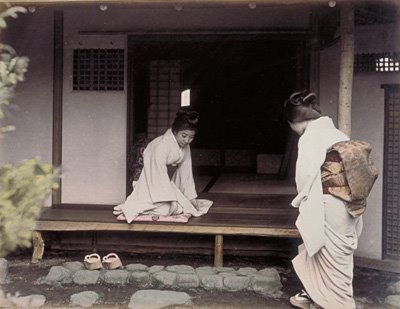
" Hotoke no kao mo, san do made! "
Monday, July 24, 2006
Life begins at 70 for Fukuda who goes fishing

Former Chief Cabinet Secretary Yasuo Fukuda said
Friday July 21st that he would not run in the Liberal
Democratic Party's presidential election in autumn.
This was a serious blow to the supporters of Fukuda
who lobbied for him expecting gains from his
candidacy. His decision is explained by Fukuda's
flock as "one made by a responsible politician who
earnestly considers the future of the nation". Fukuda
reportedly decided against throwing his hat in the
ring because he thought running for the presidency
would stir up Yasukuni Shrine visits as a key campaign
issue.

Fukuda has been circumspect about visits to the
shrine, whereas Chief Cabinet Secretary Shinzo Abe,
the prime contender to eventually become the next LDP
president and therefore prime minister, has not been
shy in expressing his support for visits by lawmakers
to the shrine.
In opinion polls on prime ministerial quality, Mr.
Abe Shinzo, current chief cabinet secretary, has
scored about 50 per cent, while Fukuda has only been
able to muster about a mere 18 per cent approval
rating. The move, however, comes as a disappointment
to observers who considered Mr. Fukuda more able to
build friendly relations with China and South Korea by
vowing to shun visits to the Yasukuni shrine, which
honors convicted war criminals, and a steadier pair
of hands when it comes to running the economy. Abe
since admitted he won't go to the Yasukuni shrine
either.
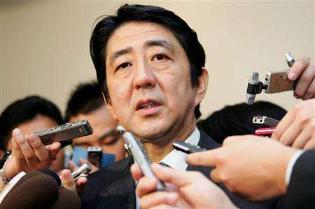
Fukuda had called for updating the last century Fukuda
Doctrine, a policy of conciliation towards the rest of
east Asia. "If I join the race, the issue of Yasukuni
and Japanese diplomacy in Asia will be the biggest
issue. That would divide national opinion into two
blocs. We should avoid such a situation", said an LDP
lawmaker quoting Mr. Fukuda, according to Kyodo wire
news. Mr. Abe's political slap rose greatly after
North Korea test fired missiles, when he warned
Pyongyang that its actions would not be tolerated and
mentioned military surgical strike back against North
Korea. He has also taken a hard line on China at a
time of growing regional friction. His conviction
that Japan should be "normal" again makes him a
natural champion of the sort of active global role
Washington and most European nations' leaders envisage
for Japan.
Friday, July 21, 2006
DPJ Chief Ozawa : a missile attack on North Korea? "Rude, extreme, dangerous"

Japan observers would choose Ozawa Ichiro if they were
asked to pick one single Japanese politician who
attracted the most attention in the 1990s. It was
Ozawa who broke off from the Liberal Democratic Party
(LDP) in 1993, and played a leading part in bringing
an end to the LDP's single-party dominance which
lasted 38 years. Ozawa also handpicked Hosokawa
Morihiro to head the fragile eight-party coalition
government.
Then, he upset the Socialist Party which left the
coalition government, leaving the Hata Tsutomu
administration as a minority government. When the
Hata administration collapsed, the antipathy against
Ozawa among the LDP and the Socialist members
contributed to the establishment of the LDP Socialist
Sakigake coalition government under the leadership of
the Socialist Prime Minister Murayama Tomiichi. For
better or worse, Ozawa was the leading figure of the
Japanese political scene in the 1990s.

Ozawa, however, is not only active in domestic
politics but also in the foreign policy decision
making. Ozawa was vocal about foreign policy, and he
was consistent throughout the 1990s. He always put
emphasis on a larger international role for Japan, and
he pursued this objective and DPJ Chief does not stop
convincing domestic crowds, international audiences
and foreign correspondents.
The leader of Japan's largest opposition party on
Wednesday denounced government officials' argument of
"ensuring (Japan's) capability to attack overseas
enemy bases" as a baseless fallacy, Kyodo News
reported. Ichiro Ozawa, chief of the Democratic Party
of Japan (DPJ), made the remarks when he was asked by
reporters about his view on the argument that Japan
should consider building the capability to attack
foreign bases in case a missile attack was imminent.
Ozawa said the viewpoint, which was put forward
recently by government and ruling camp figures, was
too "rude" and "extreme." He described the argument as
"dangerous," which he said was intended to legitimize
any preemptive attack whenever Japan named an area as
"overseas enemy bases."
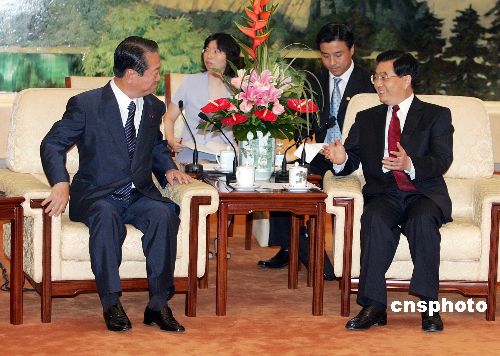
During his lecture at the Foreign Correspondents Club
Japan, Ozawa said he believed the Democratic People's
Republic of Korea's rocket and nuclear technologies
had not reached levels high enough to stage
destructive attacks on Japan and other countries.
Ozawa, a seasoned lawmaker who was elected president
of the DPJ in early April, dismissed the idea of
arming Japan with nuclear power, saying it was "not
favorable both politically and militarily."
Ozawa also strongly criticized Prime Minister
Junichiro Koizumi's foreign policy. "As a member of
the Asian community, Japan should have played an
important role, but the fact is it even failed to
build up reliable ties with neighboring countries," he
said. He added that regaining the trust of other
Asian nations toward Japan was a precondition for
Japan to play a larger role in the region in the
coming decades. (Wire news & report)
Sunday, July 16, 2006
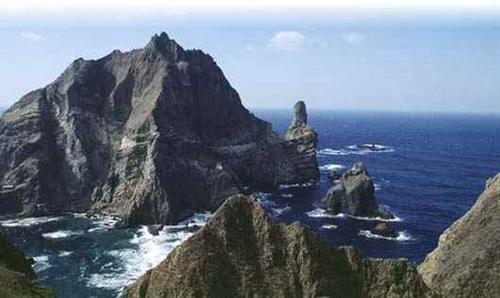
Reporting in Takeshima : Under Seoul good will ?
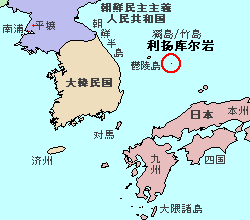
Sixteen members of the Foreign Correspondents' Club of
Japan have signed up for a visit later this month to a
pair of South Korean-controlled islets claimed by
Tokyo, sources familiar with the planned trip said
Friday.
The 16 participants, including two Japanese, will
travel on a Korean Coast Guard ship to visit the
disputed territory known as Takeshima in Japan and
Dokdo in South Korea as part of their July 23-25 trip,
the sources said.
According to the FCCJ, the group will arrive in Seoul
on July 23 and proceed to Mukho port. It will leave
Mukho by Korean Coast Guard vessel for Ullungdo and
later visit Dokdo.

After spending a minimum one hour on Dokdo, the group
will return to Mukho, where it will stay overnight
before leaving for Seoul on July 25, the press club
said.
Yoshinori Katori, the Foreign Ministry's press
secretary, told FCCJ President Dennis Normile and his
predecessor Daniel Sloan earlier this month that the
Japanese government's position is that going to the
disputed islets through South Korea implies
recognition of South Korean sovereignty.
Normile said he and Sloan told Katori that the FCCJ is
"completely neutral on the sovereignty issue."
(Wire news July 14,06)
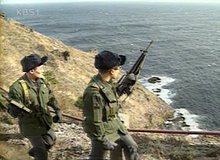
Histoire (Francais) :
La question de Takeshima
1. La position du Japon
(1) Au regard de l?histoire et du droit international,
il est clair que Takeshima fait partie intégrante du
territoire japonais.
(2) L?occupation de Takeshima par la République de
Corée est illégale, sans aucun fondement légal du
point de vue du droit international. Toutes les
mesures concernant Takeshima que la République de
Corée prend, sur la base de cette occupation illégale,
n?ont aucune valeur juridique.
(Note : La République de Corée n?a jamais apporté de
preuves claires permettant de justifier ses
prétentions selon lesquelles elle aurait établi une
autorité effective sur Takeshima avant l?établissement
de l?autorité effective et de la souveraineté du Japon
sur Takeshima.)
2. Les thèses du Japon concernant la souveraineté sur
Takehima
(1) Réalité historique sur la souveraineté de
Takeshima
A la lumière de la réalité historique, rappelée
ci-dessous, il est évident qu?au milieu du
dix-septième siècle, au plus tard, le Japon a établi
sa souveraineté sur Takeshima en s?appuyant sur une
autorité effective ; ce qui a été réaffirmé par le
Japon moderne en 1905, Takeshima étant toujours
effectivement sous l?autorité du Japon.
(a) Le Japon connaissait depuis très longtemps
l?existence de Takeshima (alors connue sous le nom de
Matsushima). Cela est confirmé dans de nombreux
écrits et sur quantité de cartes.
(Note : Sur le Kaisei Nippon Yochi Rotei Zenzu (Carte
complète révisée des régions et routes japonaises ?
1779) de Sekisui Nagakubo, qui est la publication
cartographique la plus représentative du Japon,
Takeshima est localisée précisément sur son
emplacement actuel. Plusieurs autres documents avant
l?ère Meiji en font aussi état.)
(b) Au début de l?époque d?Edo (1618), les familles
Ohya et Murakawa du fief de Houki reçurent du shogunat
des Tokugawa l?autorisation d?exercer leurs droits
féodaux sur l?île d?Utsuryo. Ces familles y menèrent
ensuite des opérations de pêches, sur l?île, et autour
de celle-ci, envoyant chaque année au shogunat une
partie des ormeaux qu?elles y avaient attrapés pour
payer leur tribut. Takeshima qui se trouvait sur le
trajet menant à l?île d?Utsuryo était un port de pêche
et un lieu d?escale. De plus, en 1661, au plus tard,
les familles Ohya et Murakawa reçurent du shogunat
l?autorisation d?exercer leurs droits féodaux sur
Takeshima.
(c) En 1696, à la suite de négociations menées entre
le Japon et la Corée concernant la pêche à proximité
de l?île Utsuryo, le shogunat interdit la circulation
des bateaux autour d?Utsuryo, mais pas de Takeshima.
(d) En 1905, le Japon réaffirma son intention de
continuer à posséder Takeshima par une décision du
Conseil des ministres en janvier, suivie d?une
déclaration de la Préfecture de Shimane en février,
qui intégrait Takeshima au sein de la Préfecture de
Shimane. Par la suite, Takeshima fut mentionné sur le
registre foncier officiel, et un permis de chasse à
l?otarie sur l?île de Takeshima fut instauré, jusqu?à
sa suppression, en 1941, lors de la Seconde guerre
mondiale.

(2) Validité de l?intégration de Takeshima par le
gouvernement japonais en 1905
Les mesures prises pour intégrer Takeshima à la
Préfecture de Shimane en 1905 réaffirmèrent
l?intention du gouvernement japonais de se prévaloir,
en tant qu?état moderne, de droits territoriaux sur
Takeshima. Elles ne peuvent nullement être
interprétées d?une manière qui pourrait laisser penser
que le Japon ne possédait pas Takeshima avant cela, et
que d?autres pays étaient en possession de Takeshima.
De plus, l?intégration de Takeshima fut relayée par la
presse écrite et ne s?est pas faite dans le secret.
Par conséquent, elle a été réalisée effectivement.
(Note : le droit international ne fait pas obligation
d?informer les gouvernements étrangers de mesures qui
intègrent des territoires.)
(3) En septembre 1954, le Japon proposa, dans une note
verbale, à la République de Corée de saisir la Cour
internationale de justice afin de pouvoir régler le
différend ; mais la République de Corée n?accepta pas
cette proposition.
Lors d?une réunion ministérielle, en mars 1962, le
Ministre japonais des Affaires étrangères proposa de
nouveau à son homologue coréen de saisir, une nouvelle
fois, la Cour internationale de justice, ce qui fut
accueilli défavorablement par les Coréens.
www.fr.emb-japan.go.jp/act/gd/06_takeshima.html

History (English)
The tiny islets, about equidistant between Japan and
South Korea, are held by Seoul but claimed by Tokyo
after its colonial occupation of Korea in 1910-1945. A
South Korean garrison has occupied the two tiny
islands since 1954. In 1965 talks to normalise
relations between the two countries saw discussions
about the issue postponed. Talks held in 1996 about
their respective maritime borders were interrupted in
2000. The latest move is part of a series of mutual
provocations that began last year when the governments
of both countries started sending warships and survey
vessels to the islands. Under international law, each
country has rights to explore and use marine resources
within 370 kilometres from its shores. It seems there
is no doubt, from a historical perspective, that Korea
should enjoy sovereignty of the islands. Prof Mark
Seldon of Cornell University said: ?Data from
historical archives bear Korea out. It can claim
possession from the time of the Silla Dynasty (in 8th
century).? Japanese diplomacy has sought to overrule
the case of history by presenting a document stating
that the Kingdom of Korea ceded the two islets to
Japan in 1905, but no one has able to prove its
authenticity.
Wednesday, July 12, 2006
Is it really time for North Korean bunker capitalism ?
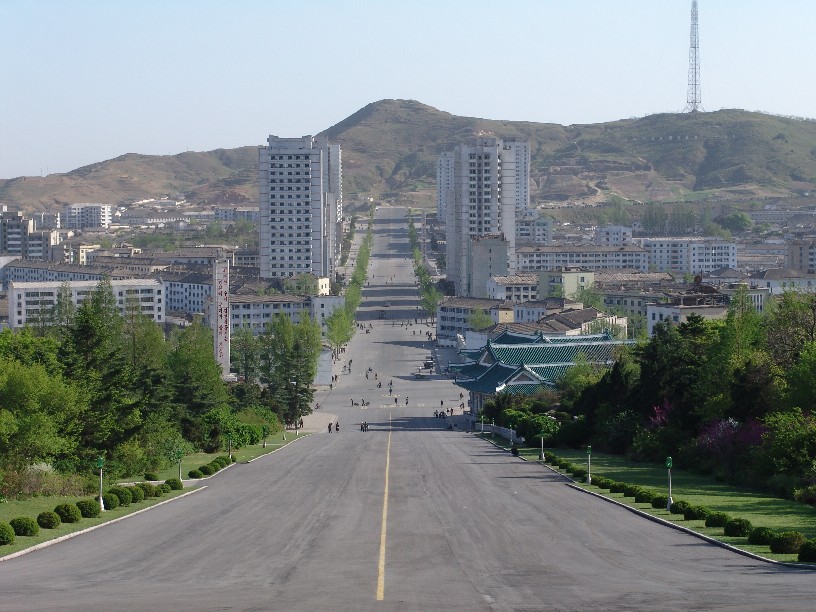
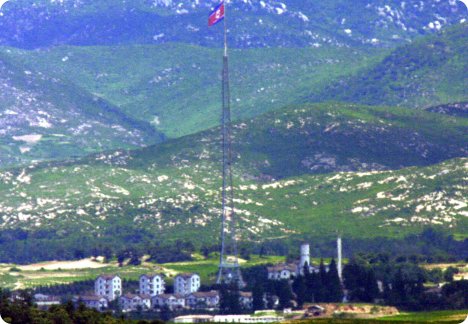
The Kaesong Industrial Complex, located just north of the
heavily fortified border, is considered to be one of the
main achievements of the landmark inter-Korean summit in
2000. The zone is a testing ground for mixing South
Korean capitalism and technology with the North's cheap
labor. The ambitious plan by the two Koreas to transform
their border area into a joint industrial park has been
thrown into deep uncertainty in the wake of missile
launches by the North that have heighten geopolitical
risks on the divided peninsula.
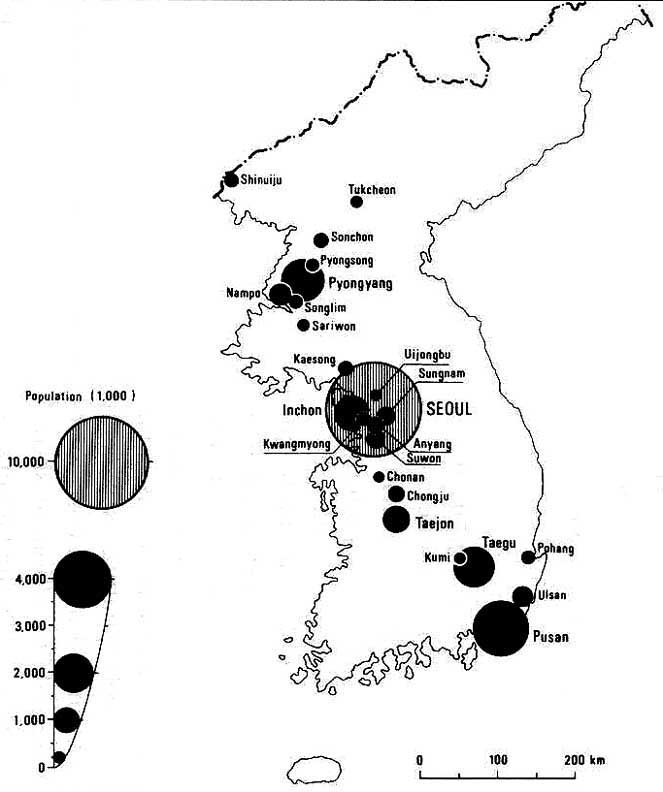
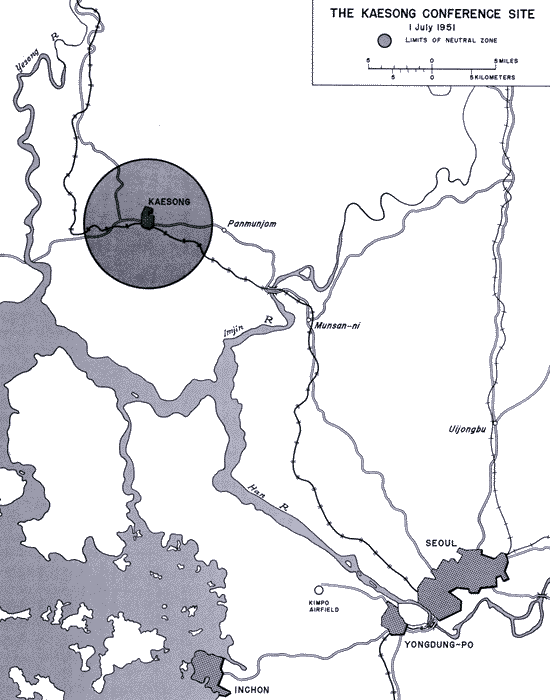
South Korean officials are meeting their U.S.
counterparts to discuss a free trade deal this week, but
they can hardly win a U.S. concession to recognize items
manufactured at the complex in the North Korean border
city of Kaesong as South Korean products. If the Kaesong
products are not considered as South Korean-made, which
ensures tariff benefits, they can hardly be sold in the
United States and elsewhere. South Korean manufacturers
will be reluctant to make ventures in the North Korean
industrial complex at a time when tensions are running
high across the border following the North's missile
tests last week.

A total of 15 South Korean companies produce goods
ranging from clothes to kitchenware at the complex,
hiring thousands of North Korean workers. More than
6,500 North Korean workers are working for a dozen South
Korean firms operating in the joint complex. Under an
inter-Korean government accord, North Korean workers
there are paid about $58 a month. The money is not paid
directly to the workers, but instead goes to the North
Korean authorities. South Korean manufacturers have
relocated their factories to the Kaesong complex to
benefit from cheap labor and land, want to export goods
at competitive prices to the United States and other
countries. With the labels of being "made in DPRK (North
Korea)," however, Kaesong products can hardly be sold in
the United States due to high tariffs that would cut
their price competitiveness. Nations are concerned that
strategic products such as precision machinery and
high-tech personal computers, may reach the industrial
park in the North viewed as supporting terrorism. The
U.S. State Department has already conveyed its concerns
about Seoul's easy shipments of strategic items through
the Kaesong project. Blacklisted North Korea, a country
that sponsors terrorism was imposed financial sanctions
for its alleged counterfeiting, money-laundering and WMD
traffic.
Tuesday, July 11, 2006
Abe Shinzo : "Japan premptive strike on North Korea permitted if attack imminent".
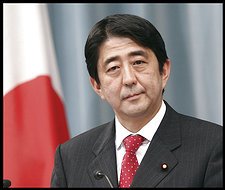
Japan has the right to strike a foreign missile base if
the country is under imminent threat of attack, Chief
Cabinet Secretary Shinzo Abe said Monday. Speaking to
reporters and referring to the pacifist Constitution, Abe
said overseas strikes would fall within the legal
parameters of self-defense "if there is no other way to
prevent a missile attack on Japan."
Abe, however, appeared to be discussing a theoretical
possibility rather than a realistic response to the launch
of ballistic missiles by North Korea into the Sea of Japan
last week. In making the remark, Abe referred to an
official government view on overseas attacks expressed in
1956 by the then Defense Agency chief during a Lower House
session. "We have to have deeper debate on the issue" of
the Constitution's ban on the use of force to settle
international disputes, and its limits on Japan having
only self-defense capability, Abe added. Later, Prime
Minister Junichiro Koizumi told reporters: "We have to
think carefully about whether we can really resort to arms
before we are attacked because this is also a
constitutional issue."
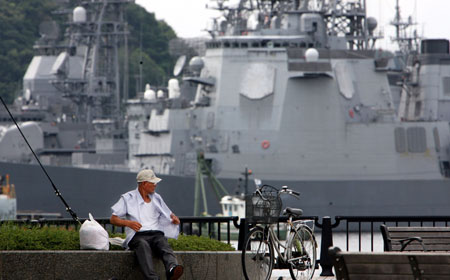
Abe's statements mirrored remarks Sunday by Defense Agency
chief Fukushiro Nukaga. "As a sovereign nation, it is
natural to consider possessing the minimum capability (for
pre-emptive strikes) under a certain framework," Nukaga
said, adding that the ruling Liberal Democratic Party and
its coalition partner, New Komeito, need to agree on this.
Nukaga also said on a TV program that Japan should have
the option of launching an overseas strike if it is clear
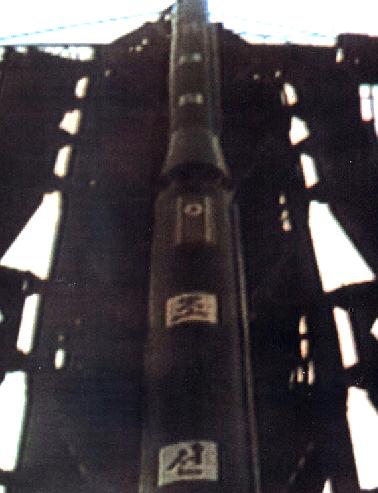
an enemy is poised to attack. North Korea test-fired
seven ballistic missiles Wednesday, including a
Taepodong-2, a model that is believed to have a design
range that puts the U.S. mainland within its reach.
In January 2003, then Defense Agency Director General
Shigeru Ishiba stirred controversy with comments about a
pre-emptive strike on North Korea, saying Japan can ask
the U.S. to attack the North's missile bases if Pyongyang
appears bent on an attack on Japan and is preparing for
such hostility. As for Tokyo's tough stance against North
Korea's missile tests, Abe also said Monday there is no
surprise that Japan is on the alert. "We are of the
belief that North Korea's missile launches pose a positive
threat to Japan and the surrounding areas," he said. (JT
& agencies)
Subscribe to:
Posts (Atom)