Sunday, July 15, 2007

Journey into Japan neo fascists dark waters


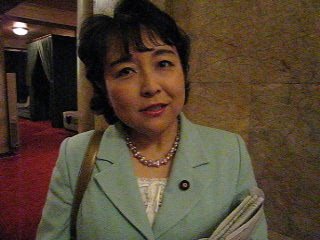
Photo: Ms. Yuko Tojo with her grand father, the war criminal
Tojo Hideki.

Tojo's grand daughter : "My grandfather has been
maligned as a war criminal"!

She might be more than an embarrassment to the Japanese
democrats who are engaged in the race for the upper
house election partial renewal this July. She is
supported by unknown friends, powerful and rich.
Nostalgic and dangerous fanatics some say, she is the
top of the iceberg of the new neo fascist forces and
intolerant generation of politicians ready to deny
historical evidences.

Tojo's grandfather was prime minister from 1941
through 1944. His granddaughter is running as an
independent for the 2007 Upper House election. She is
among 20 candidates vying for five seats in the Tokyo
constituency.

Tojo was responsible for ordering the attack on Pearl
Harbor that brought Japan into a disastrous war.
Hideki Tojo was found guilty of war crimes by the
International Military Tribunal for the Far East and
sentenced to death. He was hanged at Tokyo's Sugamo
Prison in 1948. His grand daughter, over 60's, is
considered to have almost zero chance of winning a
seat in the face of expected strong showings among
candidates from the ruling Liberal Democratic Party,
Minshuto (Democratic Party of Japan) and New Komeito.

"This is a great opportunity for me to express my
views and say what must be said in public," she added.
Because of her name-recognition, Tojo was tapped in
2001 and 2004 to run in Upper House elections. She
met with officials of one of the conservative parties
in 2001 and geared up for a run with full party
backing. However, she eventually abandoned the
attempt because of opposition to her running.

"We should never be afraid of generating controversy,"
she says. "It is quite natural to express our sorrow
and sympathy for those who sacrificed their lives for
the country. We should reject such interference in
our domestic affairs. I feel chagrined at Abe's
ambivalent attitude."

If she wins a Diet seat, Tojo said she would call on
the Emperor and the Prime minister to publicly visit
Yasukuni Shrine. "Japan did not commit a war of
aggression. We fought a 'right' war," she said,
echoing the rightist belief that Japan was liberating
Asia from Western colonialism.

"My grandfather was responsible for losing the war,
not starting it," she said. Tojo also vowed to lay to
rest controversies over historical perceptions. She
insists that the death toll in the Nanking Massacre
was exaggerated by China and that the Japanese
government was not directly involved in rounding up
"comfort women" to work in front-line brothels during
the war. She said she would also press for a Diet
resolution criticizing the United States for its 1945
atomic bombings of Hiroshima and Nagasaki.


Photo: Japanese wartime Prime Minister Hideki Tojo stands
trail for his crimes during World War Two at the the
International Military Tribunal for the Far East
(IMTFE) in 1948.

Tojo also wanted pacifist Article 9 of the
Constitution amended so that Japan can have
full-fledged armed forces. "We cannot protect our
country by ourselves, so how can we call this country
a 'nation'?" she asked. On a final campaign note, she
said that if she is elected she would establish an
official organization to repatriate the remains of
Imperial Japanese Army soldiers from overseas.

Turning once again to her family heritage, she said:
"My grandfather has been maligned as a war criminal. I
want to restore his honor and redeem the honor of
Japan."

Tojo told a news conference at FCCJ that one of her
primary goals in office would be to settle issues from
World War II that remain deeply controversial. On
Japan's mobilization of tens to hundreds of thousands
of "comfort women" to serve in front-line brothels,
Tojo said the government was not directly involved, a
commonly held belief among Japanese conservatives
despite evidence to the contrary. She also said the
often-cited death toll from the Rape of Nanking — as
many as 300,000 — has been grossly inflated by the
Chinese and it must be corrected. Today in Asia -
Pacific

Tojo said the U.S. atomic bombings of Hiroshima and
Nagasaki went "beyond all the savage acts that
occurred in history up until that time," and accused
the United States of being racially motivated.


(Ms. Yuko Tojo Photo FCCJ)

She claimed the U.S. would not have dropped such
bombs on other "white" nations. Japan, meanwhile,
went to war to "liberate people of color from the
white nations in the world" who were colonizing Asia
at the time, she said. Tojo's positions received
attention because of her family legacy.

Tojo's grandfather, Hideki Tojo, Japan's prime
minister from 1941 to 1944, is widely remembered as a
warmonger who was behind Tokyo's invasions of its
Asian and Pacific neighbors. It was Tojo who also
ordered the Pearl Harbor attack that killed 2,388
American troops and brought the U.S. into World War
II."

Western Courts in Europe and USA might not appreciate
Ms. Tojo views on races and on her ways to express
her horrendous views.


Photo: New Guinea, 1943. An Australian soldier, Sgt
Leonard Siffleet, about to be beheaded with a katana
sword. Many Allied prisoners of war were summarily
executed by Japanese forces during the Pacific War.

[ Definition of Historical revisionism : It is the
attempt to change commonly held ideas about the past.
In its legitimate form (see historical revisionism) it
is the reexamination of historical facts, with an eye
towards updating historical narratives with newly
discovered, more accurate, or less biased information,
acknowledging that history of an event, as it has been
traditionally told, may not be entirely accurate.

"Historical revisionism" (also but less often in
English "negationism") describes the process that
attempts to rewrite history by minimizing, denying or
simply ignoring essential facts.

Perpetrators of such attempts to distort the
historical record often use the term because it allows
them to cloak their illegitimate activities with a
phrase which has a legitimate meaning.

In some countries historical revisionism (negationism)
of certain historical events is a criminal offense.
Examples of historical revisionism (negationism)
include: Japan's comfort women, Holocaust denial, and
Soviet history.

Negationism relies on a number of techniques such as
logical fallacies and appeal to fear. Examples of
negationism and its effects can be found described in
literature, for example Nineteen Eighty-Four by George
Orwell and is used by hate groups on the Internet. ]

Click the link to read the add that a group of Japanese
politicians and academics took out in The Washington
Post, mid June 2007.

More to come about Nippon Kaigi.
(Author text and agencies)

Friday, June 29, 2007

Lee Teng-hui: "I cannot go to France!"


So, I finally talked to Lee Teng-hui!

So many people disapeared in one of the most abhorrent
scandal my country has known... Speaking at the
Foreign Correspondents' Club of Japan in Tokyo, 200
guests attended this record press event, I asked a few
questions to the 84-year-old former leader, one on the
risk of his visit to anger China, and one on the
Taiwan frigates scandal. His answer on the first
question follows but on the frigates, he simply
confessed with a sorrow in the throat that he cannot
even go to France, and voice his respect" for French
culture." He could have said more if my honorable
colleague Dennis had not cut me in the middle of my
question. Anyhow, Lee, quotes: " reiterated that
Taiwan is an "independent country" and urged Beijing
to promote democracy. On Yasukuni Shrine, which
honors Japan's war dead, Lee said, "There is no
rationale for a foreign government to say anything at
all about or criticize" visits by Japanese leaders to
the shrine because "it is natural to pay homage to
young people who died for their own country." Lee said
the problem of Yasukuni visits is an issue "made up by
mainland China and Korea" in an attempt to divert
criticism by their peoples away from domestic issues
that they have "failed to deal with." "Even so, the
Japanese government has been too soft in dealing with
them," he said.

The Yasukuni shrine venerates 2.5 million war dead
including colonial subjects and — most controversially
— 14 top war criminals from World War II. Lee said he
paid the pilgrimage to mourn his late brother, who is
enshrined as he died fighting in the Japanese navy in
1945 when Taiwan was Tokyo's colony. "There is no
reason for Japan to be criticized by foreign countries
or foreign governments over this kind of issue," Lee
said. "It is such a natural thing to honor young
people who died for their country." Japan's former
prime minister Junichiro Koizumi paid annual
pilgrimages to the Yasukuni shrine, infuriating China
and South Korea which refused any summits with him.
In a bid to improve relations, Koizumi's successor
Shinzo Abe has maintained a strategic silence on
whether he will go while in office, even though he was
a frequent visitor before becoming premier in
September. Lee angered Beijing during his 1988-2000
tenure by seeking a separate identity for Taiwan.

Beijing lobbed missiles near the island in 1995 and
1996, prompting the United States to send in warships.
In remarks that will likely trigger more furor in
Beijing, Lee repeated the island was already
effectively independent. "I won't be daunted at all
by whatever China says about Taiwan," Lee said. "The
people in Taiwan shouldn't care about it, either."
"The residents of Taiwan must hold the opinion that
this is our country, otherwise no one would help us,"
Lee said. China's defeated Kuomintang nationalists
fled to Taiwan in 1949 after losing the mainland's
civil war. Beijing considers the island a territory
awaiting reunification, by force if necessary. Lee's
remarks came hours after Chinese President Hu Jintao,
on the sidelines of a Group of Eight summit in
Germany, warned Abe to exercise caution on any
Taiwanese moves for independence. Abe replied there
was no change in Japan's policy of recognising only
Beijing. His government has said Lee was on a private
visit. As a Taiwanese, he does not need a visa to
enter Japan.

Only a dwindling handful of countries recognise Taipei
as China's legitimate government, with Costa Rica on
Wednesday switching allegiance to Beijing. Despite
repeated protests by Beijing, Lee said his trip to
Japan was "a big success" and he wants to visit again.
Taiwan was a Japanese colony from 1895 to 1945 and
many Taiwanese tend to be friendlier than Koreans and
mainland Chinese towards Japan. But indigenous
Taiwanese leaders were outraged by Lee's visit to the
Yasukuni shrine, saying Japan has not yet atoned for
its colonial rule." End of quotes and memo.

Some Taiwanese officials and journalists asked me to
visit Taiwan, they want to invite me there. I'd say,
I ll go for sure once visit the province's museum...

Thursday, June 07, 2007

"Yukos is not Enron", Lawyer Robert Amsterdam


(Photo de Akiko Miyake, FCCJ)

Ai assuré la présentation de la conférence de presse
de l'avocat Canadien Robert Amsterdam au FCCJ de
Tokyo, Robert est le défenseur de Mikhail
Khodorkovsky.***

L'empire pétrolier Yukos de M. Khodorkovsky a été
démantelé en 2003, après que celui-ci eût été arrêté
pour fraude. Il purge présentement une peine de
prison en Sibérie. Il pourrait bientôt faire face à
de nouvelles accusations. Son défenseur s'inquiète de
la proximité d'uranium dans sa prison sibérienne me
confiait il en fin de conférence.

Yukos a depuis été démantelée et vendue, avec la
participation de firmes européennes que Robert
Amsterdam accuse de "blanchir les réputations" afin de
demeurer dans les bonnes grâces de M. Poutine.

Un pavé dans la mare du G-8 de Heiligendamm.

- Le blog de Robert Amsterdam est complet sur les cas
d'abus aux droits humains, et apporte de nombreuses
informations sur les questions geopolitiques soulevees
par le levier petrolier et gazier de la Russie.

Citations: "Robert Amsterdam : Perspectives on Russia,
Europe, and International Affairs. On Orders from
Moscow (May 24).

Imagine my dismay when I picked up the International
Herald Tribune today, only to read the following
headline on front cover:

Europe's Energy Giants Call for Business as Usual with
Russia Yes, it seems that with particularly bad
timing, Eni of Italy, Gaz de France and E.ON Ruhrgas
of Germany have jointly called for business-as-usual
with Russia, despite growing tensions between Moscow
and Brussels over a broad range of issues.

Once firms become beholden to Gazprom and the Kremlin
in long-term deals, it seems they must fulfill an
unspoken contractual condition to evangelize against
the national interest of their own countries. At a
moment in which the European Union is struggling to
achieve solidarity and commit to a common energy
policy, enticing the Russians to ratify the Energy
Charter and creating a fair and equitable rule-based
system to de-politicize the energy trade, here come
three opportunistic firms seeking to undermine energy
security and pursue their own bilateral deals with
Gazprom." End of quotes

L'avocat Robert Amsterdam a été interviewé par mes
radios en France. Ses vives critiques sur l'affaire
Yukos citées ici dans PR Newswire:

Citations: (Anglais) LONDON, May 10 /PRNewswire/ -- As
the Russian bankruptcy liquidator organizes the final
auctions of Yukos, once Russia's largest and most
prestigious private oil company, an attorney for
political prisoner Mikhail Khodorkovsky issued the
following comments:

"This is the ending we have been expecting for some
time," said Robert Amsterdam, international defense
counsel to Khodorkovsky. "From the beginning of the
attack on Yukos and the unlawful imprisonment of my
client, to the final rigged auction, the process has
been riddled with procedural and legal violations
which have thoroughly discredited any claim of
legitimacy to the charges by the State."

"The media is wont to say that the conclusion of the
Yukos affair marks the end of an era of vast personal
enrichment - but that's not true. Now it is the
siloviki inside the Kremlin lining their pockets under
the guise of public trust. I challenge the government
to show where the auction money is really going," Mr.
Amsterdam said. "The Kremlin would like you to
believe that Yukos was the Enron of Russia - but
that's not true, and there's no plausible explanation
how in 2004 the company should owe a preposterous
eight rubles tax for every one ruble of revenue, or
how the chief bankruptcy liquidator gets nominated for
the board of Rosneft next to the president's other
friends."

"The most shameful feature of the Yukos auctions has
been Russia's successful arm-twisting of energy
multinationals to provide a service of 'reputation
laundering' in the fencing of these stolen goods,"
said Mr. Amsterdam. "But let it be known to firms
such as ENI, Enel, BP, and Royal Dutch Shell who have
bought or expressed interest in bidding on Yukos
assets, that the number of accomplices does not lessen
the gravity of the crime. Aside from making a mockery
out of their pledges to corporate social
responsibility, their shameful attempts to curry favor
with a corrupt regime at the cost of human rights will
ultimately fail, and within the year these companies
will again face harassment from the authorities."

Robert Amsterdam, founding partner of Amsterdam &
Peroff, is international counsel to the political
prisoner Mikhail Khodorkovsky. He writes a blog at
http://www.robertamsterdam.com/. End of quotes

-*** Rappel de l'affaire: (En anglais)


Mikhail Borisovich Khodorkovsky (born June 26, 1963)
is a Russian businessman, a former Komsomol activist
who became one of Russia's oligarchs at a very early
age. He was later convicted for fraud and tax evasion
and received a 9-year sentence. As of 2004,
Khodorkovsky was the wealthiest man in Russia, and was
the 16th wealthiest man in the world, although much of
his wealth evaporated because of the collapse in the
value of his holding in the Russian petroleum company
YUKOS.

On October 25, 2003, Khodorkovsky was arrested at
Novosibirsk airport by the Russian prosecutor
general's office on charges of fraud. Shortly
thereafter, on October 31, the government under
Vladimir Putin froze shares of Yukos because of tax
charges. The Russian Government took further actions
against Yukos, leading to a collapse in the share
price. It purported to sell a major asset of Yukos in
December 2004.

On May 31, 2005, Khodorkovsky was sentenced to ten
years in prison, guilty of fraud. A wide variety of
international journalists, politicians, and
businessmen — both in Russia and internationally —
consider this process to be largely political; in
2003, prior to his arrest, Khodorkovsky funded a
Russian political opposition party. Though many
speculate that an independent court would have found
him guilty of fraud (mainly due to the circumstances
of his acquisition of vast sums of money during
privatization efforts after the collapse of the Soviet
economic system), the politics of the decision are
clear. Kremlin involvement has not been proven, but
many dispute the correctness of investigations and
court proceedings. Much of the "western" media
covering the situation tended to side with
Khodorkovsky.

In October 2005 he was moved into prison camp number
13 in the city of Krasnokamensk, Chita Oblast.

In March 2006, Forbes magazine surmised that
Khodorkovsky's personal fortune had declined to a
fraction of its former level, stating that he "still
has somewhere below $500m".

(Ref: Press reports, Forbes, Agencies, Blog)

Sunday, May 20, 2007

Journalists, be tough !


Nishiyama said...

I saw him and asked him about other financial
arrangement between Japan and USA and he quoted cases
related to introduction of nuclear vessels into
Japanese waters. But the most important part of his
comments was related to the fact that from times to
times Japanese press lie. How tough judgment not
related only to the indigenous press I'd say.

"A newspaper reporter convicted of writing about
government secrets in the Mainichi more than 20 years
ago is telling journalists they must do more to keep
the public informed. Takichi , whose revelations in
1971 that the U.S. and Japan had secret deals
involving the return of Okinawa to Japanese control
led to his arrest, acquittal and then subsequent
conviction, told the Foreign Correspondents Club in
Japan “The bureaucracy has an iron curtain” that they
must penetrate. In his own case, he revealed that
Tokyo agreed to pay America $4 million extra, beyond
costs, to get Okinawa back. The now elderly reporter
is continuing to try clearing his name, but courts
have rebuffed his challenge to the conviction, saying
it’s too late because the 20 year statute of the
limitation to appeal has expired. He is appealing the
latest decision, arguing that documents made public
since 2000 prove he was right."


Geo Visitors Map

Tuesday, May 15, 2007

Imperial desire of invisibility?


In English:

Is this an expectation for a Royal highness to be quiet or the sign of
a shadow discomfort with protocol? Both, most probably, but
also the sign of a lot of consideration for the Imperial entourage
who cares about their Highnesses who appeared in front of me
at the Tokyo Imperial Palace, (former Edo Castle) as a very
harmonious, elegant and simple, indeed quite tender Royal couple.

In front of a few paintings, one being an Onin in red face...
Japan's Emperor Akihito, left, and Empress Michiko smile as
they attend our news conference ahead of Europe, in their trip
to Sweden, Britain and the three Baltic countries at Imperial Palace
in Tokyo Monday, May 14, 2007. The Japanese royal couple
will take a 10-day trip departing Tokyo on May 21. Emperor
Akihito, an avid scientist, said he does sometimes wish he
had more time to do research, or "to take long walks." But,
busy though his official duties may keep him, he said he does
not spend much time thinking about being anything but what he is.

During the news conference, a representative of my club, the
Foreign Correspondents' Club of Japan asked where
the Imperial Couple would go if they could spend the
day in hiding. Empress Michiko first stated that she wouldn't
hide herself, but then smiled and added, "If I could become
like an invisible person with a cloak of invisibility, then I
would like to go the second-hand bookstores in Kanda
or Jinbocho (in Tokyo), and spend time browsing through
the books." The Empress mentioned the idea of a cloak
of invisibility as she recalled an incident in which she
abandoned the idea of going to an art exhibition over
concerns that traffic regulations would cause inconvenience.
However, she suggested using such a cloak would be difficult.
"The Imperial Palace police and people from the Metropolitan
Police Department (handling security) might worry a bit about
that," she said, smiling.

Extraordinary event for an extraordinarily kind and caring
Imperial family.

En langue francaise :

Audience extraordinaire question ambiance et pour moi
qui travaille depuis des annees sur la famille
imperiale et sur l histoire japonaise qu'elle accompagne
depuis plus de 2.000 ans, cette fois ci etait
vraiment tres particuliere car j ai vu un couple
imperial heureux, malgre la chape de plomb du
protocole imperial seculaire qui pese sur leurs
epaules fragiles. C' est ma 2 eme "rencontre" avec le
couple Imperial du Japon en quelques semaines. (Un
livre sur la famille imperiale japonaise auquel j ai
participe sur certains points a ete publie au Japon
le mois dernier). Mais si je m'attendais a un strapontin
de presse, j'ai eu la surprise d'etre assis
au premier rang des invites lors du Japan Prize 2007.
Hasard ou pour mieux observer le " Foreign Correspondent".

Mais l'actualite Imperiale n'est pas "ciblee" pour Paris, en
cette periode de changement de dirigeants a la tete de la
France, avec Nicolas Sarkozy succedant a Jacques Chirac,
passionne par le dialogue des cultures et par le Japon et
en particulier par ces redoutables geants Sumotori.

La visite du coupe imperial est liee au passé
des pays Baltes et aux liens delicats des pays Baltes
avec l'ex URSS... Akihito et Michiko, l' empereur et
l' imperatrice, ont exprime leur interet pour la facon
dont les pays Baltes ont lutte pour affirmer et
conserver leurs cultures et "folklores" (sous la
conduite de l'URSS).

Ce qui interesse le Japon est egalement lie aux
questions politiques (le Japon a les Russes en face de
son archipel) et energetiques, le Japon pourrait jouer
un certain role d'engineering, tandis que le voyage en
Suede et en GB est plus dans la tradition des voyages
des Altesses imperiales.

Durant cette audience lundi au palais, il m' est
clairement apparu que l Imperatrice n est donc plus en
"greve de la communication" avec les fonctionnaires de
l'agence imperiale et vis a vis des medias japonais.
Elle etait souvent silencieuse ou grippee ces derniers
mois, en raison de la pression mise par les medias
japonais.

Et le couple imperial m est apparu detendu,
chaleureux, intentionne, si humain! C' est mon
constat personnel. Le couple imperial japonais (plus
de 70 ans) est vu comme un couple de beaux oiseaux
veneres comme des Dieux mais vivant en cage doree, une
famille imperiale un peu encadree par un carcan de
regles centenaires inadaptees au 21e siecle. Pourtant
le couple imperial n en demeure pas moins tres
"naturel", amoureux semble t il l' un de l autre, et
offre un visage sympathique et d'une simplicite
authentique. L'Empereur me confiait un diplomate japonais
est tres informe des choses du monde. Il est source
de joie et de fierte authentique pour les japonais.
(Peu etonnant vu la deception notee face a bien des
politiciens japonais en general)

Cette famille royale japonaise c'est un symbole de
stabilite, certes un phenomene un peu incomprehensible
pour un francais republicain mais c'est la realite d'ici.

En reponse a une de nos deux questions, les " reves "
de l Imperatrice a 72 ans sont de revetir un manteau
d'invisibilite pour "aller faire les bouquinistes a
Tokyo" et pour ne pas perturber eternellement les japonais
lors des deplacements officiels, tandis que l Empereur
ne souhaite pas etre autre chose que ce qu'il est.
Mais il a insiste sur la chance qu'ont eu les jeunes
princes heritiers de la couronne japonaise de pouvoir
voyager a l etranger avec leurs enfants. Allusion
directe aux pressions souvent insupportables des
fonctionnaires japonais et des medias nippons sur les
membres de la famille imperiale et sur la celebre
princesse Masako, sur son epoux heritier du trone des
Chrysantheme Naruhito, et, sur leur petite fille Aiko,
peut etre la future imperatrice.

C'est une jeune femme japonaise qui clamait les
questions devant le couple imperial lors de l audience
a la presse au palais lundi.

J ai note que le Luxembourg a ete mentionne,
l'Empereur rappelait que lors d' un voyage en Europe
il y a bien lontemps, le prince heritier du Luxembourg
avait ete approche par le secretaire americain
Marshall pour qu il lui presente Akihito, celui qui
etait alors Prince heritier, aujourd hui l' actuel
empereur. (Cette reference na pas ete reprise par la
presse japonaise)

L'Empereur est un scientifique specialiste de la vie
marine. Un ecologiste au sens "moderne" du terme. Il
appartient a la celebre societe de Londres du
botaniste suedois Carl Linnaeus. Ce voyage europeen
sera donc place sous le signe de la protection de
l'environnement. Priorite techologique des industries
japonaises qui aime user des symboles aussi.

Pour ce qui est de l'atmosphere du Palais, il y aurait
beaucoup de pages "a noircir d'octets"! Les
batiments, les couloirs, les passages etroits quasi
secrets entre les batiments et les jardins splendides
sont autant de surprises qui muent les visiteurs
en admirateurs calmes et paisibles, cette elegance digne
peut rendre tout un chaucun un peu plus humble face a la
conception du pouvoir en ces lieux historiques.
(rappelons-le, ce palais est bati sur l'emplacement du
chateau d'Edo, l'ancienne capitale du Japon sous les
Shogun Tokugawa). J ai pris des images avec mon
portable ce qui est d' ordinaire interdit, mais
clemence des responsables de la securite, personne ne
m' a oppose de faire ce film une fois le couple
imperial sorti de la salle d audience.

Cette salle affichait des tableaux de fleurs et un
tableau representant un "Onin rouge" enveloppe d'une
chevelure rouge ebouriffee comme un Aka shi-shi Un
"lion rouge" si cher au theatre Kabuki. Un Onin est
un genre d'ogre de personnage mythique terrifiant, une
sorte d ogre, effrayant les enfants dans les montagnes
du nord du Japon...

Nous n'etions pas effrayes, loin de la, mais
simplement, mes camarades et moi, impressionnes par
cette rencontre avec le Tenno pour un etonnant voyage
hors du commun des mortels, emportes quelques heures
durant par des vents divins, eux aussi, invisibles...

Mishima Yukio dit un jour a l'un de mes collegues de
la television francaise qui s'etonnait de decouvrir sa
residence de Tokyo si moderne dans l'arrondissement
d'Ohta ku a Tokyo que seul l'invisible etait la
caracteristique de la philosophie et de l'art de vivre
a la japonaise...

NB: Sur les 5 questions posees pendant une heure et
1/4 : 2 etaient posees par les 10 journalistes de la
presse etrangere invites au Palais qui succedait aux 3
autres par les journalistes japonais invites a
assister a l audience imperiale.

Jlk (Author text & agency)

Friday, April 13, 2007

Chine - Japon: Le réchauffement de la planète Asie!


Une impression de dégel, impression mitigée avec les
mots du premier ministre Wen qui devant les
parlementaires japonais réunis en session unique sur
les bancs de la Chambre des représentants, donnait
parfois dans le trémolo pour convaincre son auditoire
des bonnes intentions chinoises.


Réchauffement, bonne entente, liens privilégiés entre
Wen et Abe... des mots sortis tout droit de
l'imaginaire des thuriféraires propagandistes et de
leurs porte - paroles des médias japonais et chinois,
engagés de concert dans une manip des opinions
publiques sans précèdent dans l'histoire des relations
sino japonaise d'après guerre.

Même Tanaka Kakuei, l'artisan de la normalisation
chinoise doit se retourner dans ses cendres, devant le
théâtre de marionnettes qui a été interprété ces
derniers jours a Tokyo qu'elles soient chinoises ou
japonaises. Les politiciens ont exécuté leur mission
a merveille. Un grand bravo a Abe Shinzo et Wen
Jiabao qui transpiraient sous le poids des
responsabilités arborant des visages figés par la
laque des sourires de circonstances et des prises de
mains tremblantes sous le coup de l'émotion, parfaits
exécutants des partitions que leurs hauts
fonctionnaires leur ont préparé depuis deux ans.


Car depuis des mois ce sont les hauts fonctionnaires
japonais et chinois et les entrepreneurs et banquiers,
qui, furieux du climat détestable imposé par le
conservateur populiste Junichiro Koizumi, ont oeuvré,
assez habilement, au profit du réchauffement entre ces
deux géants asiatiques. En apparence, selon les rites
de la diplomatie des masques, tout s'est bien passé.

Affluence record de négociateurs officiels et non,
d'entrepreneurs et de VIP des deux pays, mesures de
sécurité exceptionnelle a cette heure, a grand renfort
de service secrets japonais et chinois, les premiers
courtois mais armés jusqu'au dent sous les vestons,
ont transformé Tokyo en citadelle assiégée, les
seconds, arborant une politesse exquise mais l'oeil
terrifié des qu'une bande vieux copains journalistes
chinois s'approchent de moi pour renouer des liens
tissés des années auparavant a Tokyo ou Pékin... Il
n'y a pourtant pas de danger dans nos échanges dictés
par le "réchauffement" et "l'amitié mutuelle"...


Donc, le monde aura vu l'image de ces deux dirigeants
se serrant la main! Ouf! Engagés dans un dialogue
stratégique, entendez surtout économique, énergie,
environnement, commerce, deux onces de technologies,
des échanges de jeunes, et quelques rendez vous sur
les questions de défense, et les armes chimiques
oubliées par les japonais en 1945 en Mandchourie (Nord
Est de la Chine) en prenant garde ne pas fâcher les
alliés des japonais, les américains, dont l'un des
porte parole, un Amiral, était hier dans le bureau
d'Abe Shinzo pour lui rappeler que la diplomatie
japonaise était conduite par Washington et au
Pentagone... tandis que Wen discutait avec le
Keidanren, le patronat japonais, non loin.

Mais au demeurant, mission accomplie:
Une impression de bon travail des diplomates sino
japonais, une excellente coopération des services du
premier ministre Abe du "Kantei et du "Gaimusho" qui
n'ont pas hésité a recevoir jusqu'à minuit quelques
journalistes correspondants comme S, S ou A, pour les
briefer. Qu'ils en soient remerciés. Le premier
d'entre eux, proche d'Abe Shinzo a l'envergure d'un
grand diplomate et je ne serai pas surpris qu'il soit
un jour l'un des meilleurs ambassadeurs du Japon qui
"ose". Tout comme l'excellent directeur général du
Gaimusho en charge de la Chine, ou encore comme le
professeur de l'université Keio, Kokubun sensei,
passionné par la Chine et par la réalisation d'une
amitié fidèle et d'une authentique coopération entre
ces deux puissance que sont Chine et Japon, bien
au-delà de l'Asie que veulent réaliser les marchands
et les banquiers... et les américains profiteurs des
bonnes opérations.

Mais le Japon est il prêt?


Les japonais, bornés, carrés, coincés, timides,
sensibles, capables de la pire noirceur des desseins
et d'immoralités comme des meilleurs sentiments et
entreprises, se prennent les pieds dans les tapis de
leurs éternelles contradictions au nom de ce sport
national nippon qu'est la dualité et ses ambiguïtés
souvent pathétiques, parfois lâches ou même
trahissantes au point de les rendre malfaisants aux
yeux des "Gaijins"!

Dualisme (Tatemae - Honne en japonais)

Sont ils prêts a lutter avec les maîtres du nord? Les
élites chinoises que près de 60 ans de communisme,
amadoués par le chant des sirènes capitalistes depuis
les réformes de Deng de 1978, ont transformé en
admirables négociateurs, en apparence redoutables
diplomates et bâtisseurs d'Empires économiques et
financiers, parfaits copieurs de scénarii écrits
ailleurs et par d'autres jouent les re-créateurs.
Donc, l'envers du décors chinois demeure encore
fragile, bien fluet et inexpérimenté, comme des
infrastructures en ombres chinoises, a l'image de ces
gratte ciels de 50 étages, corsetés par des murs de
bambous qui dessinent des grilles immuables sur le
béton et la glace...?


Mais sur les dossiers qui fâchent: énergie, gisement
gaziers de mer de Chine, défense, et harmonisation des
vues historiques, point d'accord. Sur le dossier des
gisements gaziers, motif possible de futures
escarmouches, un haut dirigeant du ministère japonais
des affaires étrangères me déclarait hier a Iikura
House, que les chinois demeuraient intraitables sur le
dossier. Gaz ou pétrole, deux motifs suffisants pour
ne pas tomber ans les génuflexions idéologiques
auxquelles se sont livrées bien des reporters
japonais, incultes de l'histoire et de la civilisation
chinoise, prêts, comme leurs rédacteurs en chefs (la
soixantaine) a vilipender les chinois, les jalousant
voire même les haïssant secrètement, car élevés dans
un Japon pauvre et vaincu, blessés dans leur honneur
d'ex samouraïs a la petite semaine, aveugles par leur
Mikado et leur clique du "Mandchukuo", puis par les
errements de la guerre froide ou le moto était de
considérer les chinois et les coréens comme des
peuples sous développés, ignares, dangereux,
barbares.

Alors qui était ce Wen? Le visiteur devant le Congres
du Peuple de Pékin, ou bien était ce le dignitaire
représentant de commerce venu défricher le terrain
avant la visite de son président Hu Jintao en 2008,
devant une nation japonaise insulaire, méfiante,
engagée sur une dangereuse pente nationaliste et
encouragée dans cette méfiance par son fidèle allié
américain, qui nourrit a l'égard de la Chine beaucoup
d'inquiétudes sur les intentions qu'il croit
belliqueuse et querelleuse? C'est bien mal connaître
le coeur et l'âme chinoise, plus passionnée qu'un
fleuve en furie... et qui selon Confucius est prête a
"Rendre le bien pour le bien et la justice pour le
mal..."


Politiquement, j'ai choisi de retenir les commentaires
de deux politiciens japonais qui me semblent
caractéristiques du climat juste après le discours de
Wen Jiabao a la Diète, "une meilleure atmosphère entre
Pékin et Tokyo" estime Kato Koichi, un politicien
ancien proche de Junichiro Koizumi et ardent défenseur
de ce rapprochement.


"Beaucoup de bonne volonté des chinois permettront au
Japon de parvenir au Conseil de Sécurité des Nations
Unies" estime quant a elle "Kuni chan" Madame Kuniko
Inoguchi, parlementaire et ancien ministre de Koizumi.
Et très francophile.

Voila pour les impressions personnelles, a chaud,
voici maintenant un déroulé des événements, plus
factuel, plus "agencier". Je n'ai pas trouve de photo
de Wen Jiabao en train de faire son Jogging a 06h30 du
matin jeudi au parc Yoyogi, la presse japonaise,
toujours aussi aimable et coopérative n'a pas juge bon
d'informer les journalistes européens de ce petit
épisode théâtrale ou M. Wen Jiabao a destressé au pas
de course des body - guards de la police secrète
chinoise et japonaise...

Wen au Parlement japonais le 12 avril:

"Nous espérons sincèrement que le Japon mettra en
pratique par des actions, ses déclarations et ses
promesses, il existe des intérêts communs en constante
progression entre la Chine et le Japon", a déclaré Wen
Jiabao durant son allocution de 35 minutes, Wen qui a
eu droit aux applaudissements répétés de son auditoire
avec ce premier discours d'un dirigeant chinois devant
la Diète nippone. Ce discours entre dans le cadre de
la visite de trois jours de Wen au Japon, visant à
confirmer le réchauffement des relations diplomatiques
amorcé en octobre, avec la visite à Pékin de son
homologue Shinzo Abe. S'il a rappelé que "l'invasion
japonaise a été une calamité pour le peuple chinois",
Wen a affirmé que "le peuple chinois veut vivre en
toute amitié avec le peuple japonais", ajoutant que
Pékin ne souhaite pas de confrontation sur les projets
militaires, les frontières maritimes ou l'énergie. Il
a notamment tenu à rassurer les Japonais sur la
puissance militaire grandissante de la Chine. "Je
peux prendre la responsabilité personnelle de vous
dire que la Chine porte le drapeau du développement
pacifique". Sans vraiment convaincre les
nationalistes du régime, notamment Junichiro Koizumi
et Shoichi Nakagawa, apparemment absents de
l'hémicycle durant le discours de Wen Jiabao.

Répétant un message déjà délivré à son homologue
Shinzo Abe, le Premier ministre chinois a prévenu que
le Japon ne devait pas soutenir l'idée d'une
indépendance de Taiwan, ancienne colonie japonaise
considérée par Pékin comme une province rebelle qui
doit accepter tôt ou tard la réunification. "Le Japon
doit reconnaître la sensibilité de cette question" qui
est au "coeur des intérêts de la Chine", a-t-il dit.
Les deux voisins asiatiques ont vu leurs relations se
tendre pendant le quinquennat du Premier ministre
japonais Junichiro Koizumi, le prédécesseur d'Abe, qui
s'est rendu chaque année au sanctuaire controversé de
Yasukuni, dédié aux morts de la guerre. Jeudi, Shinzo
Abe a salué la visite de son homologue chinois. "Le
Japon et la Chine ont une longue histoire, qui s'étend
sur 2.000 ans. En ayant à l'esprit cette longue
histoire, nous devons bâtir des relations stratégiques
mutuellement profitables et tournées vers l'avenir",
a-t-il déclaré aux journalistes. "Cette visite au
Japon du Premier ministre Wen constitue un grand pas
dans cette direction."


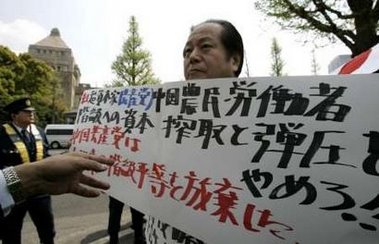
Image: Manifestations japonaises, Falun Gong, agriculteurs,
extrême droite & Yakuza.


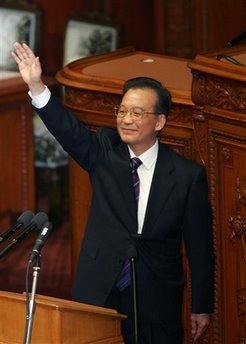
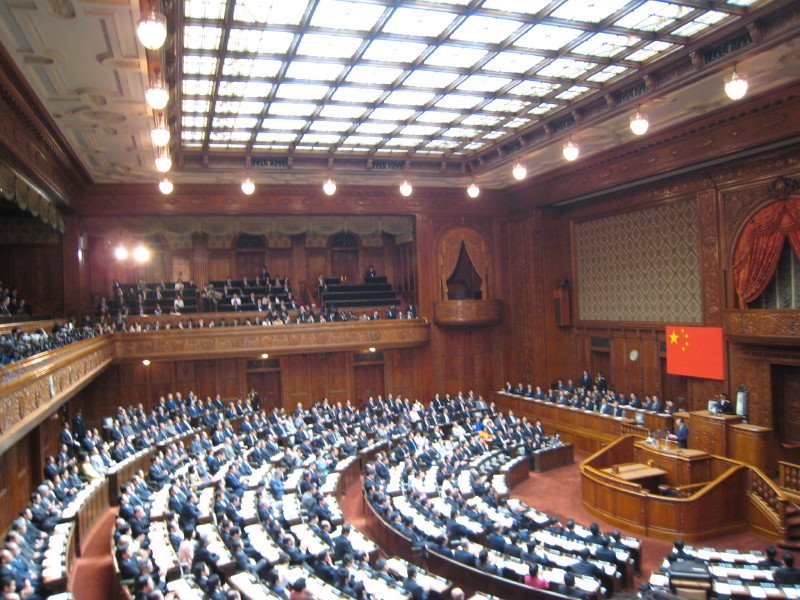
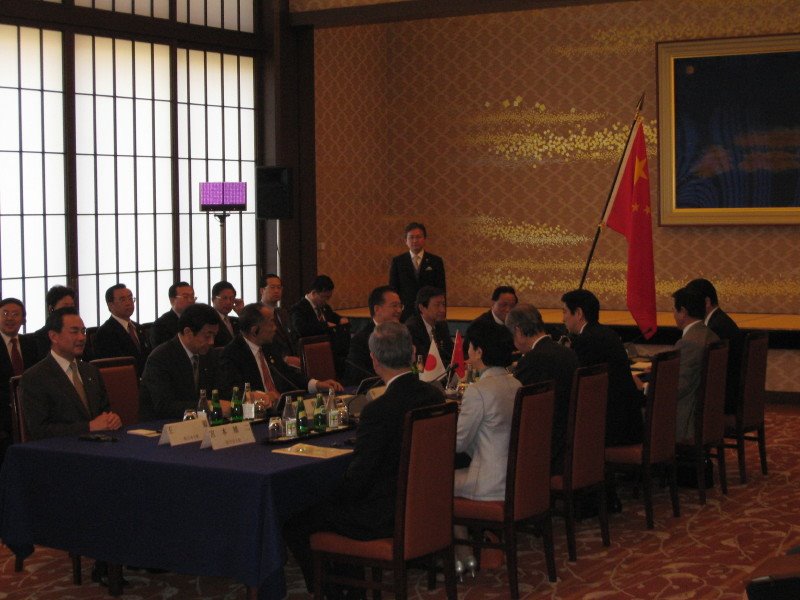
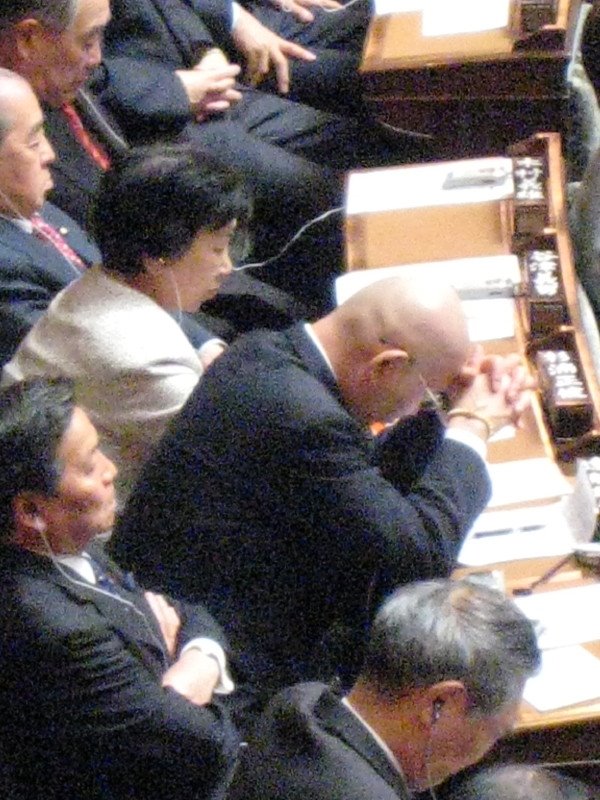
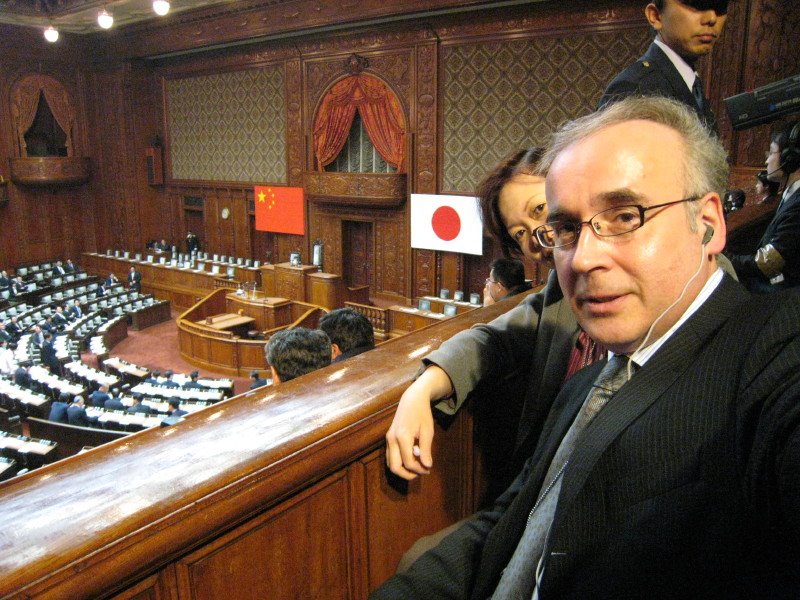
J'étais au discours de Wen Jiabao, "séquence historique", pris ici avec
une collègue de Singapour.

Wednesday, April 11, 2007

Wen Jiabao to Japan: success if good atmosphere!


"Governing by laws and punishments does not cultivate
the virtue of the people. Governing by "moral force"
(te) and "ritual" (good manners, ) does."

This is what Confucius wrote and may inspire both
leaders at that crucial and historical crossroad of
Japan and China relation.

Beijing and Tokyo "both countries' top priority will
be to maintain a good atmosphere and create it for the
best of the two nations, so Japan has to make sure
that prime minister Wen's visit is a great success,
according to Ryosei Kokubun, director of the Institute
of East Asian Studies at Tokyo's Keio University.

"A successful visit will require that both sides
accentuate the positive and avoid generating an
expectation of breakthroughs on points of tension. One
potentially fruitful ? and uncontroversial ? area of
cooperation is the environment: China's rapid
industrialization and inefficient energy use has
created a horrific pollution problem; Japan has coped
with similar problems in the past to become one of the
world's most efficient energy users, and its expertise
in this field could be of great benefit to China.

A more challenging energy issue, however, is the
disputed ownership of rich underwater natural gas
deposits in the East China Sea. Maritime boundary
lines between China and Japan aren't fixed, and both
claim a right to the gas ? ships from the two
countries faced off in tense confrontations in the
area in 2004 and 2005. Even if they've managed to
ease the standoff, the competition for scarce energy
resources between two countries without adequate
domestic supplies of their own make it difficult to
resolve.

Abe and Wen will discuss the possibility of jointly
developing the gas deposits, but Tokyo isn't hopeful.
"I don't think we'll sign anything specific," says a
senior Japanese foreign ministry official. "If it's
worthwhile we will, and if it's not, we won't." The
two sides may also sidestep their differences on how
to handle North Korea's nuclear program ? Japan wants
more pressure on Pyongyang, but China has orchestrated
a softer compromise in the Six-Party process. Despite
the strains ? and the rivalry dating back millennia ?
today's China-Japan relationship is held together by
an overwhelming imperative: business. Even when ties
were at their frostiest over Koizumi's visits to
Yasukuni and the response of Chinese protestors,
economic ties continued to strengthen ? last year,
bilateral trade passed $200 billion, and China will
soon become Japan's top trading partner."
(Agencies)

Revue de presse en Francais (Source (Amb Fr)

C?est la première fois depuis six ans et demi qu?un
Premier ministre chinois se rend au Japon. Le
MAINICHI note que les deux pays envisagent de mettre
en avant une ambiance amicale, en publiant un
communiqué commun sur leur coopération en matière
énergétique et environnementale, conformément à l?idée
de créer une « relation d?intérêt mutuel stratégique »
sur laquelle MM. Abe et Wen s?étaient mis d?accord en
octobre dernier, lors de la visite du Premier ministre
nippon en Chine. Le quotidien souligne en outre que
les deux hommes assisteront jeudi à la première
réunion des ministres économiques des deux pays, qui
servira de base à un dialogue économique stratégique
régulier tel qu?il existe entre la Chine et les
Etats-Unis. Toutefois, poursuit le quotidien, la
question des gisements gaziers de la Mer de Chine
orientale reste sans perspective de déblocage, tandis
que la question du passé historique continue d?être
susceptible de plonger les relations nippo-chinoises
dans la mésentente.

Le NIKKEI et le TOKYO SHINBUN soulignent que les
gouvernements japonais et chinois visent à se mettre
d?accord, au moment de la rencontre des Premiers
ministres Abe et Wen le 11 avril, sur la mise en
service d?ici la fin de l?année d?un vol charter
reliant directement Haneda et Shanghai, à raison de
deux à quatre vols aller-retour par jour.

Le YOMIURI signale pour sa part que la Chine coopèrera
au règlement de la question des kidnappés. Le
communiqué commun mentionnerait que la Chine «
fournira la coopération nécessaire » pour le règlement
de la question des kidnappés. Ce serait la première
fois que la l?on évoque cette question dans un
communiqué commun nippo-chinois.

Le SANKEI signale de son côté que les médias chinois
présentent successivement le Japon : China Central TV
a diffusé, durant trois semaines, des émissions
présentant le Japon aux heures de grande écoute,
tandis qu?un hebdomadaire édité par l?agence de presse
nationale a publié un dossier spécial intitulé «
voyage pour faire fondre la glace » (de l?expression
employée par le Premier ministre Wen Jiabao pour sa
visite au Japon) ; plusieurs journaux ont publié des
articles présentant le Japon. Le SANKEI y voit
l?intention des autorités chinoises d?atténuer
l?opinion anti-japonaise du pays et de prêter main
forte à la politique de Pékin de promouvoir les
relation avec l?Archipel.

Exchange of students and cultural grassroots
cooperation: target to a better future for a better
Asia. More humane, more respectful and creative with
more diversity and imagination in the shaping of their
common design and destiny.

Sunday, April 08, 2007

Pyongyang sales everything everywhere!

The United States did not act to prevent a recent
shipment of arms from North Korea to Ethiopia, even
though sketchy intelligence indicated the delivery
might violate a U.N. Security Council resolution
restricting North Korean arms sales, Bush
administration officials said yesterday.

In the same time, Japan forbids a shipment of clams
from North Korea to Japan Furusato (Home province) of
Japan Prime Minister Abe Shinzo.

The president of a seafood company in Sanyoonoda,
Yamaguchi Prefecture, and seven employees were
arrested Saturday for allegedly importing North Korean
clams in February without authorization. The Japan
Coast Guard and Yamaguchi Prefectural Police suspect
that Toen Boeki K.K. President Noboru Fujioka, his
brother and company executive Yoshio Fujioka, and six
other employees imported littleneck clams from North
Korea and sold them as Chinese products. Clams are
subject to Japan's economic sanctions on North Korea.
Eleven crew members of a Chinese cargo ship, which
allegedly imported the clams, were also served with
fresh arrest warrants. The company has said it has
ordered shipments of Chinese clams but never ordered
North Korean products.

2 acts of confusion... or fact that North Korea did
indeed convert to market economy when it likes it?

Back to the weapons sales, full story in French:
(Sources Agences, NYT, WP)


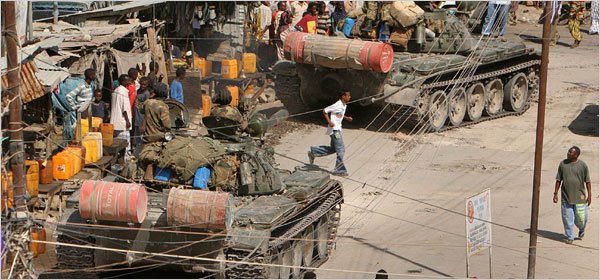
Image de Michael Kamber (NYT)

L'administration Bush a autorisé l'Ethiopie à aller au
bout d'un achat secret d'armements à la Corée du Nord,
qui viole une résolution du Conseil de sécurité sur
des sanctions contre Pyongyang, rapporte le New York
Times dans son édition de dimanche.

Citant des responsables américains de plusieurs
organismes, le New York Times écrit que les Etats-Unis
ont donné leur feu vert à la livraison d'armes en
janvier parce que l'Ethiopie était engagée dans des
combats contre les milices islamistes en Somalie et
parce que cette offensive aide la lutte que mène
Washington contre les militants d'Al Qaïda dans la
Corne de l'Afrique.

Un porte-parole du département d'Etat américain s'est
refusé à tout commentaire sur les détails de cette
livraison d'armes, mais a déclaré que les Etats-Unis
étaient "profondément attachés au maintien et à
l'application des résolutions du Conseil de sécurité
de l'Onu", écrit le journal. L'ambassade d'Ethiopie
aux Etats-Unis n'a fait aucune déclaration.

L'ex-ambassadeur des Etats-Unis à l'Onu John Bolton,
qui a contribué à faire adopter la résolution imposant
des sanctions contre la Corée du Nord en octobre
dernier, après l'essai nucléaire réalisé par
Pyongyang, a estimé que les Etats-Unis auraient dû
demander à l'Ethiopie, pays allié de Washington, de
renvoyer ces armes à la Corée du Nord.

LIVRAISON CONNUE DEPUIS OCTOBRE

"Je sais qu'elles (les armes) ont été utiles en
Somalie, mais la Corée du Nord a un programme
d'armements nucléaires qui est inutile pour le monde
entier", a-t-il dit, cité par le New York Times.

Les services de renseignement américains ont signalé
fin janvier qu'un cargo éthiopien ayant probablement à
son bord des pièces de blindés et d'autres matériels
militaires avait appareillé d'un port nord-coréen.
Après un bref débat à Washington, il a été décidé de
ne pas faire obstacle à cette vente d'armes et de
presser les Ethiopiens de ne plus acheter à l'avenir
d'armes à la Corée du Nord, selon le journal.

On ignore si les Etats-Unis ont signalé cette vente
d'armes nord-coréennes au Conseil de sécurité, ajoute
le NYT.

Plusieurs responsables américains ont déclaré au
journal qu'ils avaient appris pour la première fois
que l'Ethiopie prévoyait de recevoir une cargaison
d'armes de Corée du Nord lorsque le gouvernement
d'Addis-Abeba en a informé l'ambassade des Etats-Unis
en Ethiopie après l'adoption de la résolution de
sanctions le 14 octobre.

"Les Ethiopiens sont venus nous voir et ont dit
'voyez, nous savons que nous devons passer à d'autres
clients, mais nous ne pouvons pas le faire du jour au
lendemain", déclare un responsable américain, cité par
les journalistes MICHAEL R. GORDON and MARK MAZZETTI
du New York Times.

Friday, April 06, 2007

Japan Aegis defense leak: Spying or Otaku?


Missile launched from a Japan Navy Aegis-equipped
cruiser

Three Japanese naval officers who swapped pornography
on their computers triggered a scandal over a possible
leak of sensitive data linked to Japan's missile
defense system, a newspaper said Thursday. Police
launched a probe last week after a navy officer
married to a Chinese woman was found to have taken
home a computer disk containing information about the
high-tech Aegis radar system, domestic media said.

Aegis is used on Japanese destroyers that are to be
fitted with SM-3 missile interceptors from this year
as part of the missile defense program.The officer
told police he accidentally copied the confidential
data onto his computer's hard disk when copying porn
from a computer belonging to a crew member from
another destroyer, the Yomiuri newspaper reported. A
third officer was also found to have copied data on
the Aegis system alongside pornographic images, the
Yomiuri said.

Police suspect senior officers were also involved in
the swap because none of the three were authorized to
access the confidential information, the Yomiuri said.
Japan sped up the implementation of its missile
defense program after North Korea fired a volley of
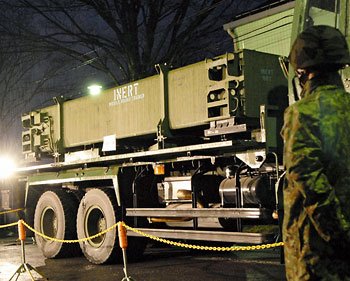
ballistic missiles last year. Last Friday, its first
ground-based interceptors were trucked into Iruma air
base in Saitama prefecture, north of Tokyo, to protect
the capital.


One of the targets of the investigation is an officer
of Japan's Maritime Self Defense Force married to a
Chinese woman suspected of spying. The officer
allegedly had taken home classified information
without authority. The sailor, a petty officer, was
stationed aboard the Shirane, a destroyer.

The Asahi Shimbun newspaper too on wednesday said the
investigation was being conducted by Kanagawa
prefecture police and MSDF personnel. Officials
reported said the probe could be extended to others
for violating secrecy laws in the Japan-U.S. Mutual
Defense Assistance Agreement. Police said a hard disk
containing information on the ship and its U.S. Aegis
system were found in his home in January while police
were searching for evidence related to his wife's
alleged espionage.

Sunday, April 01, 2007

10 minutes to vaporize Tokyo ?


Japan Missile Defense System: a lot remains to
guarantee the protection of Japan archipelago.
Uncertainty between salesmen of the industry and
military personal who don't want to see their family
die because of bad, bad, bad acquisitions. Question
is simple: Unsure defense only or sovereign counter
attack? Better retox or better talk? Here is an
insight on the current problem, talks and quotes:

Japan deployed its first ballistic missile
interceptors at an Air Self-Defense Force base north
of Tokyo on Friday, but a number of operational issues
must still be addressed before the missile defense
program can become effective. A pressing issue now is
how to secure a location to carry out the unit's
mission. The Yomiuri wrote: " On March 23, the
Cabinet approved guidelines that stipulate how to
operate the PAC-3 system in case of emergencies.
Calling up the antiaircraft unit takes about an hour,
and getting it ready for operation after arriving at
the site also requires about an hour. It also takes
some time for the unit to travel to the site. The key
is whether the government can mobilize the unit as
soon as possible after detecting in cooperation with
the U.S. military the launch of a missile. A missile
is believed to be capable of reaching Tokyo from North
Korea in about 10 minutes. However, a senior Defense
Ministry official said even if the ministry were to
obtain information of the missile launch sooner, "it
will be extremely difficult if the defense minister
issues an interception order in line with the
emergency guidelines." In addition, the government has
yet to decide specifics such as how to protect people
from a missile if the unit fails to shoot it down, or
from missile debris if it is intercepted in the air."

The government plans to deploy PAC3 launchers at 11
bases across Japan by fiscal 2010, but PAC3 systems
alone cannot protect the entire country from missile
attacks.

For example, Japan still lacks SM3-armed Aegis ships
needed to complete the missile defense setup.
Upgrades to its first ship to have SM3s will not be
completed until the end of 2007. The government plans
to add an Aegis ship to its fleet each year starting
in fiscal 2008 until it has three more SM3-equipped
ships. So it will take some time until Japan has the
six Aegis ships called for in the program, including
two without SM3s. To fill this vacuum, Japan intends
to create an arrangement in which information such as
signs of missile launches can be exchanged instantly,
including with U.S. forces, according to a senior
ASDF official. Japan and the U.S. are stepping up
information gathering capabilities by building new
radar facilities, for example. But with North Korea's
intermediate-range Rodong ballistic missile expected
to be able to reach Japan in about 10 minutes, it is
not known whether data from U.S. early-warning
satellites can be conveyed to the Japanese side in a
timely manner. Other issues need hammering out, such
as how the Japanese missile defense system will
coordinate with the USS Shiloh, an SM3-equipped Aegis
cruiser deployed by the U.S. at its base in Yokosuka,
Kanagawa Prefecture, as well as coordinate with PAC3
launchers it installed at Kadena Air Base in Okinawa
Prefecture. (The Nikkei Saturday morning edition)


Opponents say the purpose of the Patriot system is to
protect military facilities, including those used by
US troops, and denounced today's arrival of the
launchers as a "military performance". "Bringing
PAC-3s to places such as Iruma makes them the focus of
interception strategy and therefore [puts them] at
risk of becoming the target of attack by other
countries," campaigners said in a statement. By the
end of the year, Japan expects to equip one of its
warships with an SM-3 interceptor capable of reaching
incoming missiles earlier. Preparing for the
perceived North Korean threat is proving expensive,
with spending on missile defence alone expected to
rise by 30.5% to 182.6bn yen in the fiscal year 2007.
Japan plans to have 30 PAC-3 launchers in place in 10
locations within the next four years. (Wire news)


Image: Members of Japan's first rapid - response
counter-terrorism division attend an inauguration
ceremony at the Ground Self - Defense Force's Asaka
base in northwestern Tokyo on March 31st, 07.

Japan and the United States are in the final stage of
setting a meeting between Japanese Defense Minister
Fumio Kyuma and U.S. Secretary of Defense Robert
Gates for April 30 in Washington. The two countries
are also trying to arrange for a foreign ministerial
gathering on the same date there, followed by a
so-called ''two-plus-two'' top security meeting of
their foreign and defense ministers May 1, the source
said.


Image SM-3

Recall...

Some remarks on Theater Missile Defense (TMD).

"As emphasized by Moshe Ahrens and other Israeli
government statesmen, Patriot killed few, if any, SCUD
missiles launched against Israel by Iraq writes
Richard L. Garwin 26th at Pugwash Workshop on Nuclear
Forces "Nuclear Forces and the ABM Treaty". That is
not to say that Patriot is a poor anti-aircraft system
or even that it is a poor anti-missile system, when
properly modified. It does show some of the serious
problems of achieving operational effectiveness with a
non-nuclear interceptor.

All of the SCUD payloads launched Israel and Saudi
Arabia in 1991 were "unitary" high explosive-- that
is, a single high explosive charge carried on the SCUD
warhead to detonate on impact. Such warheads in the
future, directed against military installations, could
be handled by defensive systems of very short range.
Countering their use against cities is a more
difficult problem, but still one for which systems
like Patriot upgrade should be reasonably effective in
the terminal area.

But even TMD systems are often advocated with the
promise to counter missiles carrying chemical or
biological payloads, and they problem there is that
military effectiveness alone pushes the offense toward
bomblets which could conveniently be made to re-enter
independently, having been dispensed from the
ballistic missile very early in flight.

To the extent that one is concerned about chemical or
biological attack with ballistic missiles, one wants
to push the universalization of the BW Convention and
the CW Convention, and commit the nations of the Earth
to retaliate against any military use or possession of
BW or CW.

Paradoxically, it is the relatively ineffective
unitary high explosive warhead and the highly
effective nuclear warheads that might be individually
intercepted in the terminal area. But the standard of
performance required of a defense that has the
responsibility of countering a nuclear warheads is
very high, and there, too, the first line of defense
is to prevent the acquisition of nuclear weapon
capability. Still, both terminal-area TBM against
missiles of short range and boost-phase intercept
capability are feasible and desirable.

End of quotes.